Content
Picture a maintenance manager walking a 200 m² assembly hall in late summer. The floor is tolerable, the air at three metres is not, and the wall thermometer reads 34 °C. Someone says "that's convection for you" — correct, and not very useful. The question that actually shapes the purchase order is the one underneath it: what is the opposite of convection, and what does that opposite do to the way a space gets cooled?
Short answer: conduction and radiation. Convection shifts heat by moving a fluid in bulk; conduction passes it molecule to molecule through contact; radiation carries it as electromagnetic waves and needs no medium at all. Keep those three apart and most cooling arguments resolve quickly. Blur them together and you buy an oversized fan for a problem that was never convective in the first place.
The three modes are usually taught side by side. A specification meeting only needs the differences that change how equipment behaves.
| Mode | How energy moves | Needs a medium? | Typical example in cooling work |
|---|---|---|---|
| Conduction | Energy passes between touching molecules; the material itself does not flow. | Yes — a solid or a still fluid | Heat crossing a motor housing, a wall, or the water film on a cooling pad |
| Radiation | Emitted as infrared waves from any surface above absolute zero. | No — works in a vacuum | A sun-loaded roof warming the space below it; a warm machine surface losing heat to the room |
| Convection | Bulk movement of a gas or liquid carries enthalpy from one place to another. | Yes — a moving fluid | Warm air rising off equipment; a fan pushing room air across a surface |
Two clarifications prevent most confusion. Convection always contains conduction: heat must cross the boundary layer from a solid surface into the moving fluid before the fluid can carry it anywhere. And radiation is not "rising heat" — it travels in straight lines and is reflected, absorbed or emitted by surfaces, which is why shade and surface finish matter as much as airflow.
Conduction is the strictest opposite of convection: the material stays where it is while energy passes through it. That single difference explains why insulation stops conduction but does nothing for a draught.
The design consequence is easy to state and easy to forget: a fan can only remove heat as fast as conduction delivers it to the surface being cooled. Bolt a hot pump to an insulated base and no amount of airflow will fix the housing temperature. Watch contact resistance too — a poor thermal joint behaves like a thin layer of insulation that nobody specified.
Every surface above absolute zero emits infrared radiation, and every surface absorbs some of what arrives. Net exchange depends on two things: absolute temperature raised to the fourth power, and emissivity. A 60 °C roof deck radiates steadily into the room beneath it whether the air there is still or moving.
This is why a cooler placed in direct sun underperforms while the same unit works in shade. The equipment is removing convective heat while the sun reloads the space radiatively, and the two effects partly cancel.
Not every "opposite of convection" is a different mode of heat transfer. Some are labels for how the fluid moves, and mixing the two vocabularies causes real specification errors.
Warm fluid expands, its density drops, and buoyancy lifts it. In still room air this produces gentle velocities of a few tenths of a metre per second and low surface heat-transfer coefficients — the reason a room can feel stuffy at a moderate temperature. Its opposite is forced convection.
Add a fan or blower and the same air carries far more heat. A fan does not lower the air temperature; it lowers surface temperatures, breaks up stratified layers and raises the convective coefficient. Volume flow and throw therefore matter more than fan diameter alone.
In fluid dynamics, advection is bulk transport of a property by flow, and it is sometimes offered as the technical counterpart to convection where that word means vertical buoyant motion. In kitchens, "convection" means a fan-assisted oven, so the everyday opposite is simply "conventional". Both usages turn on the same question — is a fan moving the air or not? Neither adds a fourth mode of heat transfer.
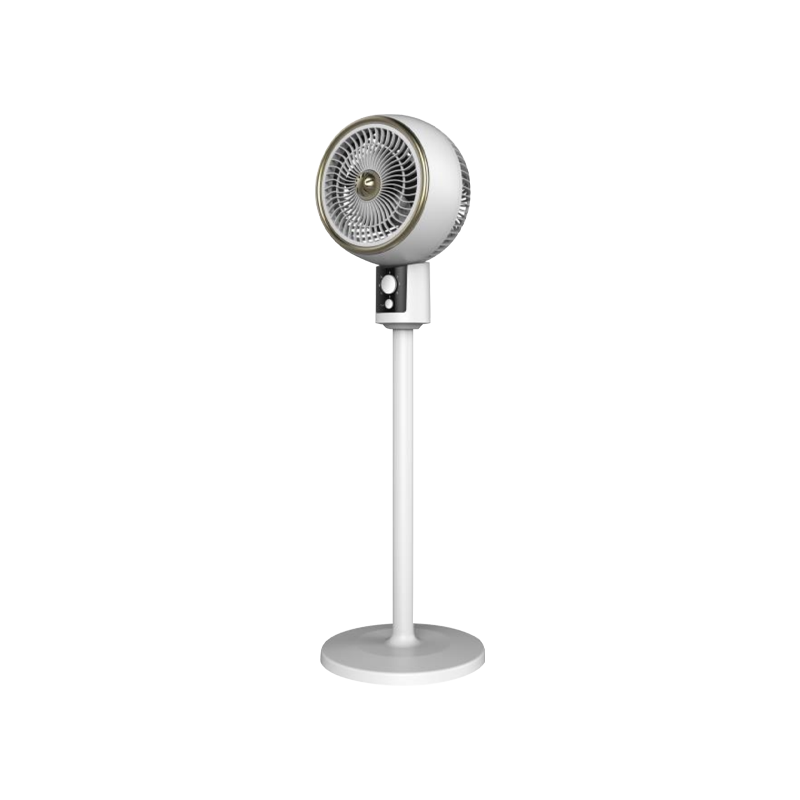
A circulation fan is the cheapest way to turn a naturally convective room into a forced-convective one, and it is usually the first thing to try before specifying cooling capacity.
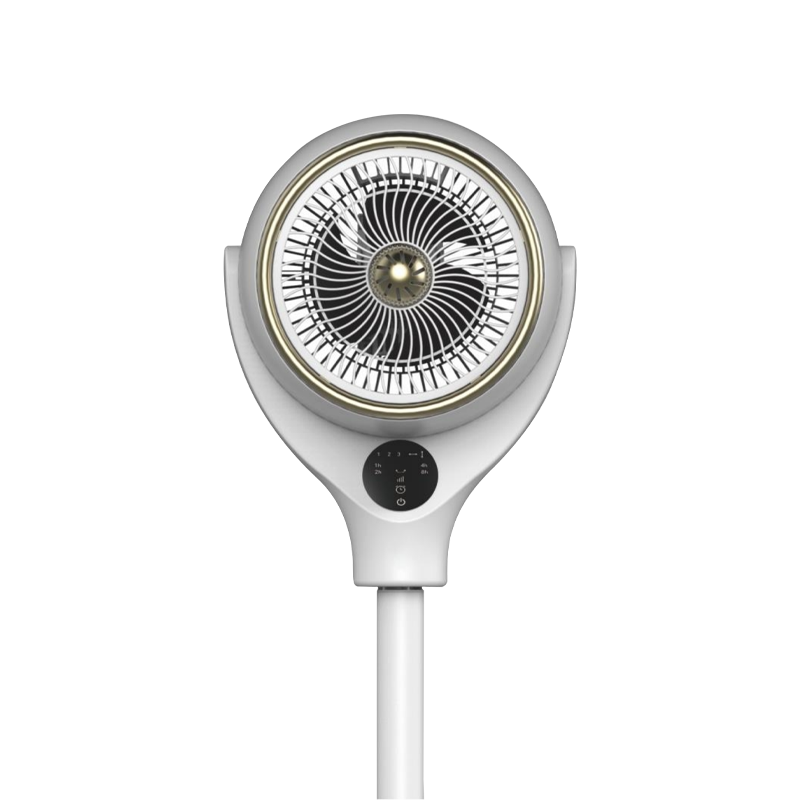 Intelligent Voice Control Silent Floor Fan Fan-03A 25 W floor fan with 90° horizontal and vertical oscillation plus remote and voice control, useful for forced-convection air circulation.View Product →
An evaporative cooler is a forced-convection machine wrapped around a phase-change core, and it still has to live with conduction and radiation.
Sizing follows from step three. Industrial halls are commonly quoted at roughly 25 to 40 air changes per hour, with high racks, open doors or strong local exhaust pushing the figure upward. Under-sizing shows up first as warm air at head height, exactly the symptom that started the conversation.
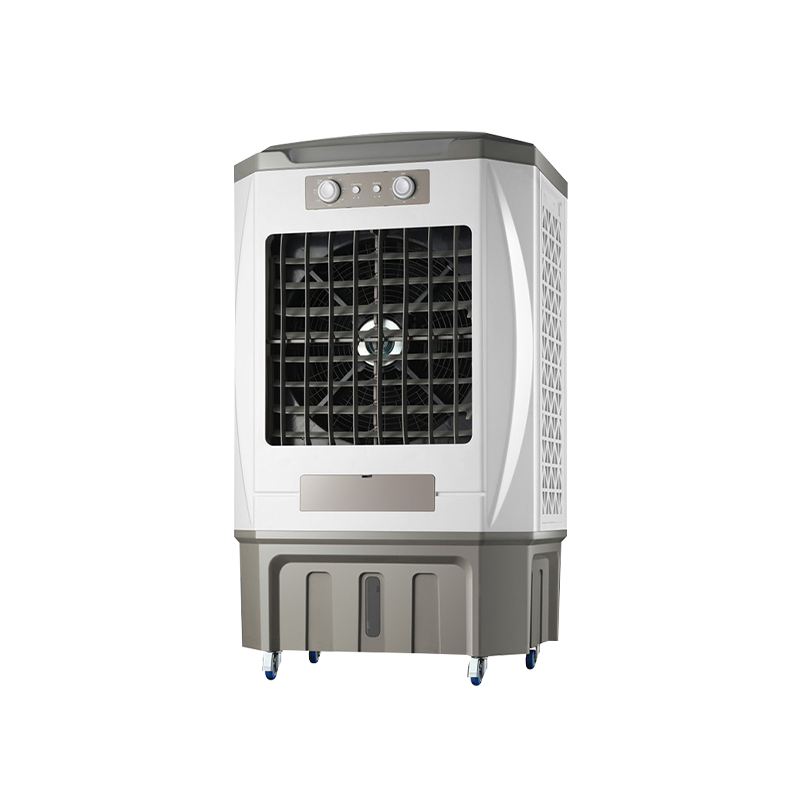
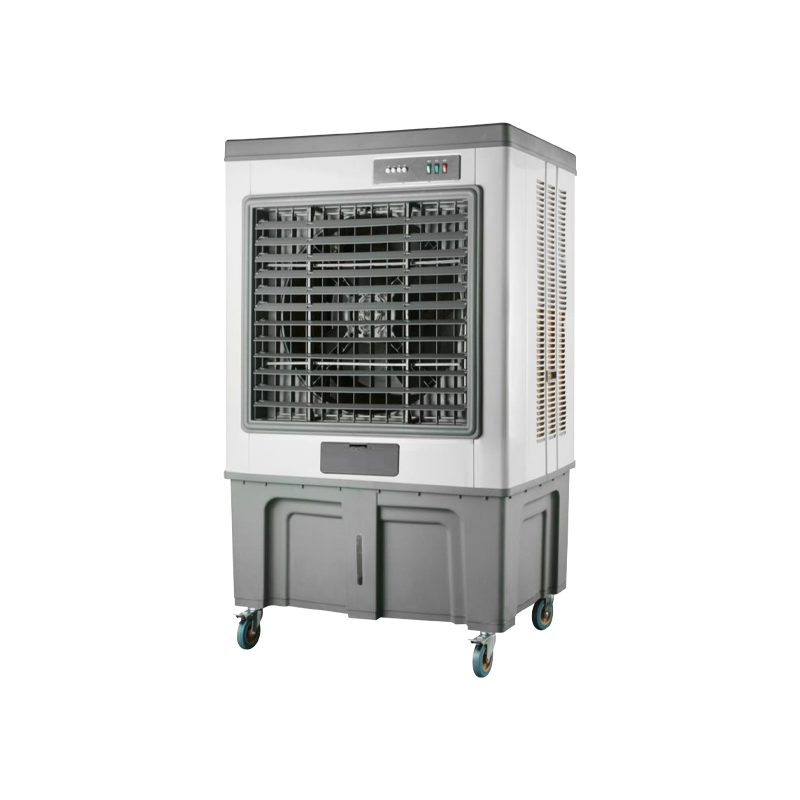
Where the load is spread across a large workshop floor, a high-capacity industrial unit is the sensible starting point rather than a domestic cooler. Understanding how cooling fans handle heat dissipation across different fields helps match airflow pattern to the actual heat sources.
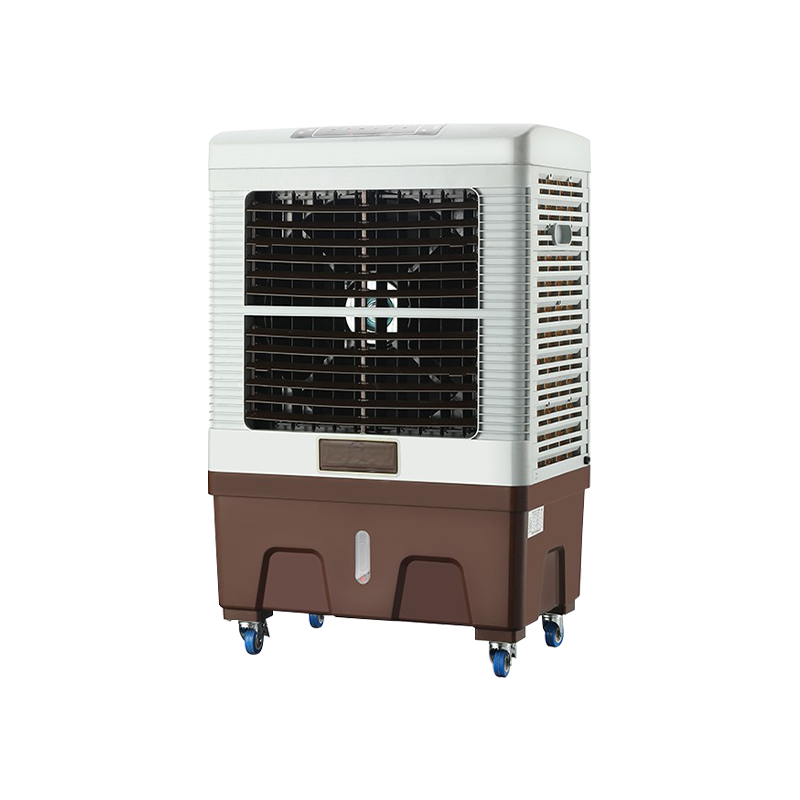
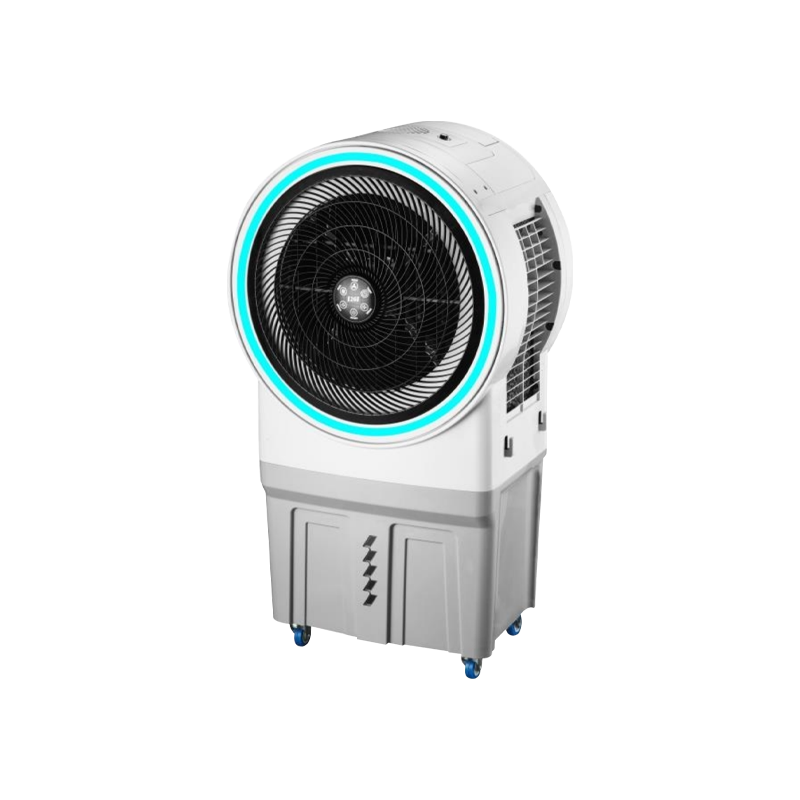
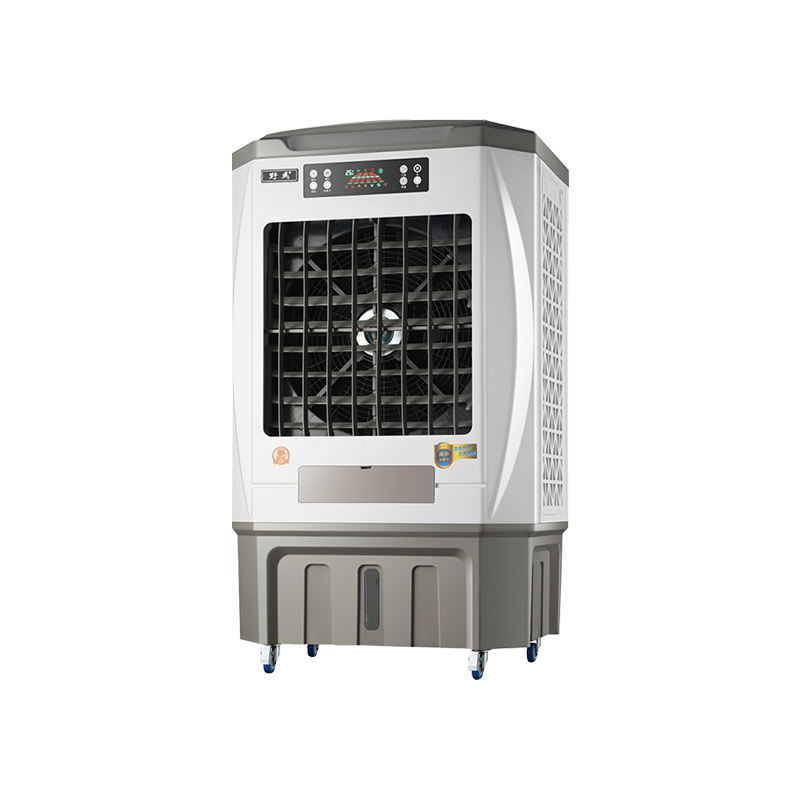 LBW-16000RC Industrial Evaporative Air CoolerA 400 W industrial evaporative cooler for 80–120 m² spaces, with 12,000 m³/h airflow, ice-box cooling and triple filtration.View Product →
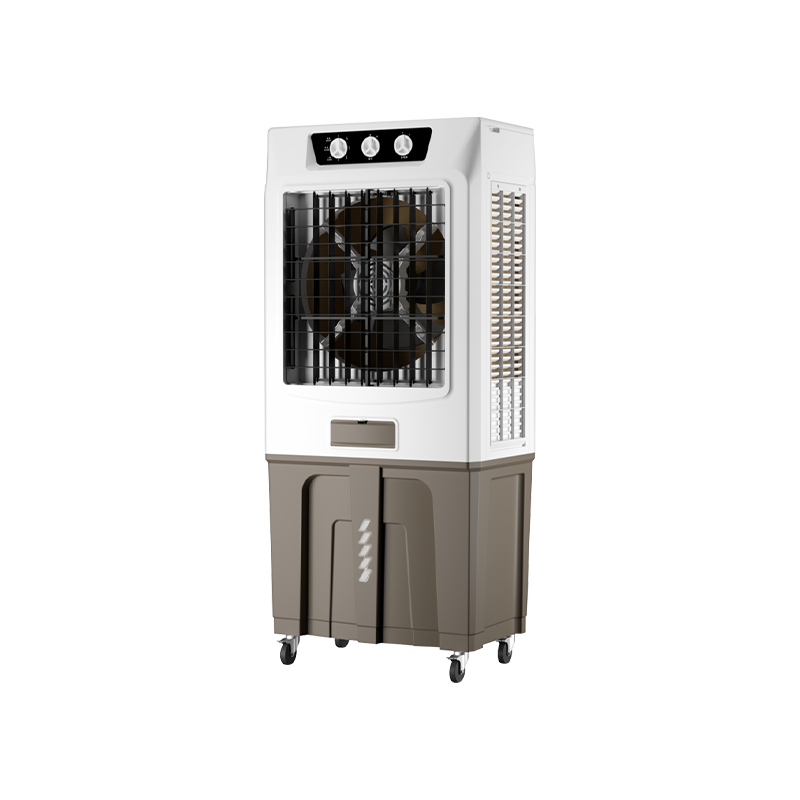
Small portable units follow the same logic at a smaller scale: they win on spot cooling and mobility, and lose when asked to cool a whole hall. A quick check of the cooling fan range against room volume, occupancy and exhaust usually settles the choice faster than a datasheet comparison.
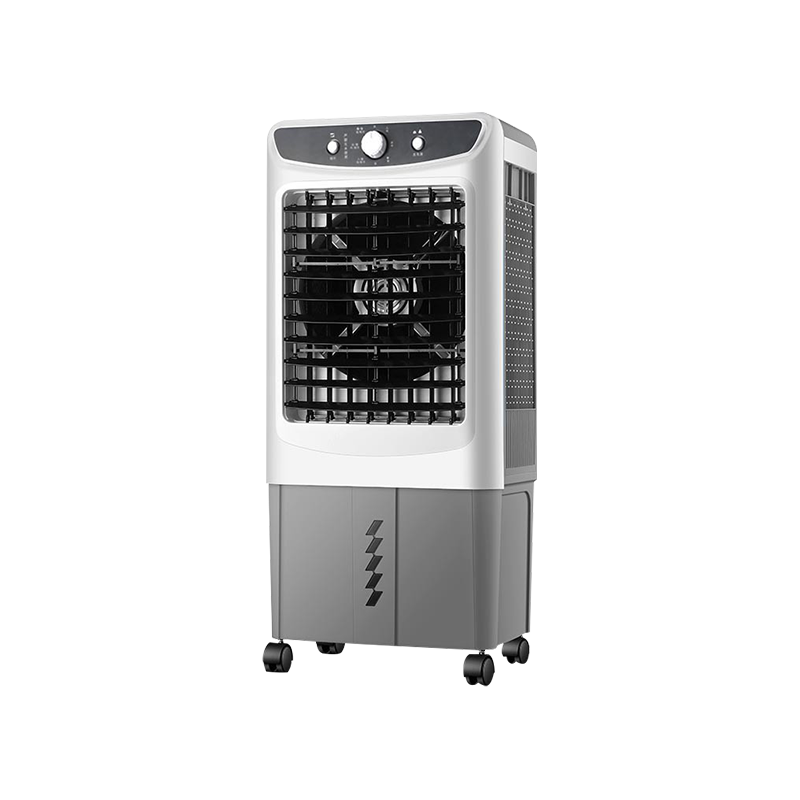
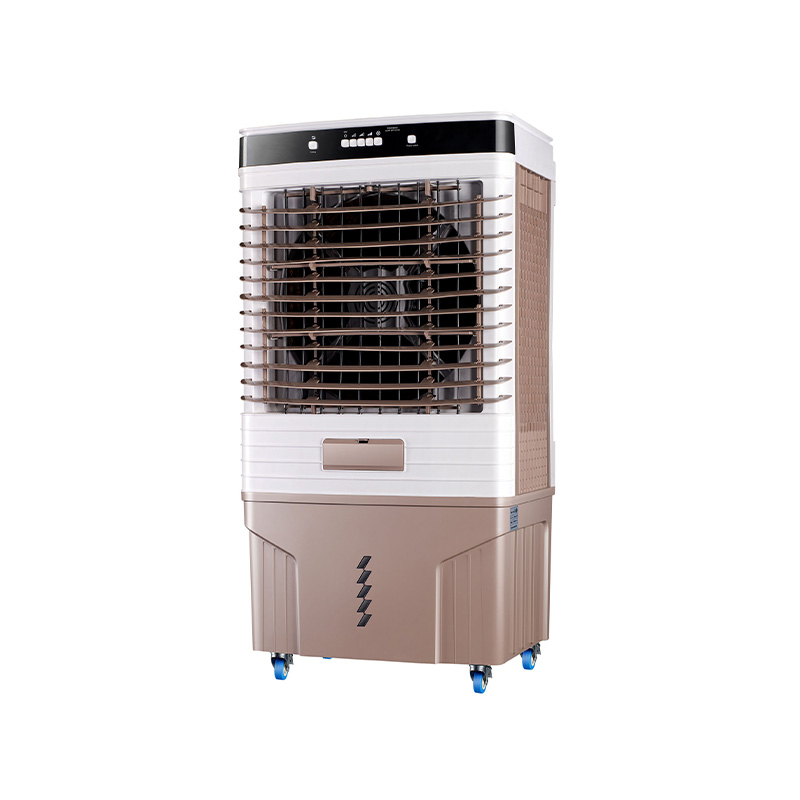
 LBW-5500RC/5500 Low Power Home and Outdoor Air CoolerAn 80 W evaporative air cooler for 20–40 m² rooms or terraces, with 36 L tank, 4,000 m³/h airflow and remote or button control.View Product →
The bottom line: conduction and radiation are the opposite of convection, and each one fails in a different way when ignored. Conduction governs how fast heat reaches a surface; radiation decides how much heat arrives without any air movement at all. Select cooling equipment by asking which mode dominates in the room you actually have.


No.1015 Guanfu Road, Fuhai Town, Cixi City,Zhejiang,China

+86 134-8601-6220



Copyright ? Cixi Bisheng Electrical Appliance Co., Ltd. All Rights Reserved.
Wholesale Portable Air Cooler Manufacturer




 English
 中文简体
 Español