Content
Hold one end of a metal spoon in a cup of hot coffee, and within moments the other end warms up. That is conduction. Watch the air shimmer above a sun-baked road on a summer afternoon, and you are looking at convection currents. Step outside and feel the sun's warmth on your skin across nearly 150 million kilometers of empty space — that is radiation. Every object around you exchanges heat by at least one of these three routes, and in most real situations all three are happening at once.
For anyone who buys, specifies, or manufactures cooling equipment, understanding the difference between conduction, convection, and radiation goes far beyond a physics refresher. It explains why evaporative air coolers are designed the way they are, why some materials feel cold to the touch, why dark surfaces absorb more heat, and why fan speed has such a direct effect on comfort. This guide breaks down each mechanism, compares them side by side, and shows what those differences mean in real product decisions.
All heat transfer follows one fundamental rule: thermal energy moves from a region of higher temperature to a region of lower temperature. The three mechanisms differ in how that movement happens, and that difference determines their speed, their range, and their practical applications.
Those three sentences are the core of the subject. The rest is detail — and the detail is where engineering decisions are made.
Conduction is the most intuitive form of heat transfer. When particles in a solid are heated, they vibrate faster and collide with neighboring particles, passing kinetic energy along like a line of dominoes. The heat appears to flow through the material, but it is actually a chain reaction of molecular collisions.
Materials do not conduct heat equally. Metals are outstanding conductors because their free electrons travel quickly and carry thermal energy across the entire structure. That is why copper appears in heat exchangers and aluminum in cooling fins — and why a metal chair feels colder than a wooden one at the same room temperature. The metal simply draws heat away from your hand faster. Air and most plastics are poor conductors, which is why they serve as insulating barriers.
Key insight: In cooling equipment, conduction is both an asset and a risk. It moves waste heat from the motor and electronics toward heat sinks, but it also lets heat from a hot floor or warm wall leak into the unit through its casing.
Product designers therefore look carefully at material choices, contact surfaces, and internal layout to encourage conductive heat removal where it is needed and block it where it is not.
Convection happens when heat is carried by the bulk movement of a fluid — a liquid or a gas. Warm fluid becomes less dense, rises, and is replaced by cooler, denser fluid, creating circulation loops known as convection currents. Natural convection is what spreads warmth from a radiator through a room. Forced convection is what happens when a fan pushes air across a surface to accelerate heat exchange.
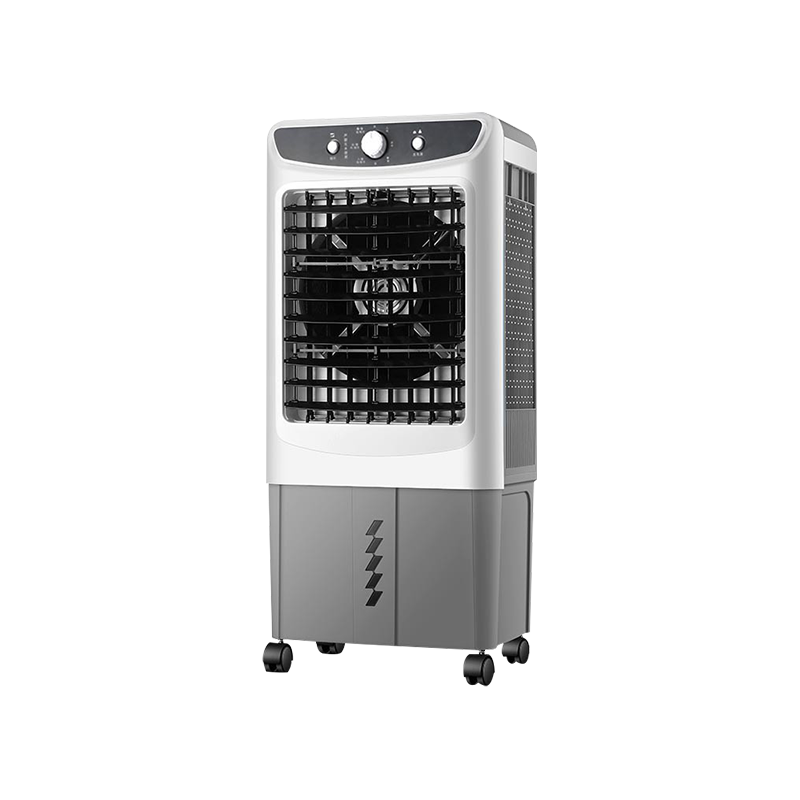
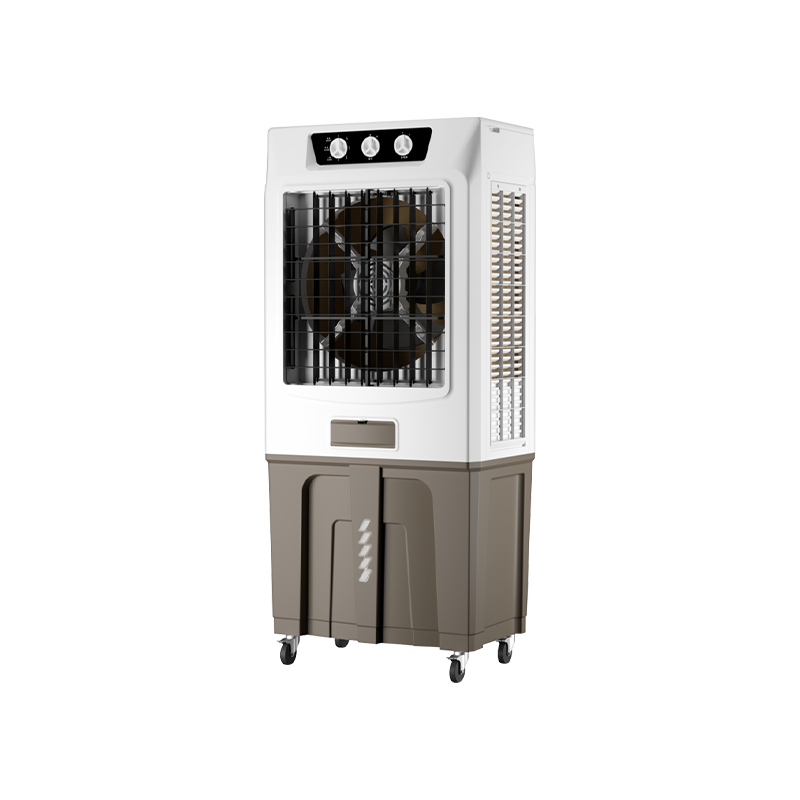
Every evaporative air cooler operates on this principle. The unit draws warm, dry air through water-saturated cooling pads. As the water evaporates, it absorbs heat from the air, and the air leaving the unit is measurably cooler. The fan does not generate cold; it drives a convective process that continuously removes heat through evaporation.
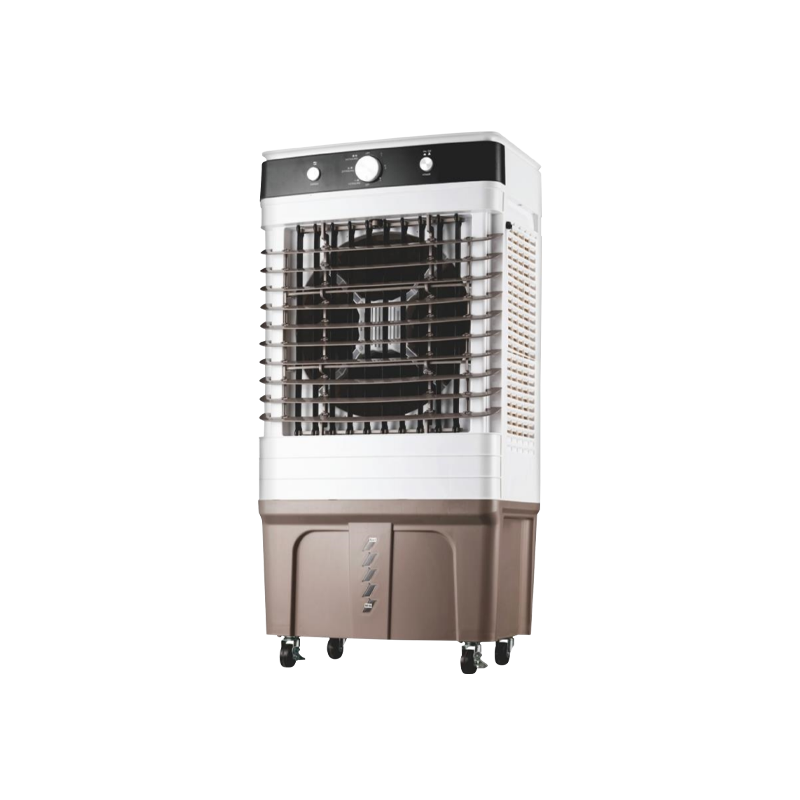
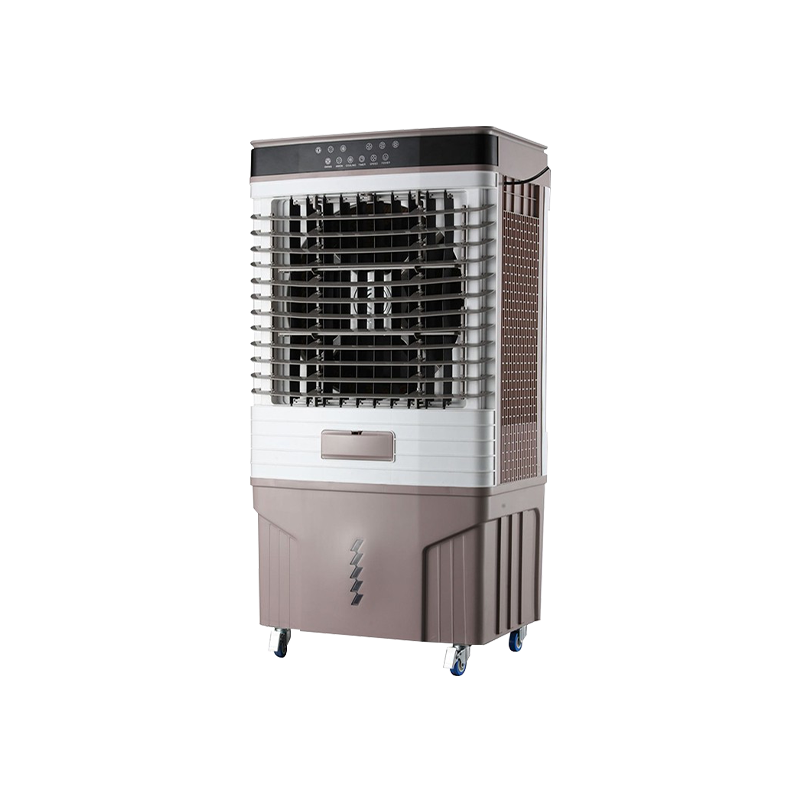
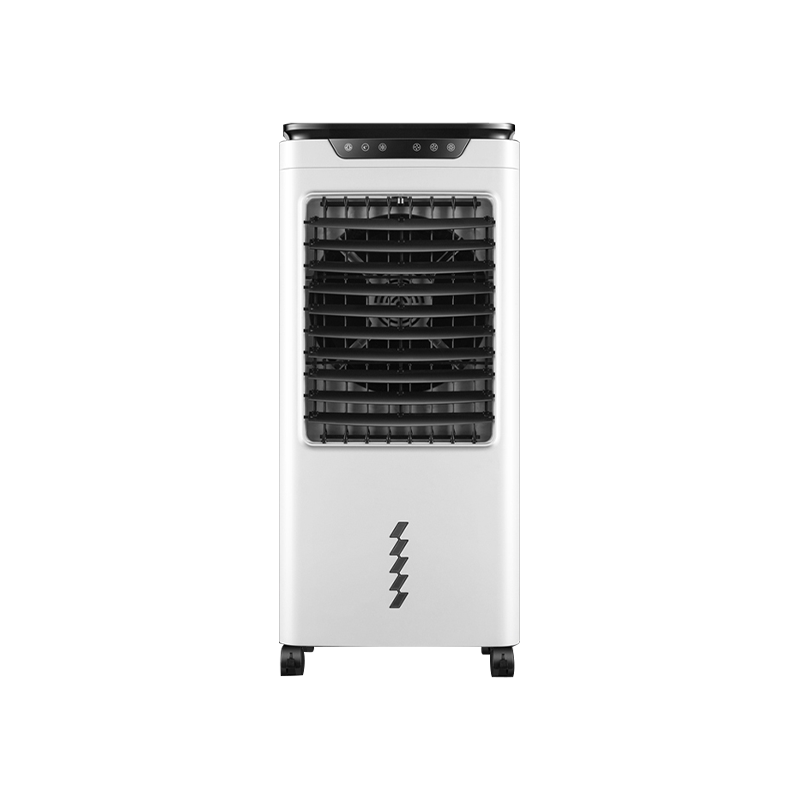 36L Three-Mode Portable Evaporative Air Cooler with FanThis portable cooler with a 36-liter tank and three operating modes directly illustrates how airflow and pad design shape convective cooling, making it a useful reference for comparing performance factors discussed here.View Product →
The performance of an evaporative cooler depends heavily on how well that convection loop is engineered. Pad thickness, airflow rate, water distribution, blade geometry, and inlet placement all determine how much air contacts the wetted surface and how quickly evaporation proceeds. That is why two coolers with identical tank sizes can deliver completely different results — convection performance is a matter of engineering detail.
Radiation is the exception to every rule above. It needs no medium. Any object with a temperature above absolute zero emits electromagnetic radiation — mostly in the infrared range at everyday temperatures. That radiation travels at the speed of light, passes through a vacuum, and is absorbed by other objects, warming them on contact.
This is how solar energy reaches the Earth. It is also why you can feel the warmth of a fireplace on your face while the air a meter away remains cold. Radiant heat reaches you directly, without warming the air in between.
Key insight: Radiation cannot be "blown away" with a fan. Only reflection, absorption, and shielding can manage it.
For cooling equipment, radiation is mostly a factor to be managed rather than exploited. A unit left in direct sunlight absorbs radiant heat through its outer shell, and dark surfaces absorb more than light ones. That is why outdoor-rated portable air coolers often use light-colored shells with UV-stabilized materials. Inside a building, radiant heat from windows and hot machinery can add a significant heat load that a cooling unit must overcome.
Placing the three mechanisms next to each other makes the differences easier to absorb:
| Property | Conduction | Convection | Radiation |
|---|---|---|---|
| Medium required | Solids in direct contact | Liquids and gases | None — works in a vacuum |
| Transfer mechanism | Particle collisions | Fluid movement and currents | Electromagnetic waves |
| Typical speed | Slow to moderate | Moderate | Speed of light |
| How to control it | Choose conductive or insulating materials | Adjust fan speed, airflow direction, surface area | Use reflective or light surfaces, add shading |
| Everyday example | Metal spoon heating up in hot soup | Warm air rising from a heater | Sun warming your skin |
Reading down the table, the engineering implications become obvious. Conduction is confined to the material itself, so controlling it means choosing the right materials. Convection depends on fluid movement, so its rate can be multiplied with fans and clever airflow design. Radiation is the only mechanism that crosses a vacuum, and it is the fastest of the three by a wide margin.
The three mechanisms are not academic categories. They are engineering constraints that shape every portable air cooler, cooling fan, and evaporative unit sold today.
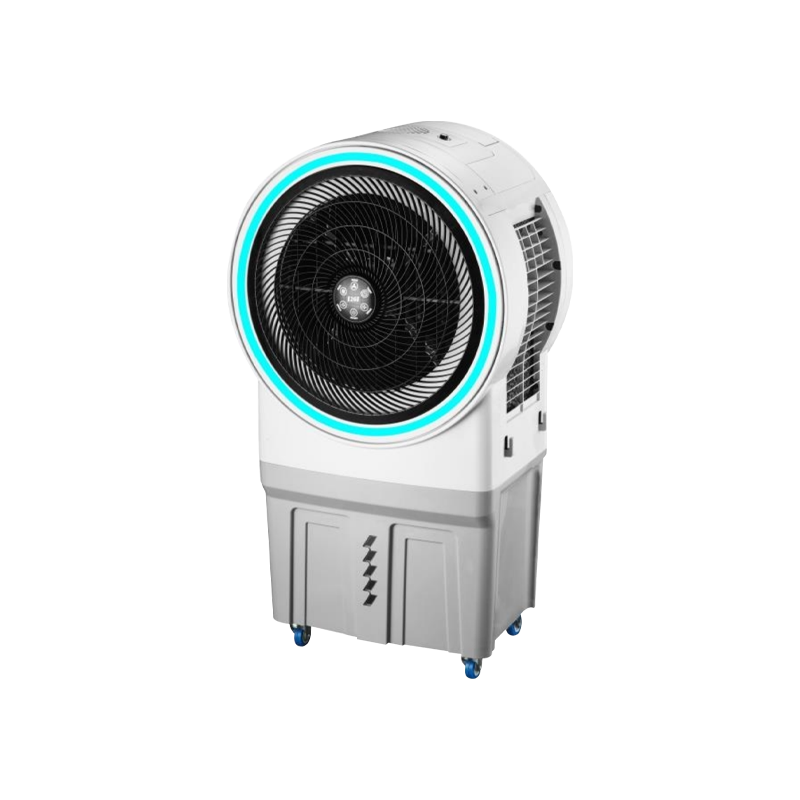
The practical takeaway is straightforward: compare the airflow path, the wet-curtain surface area, and the fan design before you compare wattage. A large floor-standing evaporative air cooler with disciplined convective engineering will move far more heat in an hour than a compact unit running at maximum speed. Understanding how conduction, convection, and radiation work is what separates a machine that simply blows air around from one that actually lowers the temperature of a room.
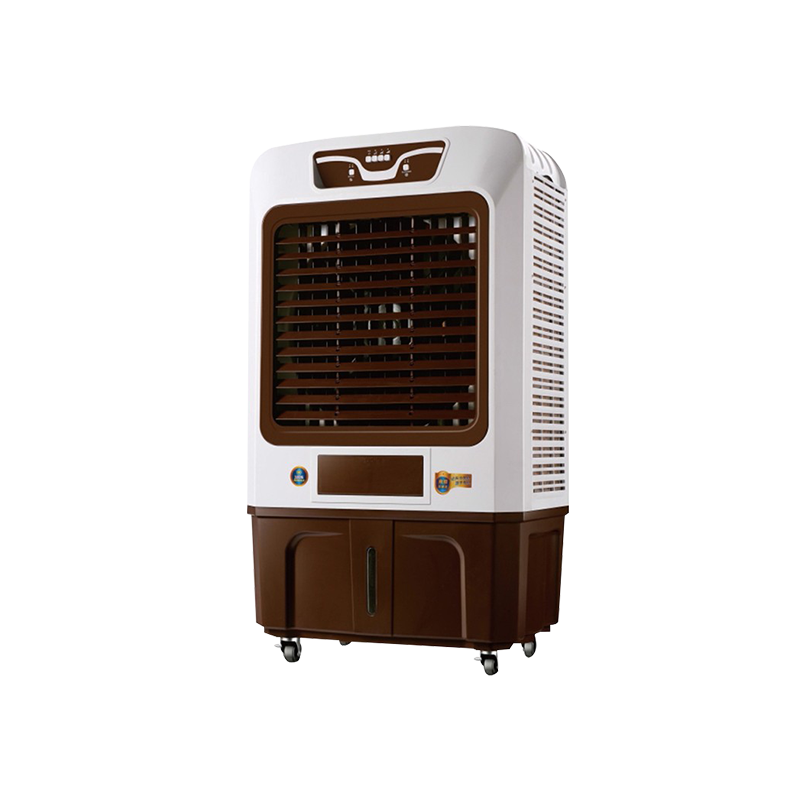
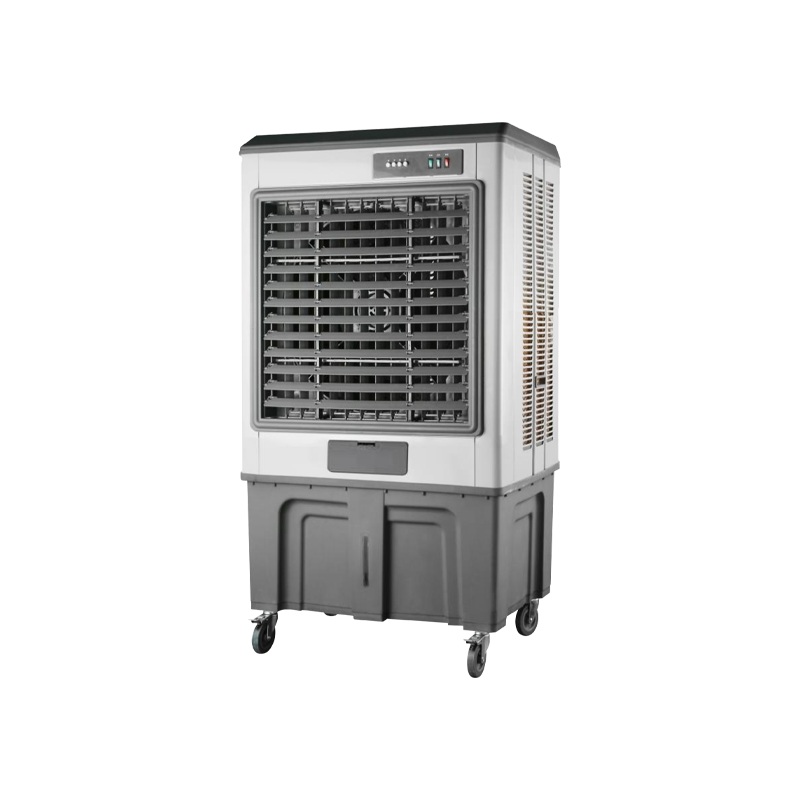
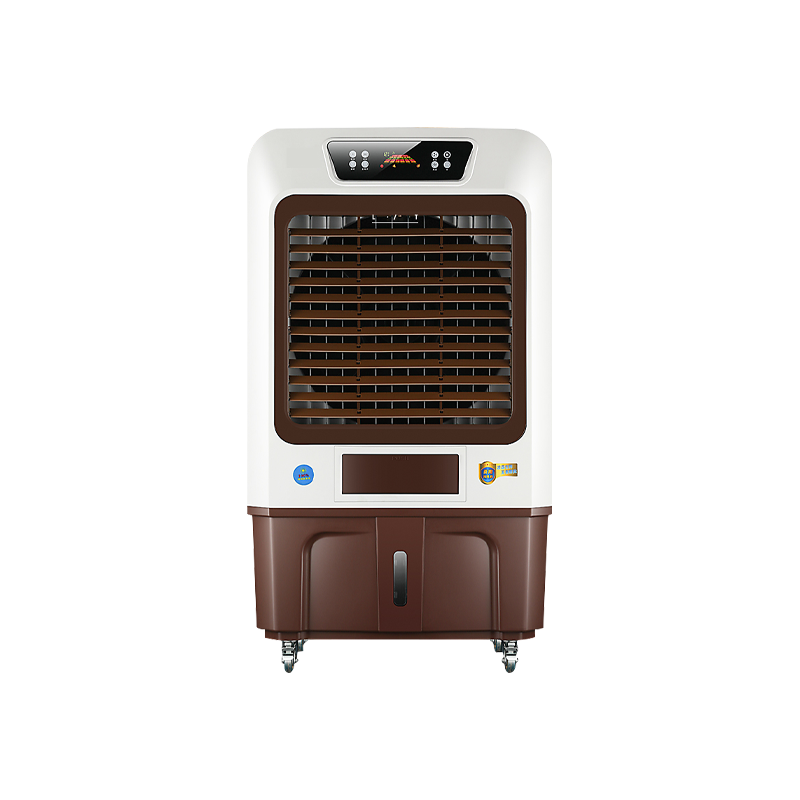 120L Large-Capacity Floor-Standing Evaporative Air Cooler for Home and IndustryWith a 120-liter tank and floor-standing design, this unit demonstrates how large wet-surface areas and robust airflow support effective heat transfer across conduction, convection, and radiation, ideal for big spaces.View Product →
Conduction, convection, and radiation are not competing theories. They are three routes that heat takes whenever a temperature difference exists, and in any real environment all three operate simultaneously. The practical questions are always the same: which mechanism dominates, how much heat does it carry, and how can design push that flow in the right direction?
For evaporative cooling products, the answer usually begins with convection — moving the maximum volume of air across the maximum wetted surface. Conduction then determines how well internal waste heat is removed, and radiation decides how much outside heat the unit absorbs. Understanding those three roles gives you a far better basis for comparing specifications, reading performance claims, and choosing a cooler that will genuinely do the job.


No.1015 Guanfu Road, Fuhai Town, Cixi City,Zhejiang,China

+86 134-8601-6220



Copyright ? Cixi Bisheng Electrical Appliance Co., Ltd. All Rights Reserved.
Wholesale Portable Air Cooler Manufacturer




 English
 中文简体
 Español