Content
As summer temperatures soar, how to enjoy coolness while saving on electricity bills has become a focus for many families. In recent years, Air circulators have rapidly gained popularity in the small appliance market due to their unique design and powerful functions.
To understand whether it can replace an air conditioner, we must first understand the core technology of an air circulator.
Airflow Design: Regular fans primarily cool people by evaporating sweat from the skin; while air circulators use long-distance, high-pressure turbine power technology, capable of blowing air over much farther distances (typically more than 10 meters).
Circulation Principle: It creates effective airflow circulation through the directional flow of indoor air. Simply put, its main task is not to blow air onto people, but to "stir" the indoor air, making the temperature and humidity of the entire room more even.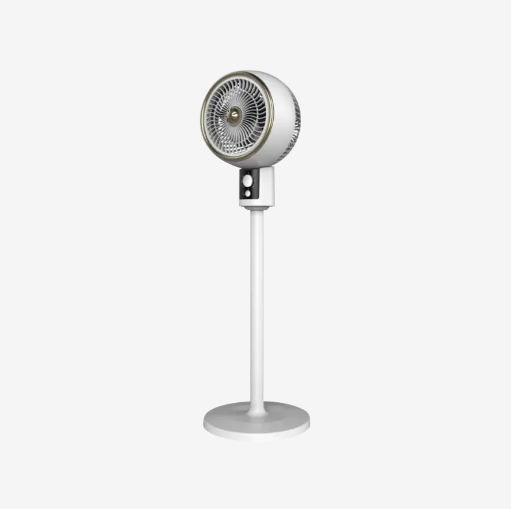
The conclusion is: In extremely hot weather, an air circulator cannot completely replace an air conditioner, but it is the best partner for an air conditioner.
Why can't it completely replace it?
No cooling function: Air circulators are essentially machines that accelerate airflow; unlike air conditioners, they don't have compressors or refrigerants. If the initial indoor temperature is 35°C, the air it blows out will still be at 35°C.
Limited cooling capacity: Without a cooling source, it can only alleviate stuffiness by increasing ventilation, unable to precisely control indoor temperature like an air conditioner.
Why is it considered the "soulmate" of air conditioning?
While it can't directly lower the temperature, air circulators perform remarkably well in the following scenarios:
Besides aiding in cooling, air circulators are highly useful year-round:
If you decide to buy one, we recommend focusing on the following three key indicators:
Air circulators are not competitors to air conditioners, but rather "conditioners" of the home air environment. While they cannot create cool air out of thin air like air conditioners, they optimize air circulation, making air conditioning more energy-efficient, breathing healthier, and the home environment more comfortable.


No.1015 Guanfu Road, Fuhai Town, Cixi City,Zhejiang,China

+86 134-8601-6220



Copyright ? Cixi Bisheng Electrical Appliance Co., Ltd. All Rights Reserved.
Wholesale Portable Air Cooler Manufacturer




 English
 中文简体
中文简体 Español