Content
In the sweltering summer or freezing winter, we often encounter this problem: the air conditioner is set to 16 degrees Celsius, but the other side of the room is still unbearably hot; or the heating is on full blast, but our feet remain icy cold.
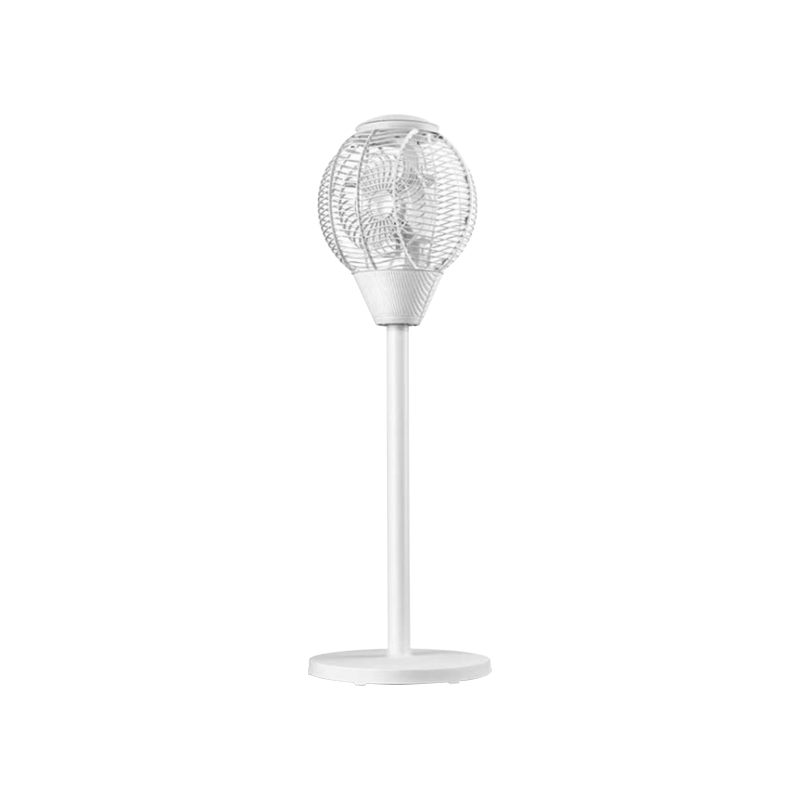
The design of an air circulator fan is not to blow air directly onto people like a traditional fan, but to accelerate indoor air circulation.
Its internal structure uses a design similar to an aircraft turbine propulsion system. A powerful motor drives unique deep-space blades, converging air into a spiral-shaped "columnar air jet." This air jet has extremely high directionality and jet force, enabling the air to travel a greater distance, thus agitating the indoor air and creating airflow circulation.
The main function of an ordinary electric fan is direct cooling. It removes heat by accelerating the evaporation of sweat from the human body's surface, therefore it must be directed at a person to feel cool. The core function of an air circulator fan, however, is to balance room temperature. Its task is to agitate the air throughout the room, bringing still air to life and thus eliminating temperature differences.
Ordinary fans blow diffused air, which quickly disperses after leaving the blades, typically covering a distance of only 3 to 5 meters. In contrast, air circulators use a turbine to blow a spiral, energy-concentrating airflow. This airflow is highly directional, like a long "wind column," and can typically reach 10 meters or more, touching every corner of the room.
Most ordinary electric fans only support horizontal oscillation, resulting in a relatively simple airflow plane. Air circulators generally have 3D omnidirectional oscillation, automatically rotating both vertically and horizontally. This three-dimensional circulation trajectory more effectively breaks up air stratification, achieving deep convection throughout the room.
Due to its limited function, ordinary fans are usually only used in summer and are stored away when the weather cools down. Air circulators are essential year-round: in summer, they work with air conditioners to deliver cool air; in winter, they work with heaters to allow hot air to descend; and in spring and autumn, they can assist with indoor-outdoor ventilation, making them highly versatile.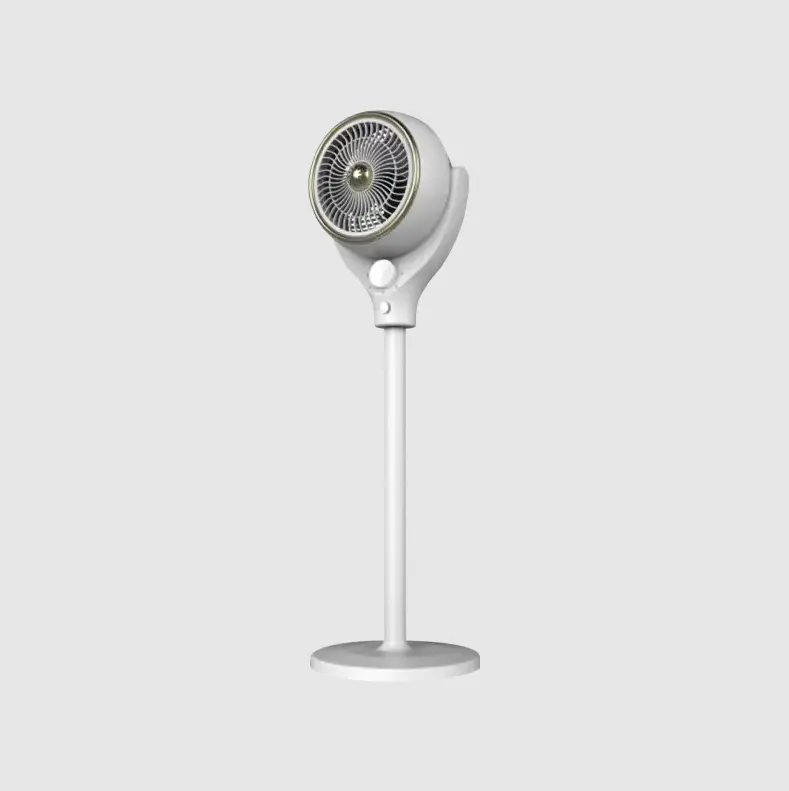
This is the core selling point of air circulators. In air-conditioned rooms, cool air sinks and warm air rises. Air circulator fans break this airflow barrier, allowing the indoor temperature to quickly reach a uniform level, thus saving energy.
During the rainy season or in newly renovated rooms, air circulators can be directed out the window, using negative pressure to accelerate indoor-outdoor air exchange and effectively remove formaldehyde or moisture.
Because they don't blow directly at people but cool the room by circulating air throughout, they are more suitable for the elderly, children, or those with weaker constitutions who are prone to "air conditioning sickness."
When choosing an air circulator, it's recommended to pay attention to the following technical parameters:
Motor Type: Prioritize DC inverter motors. Compared to AC motors, they are quieter (better noise reduction), more energy-efficient, and offer more precise wind speed adjustments.
Air Delivery Distance: High-quality circulators typically have an air delivery distance of over 10 meters; the greater the distance, the stronger its air-gathering ability.
Oscillation Dimension: Does it support fully automatic 3D oscillation in all directions? Only omnidirectional rotation can truly achieve seamless air convection.
Noise Level: The noise level in sleep mode should ideally be below 30 decibels to avoid disturbing your rest at night.
An air circulator is more than just a fan; it's like an "air conditioning assistant." Whether used in conjunction with air conditioning to balance room temperature or to assist with ventilation in spring and autumn, it can significantly improve the comfort of your home.
If you're looking for a high-quality breathing environment or want to optimize your home's temperature control efficiency, an air circulator is a smart appliance worth investing in.


No.1015 Guanfu Road, Fuhai Town, Cixi City,Zhejiang,China

+86 134-8601-6220



Copyright ? Cixi Bisheng Electrical Appliance Co., Ltd. All Rights Reserved.
Wholesale Portable Air Cooler Manufacturer




 English
 中文简体
中文简体 Español