Content
A 20-litre portable air cooler standing two metres from your bed should sit at around 40 to 45 dB(A) on its lowest speed, roughly the noise level of a quiet library. If yours hums, rattles or roars, the fan itself is rarely the whole story. Three things cause almost all fan noise: dust moving through the unit, turbulent airflow, and vibration passing into whatever the machine is standing on. Cleaning, clearance and one speed step down usually remove 8 to 10 dB, which is a halving of perceived loudness, before you spend anything on new equipment.
What follows is the same order of checks our engineers use when a customer sends back a "noisy" unit: identify the noise family first, then work from free fixes to specification choices, and only then consider replacing the fan.
Fan noise is not one problem, it is five. Each family has a different solution, and the wrong fix wastes money, for example replacing a bearing when the real issue is a blocked intake.
| What you hear | Most likely cause | Lowest-cost fix |
|---|---|---|
| Steady whoosh that rises and falls with speed | Aerodynamic noise from high fan speed, restricted intake or outlet grille | Clear 10 cm at the intake and 1 m at the outlet, open the louvers, drop one speed step |
| Rhythmic tick or scrape, once per revolution | Blade touching the grille, or hair and thread wound around the shaft | Switch off, remove the obstruction, then check the blade for side-to-side play |
| High-pitched whine that never changes pitch | Worn sleeve bearing or a low-cost AC motor | A drop of light machine oil buys time; a brushless DC fan solves it properly |
| Low buzzing that gets louder on hard floors | Vibration transferred into the tile, laminate or desk surface | Rubber feet or a 10 mm foam mat under the base, tighten every screw |
| Constant hum at 50 or 60 Hz | Motor or transformer hum, common in AC-driven units | Choose a DC model, or run a higher speed step where the hum is masked by airflow |
| Fan speeding up and slowing down on its own | Thermal load: clogged wet curtain, dusty filter, hot ambient air | Clean the wet curtain and filter, shade the unit, improve cross-ventilation |
A useful rule of thumb: if the noise changes with speed, it is aerodynamic. If the pitch and rhythm stay the same at every speed, it is mechanical or electrical. If it is loudest through the floor and quieter the moment you lift the unit, it is vibration.
Most people stop at the first or second item on this list. Working through all eight takes about half an hour.
Fan noise is driven mainly by blade tip speed, not by how expensive the motor is. A 400 mm blade turning slowly can move the same air as a 200 mm blade turning fast, and the gap between those two designs is often 10 dB or more.
| Change | Why it works | Typical effect |
|---|---|---|
| Larger blade diameter for the same airflow | Tip speed falls, so turbulence noise falls with it | 5 to 10 dB quieter |
| Halving the fan speed | Aerodynamic noise falls steeply as tip speed drops | 10 to 15 dB quieter, but airflow roughly halves |
| Doubling the listening distance | Sound spreads over four times the area | About 6 dB quieter |
| Cleaning blades and wet curtain | Restores balance and reopens the airflow path | 1 to 4 dB quieter |
| Rubber feet or a foam mat | Interrupts the vibration path into the floor | 2 to 4 dB quieter |
The practical translation: above roughly 25 square metres, a larger fan at low speed beats a smaller fan at high speed, and a wide, slow-turning blower in an evaporative cooler beats a small high-speed axial fan. Brushless DC motors also remove the constant 50/60 Hz hum that AC motors produce, which is the sound people notice most at night once the airflow itself has faded into the background. You can see how capacity, speed steps and control type are combined across the cooling fan range.
A single decibel figure means very little without the conditions behind it. Two units both labelled "low noise" can differ by 8 dB at the same distance.
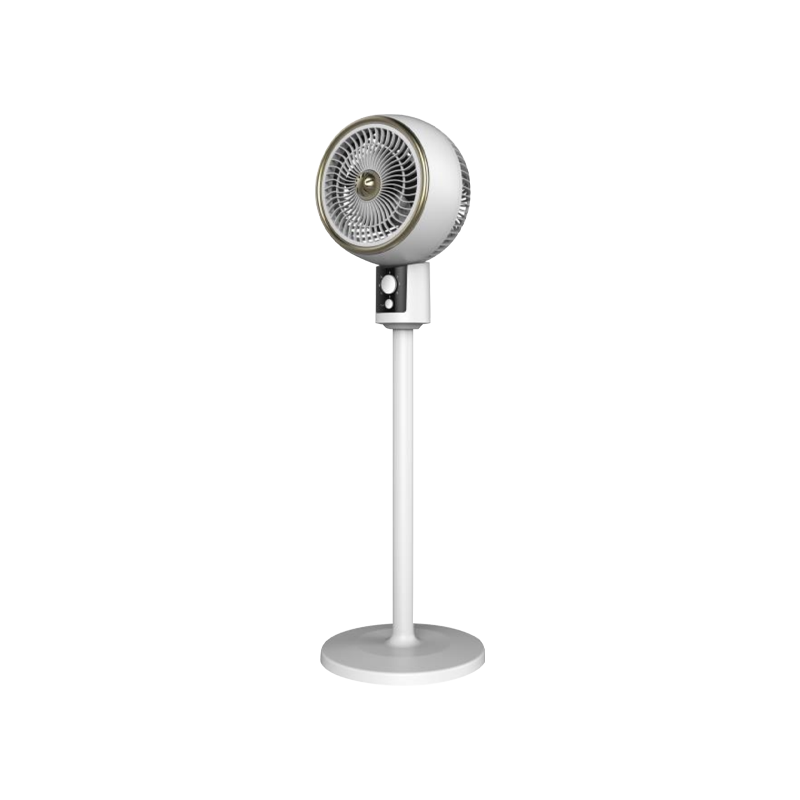
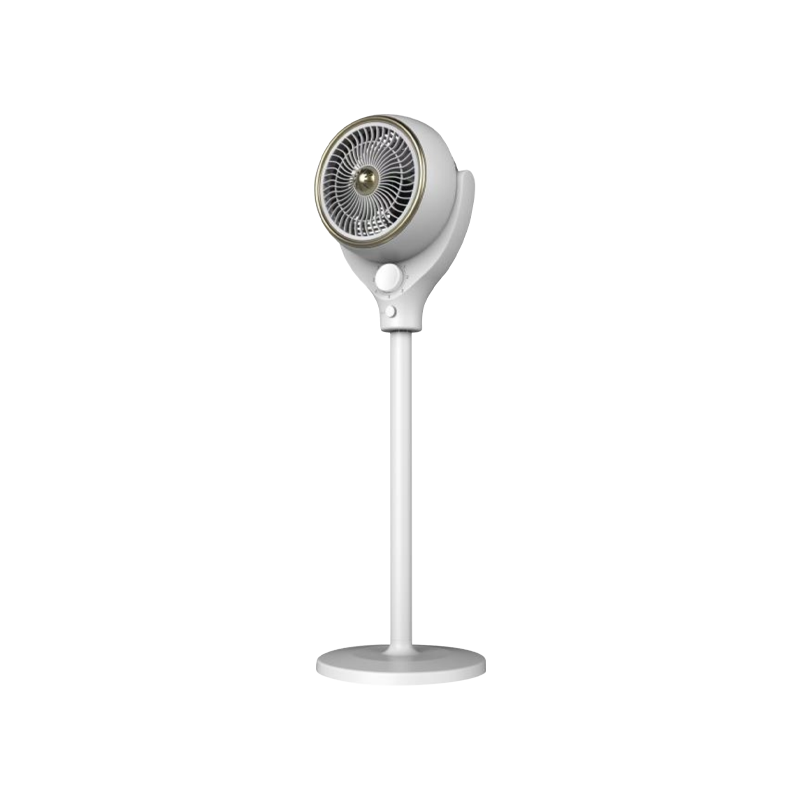
Two design details matter more than the marketing label. The first is whether the controls let you reduce speed without leaving your seat. A voice-controlled or remote-controlled fan genuinely gets turned down at midnight; a fan with only a mechanical dial usually does not.
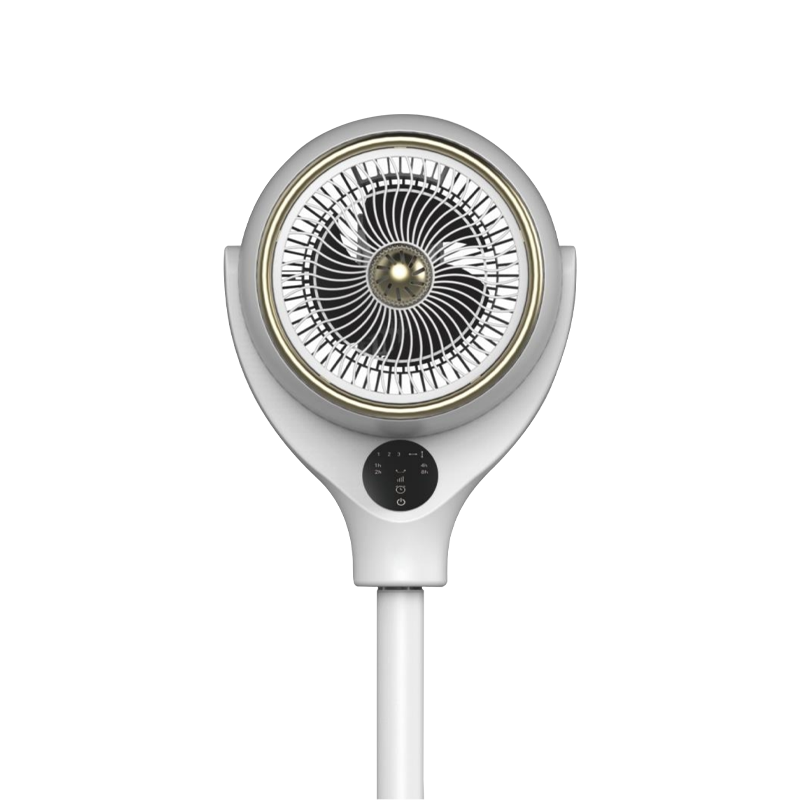 Intelligent Voice Control Silent Floor Fan Fan-03A floor-standing fan with remote and voice controls, 90° oscillation, and a stable base, suited to hands-free indoor cooling.View Product →
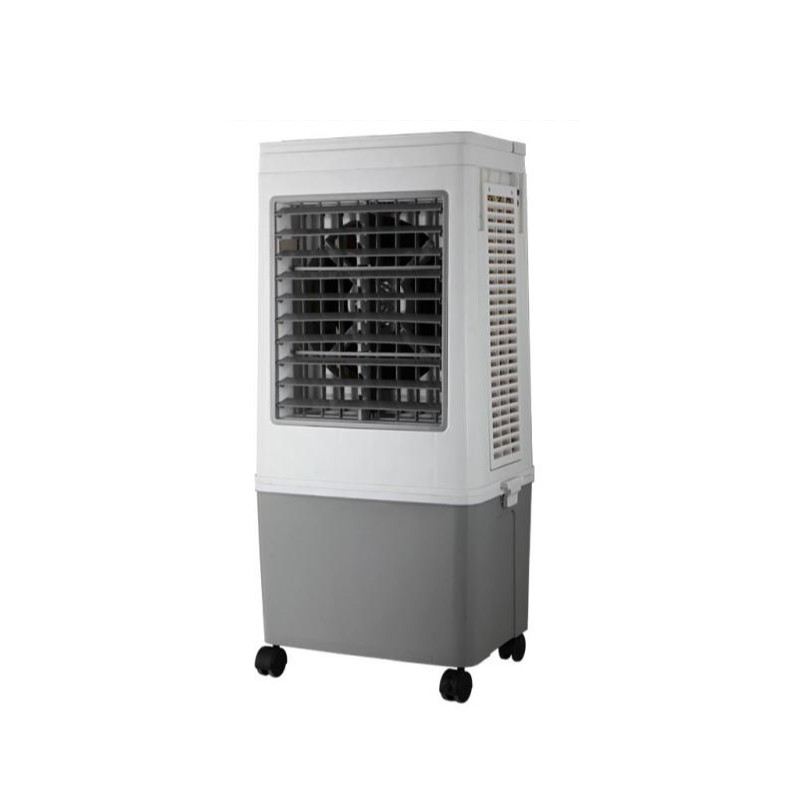
The second is whether the unit can step down on its own. A fan that falls from high to low automatically is quieter for the six hours when noise is most noticeable, and a 12-hour timer does the same job on a fixed schedule.
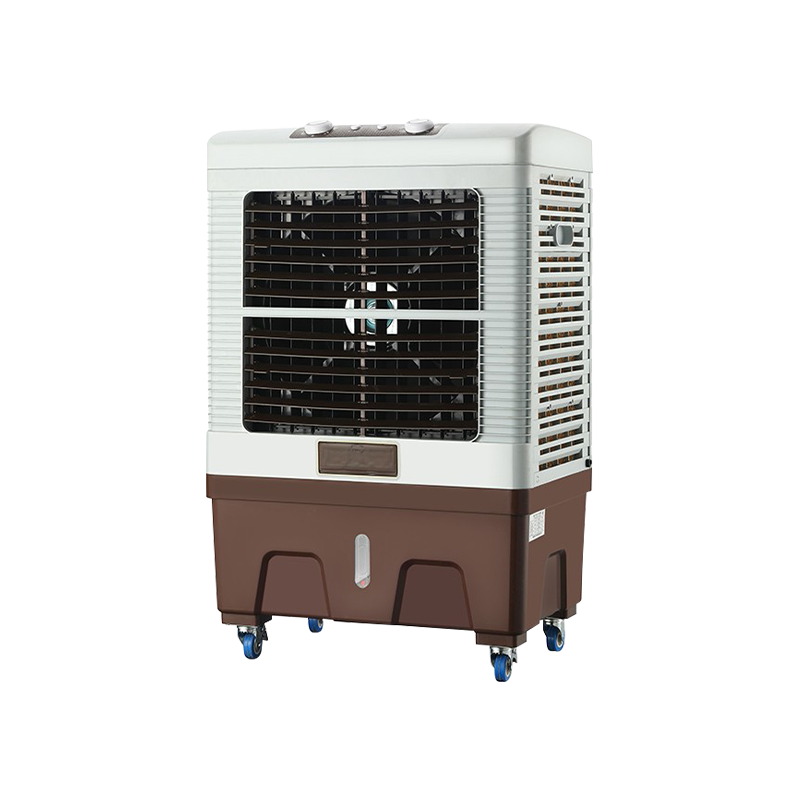 3-In-1 Evaporative Low-Noise Air Cooler With 12h TimerCombines evaporative cooling, humidification, and air purification with a 12-hour timer; low-noise motor and remote control suit quiet scheduled indoor cooling.View Product →
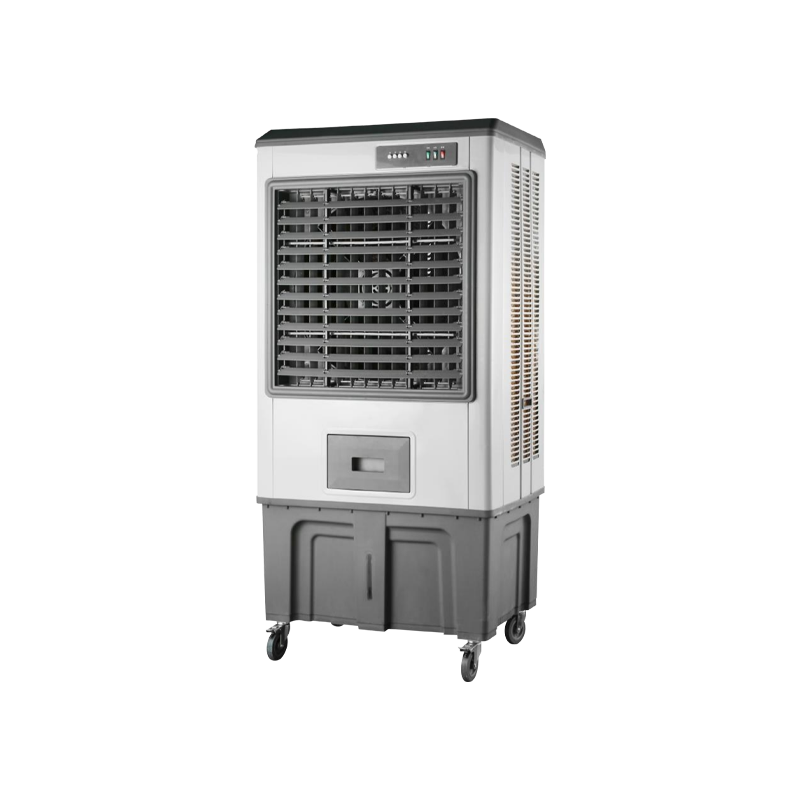
In a workshop, warehouse or open office the calculation changes, because the unit is bigger, further away and often ducted. A large evaporative air cooler has three separate noise sources and they need different attention:
Placement does more work than any single component upgrade. Moving a ducted cooler from beside a workstation to a position six metres away and delivering air through a short, straight duct typically removes 6 to 8 dB at the operator's ear at no cost in cooling capacity. Ducting also interacts with heat load: in a high heat density space the cooler has to move more air for longer, and that is where noise interference usually starts. The engineering answer to that trade-off is covered in this note on stable heat dissipation with reduced noise interference.
When comparing industrial models, ask for the noise figure at the working distance rather than at one metre, check that the pump is rubber-mounted, and confirm the wet curtain can be removed for cleaning without tools. A cooler that is easy to service is a cooler that stays quiet.
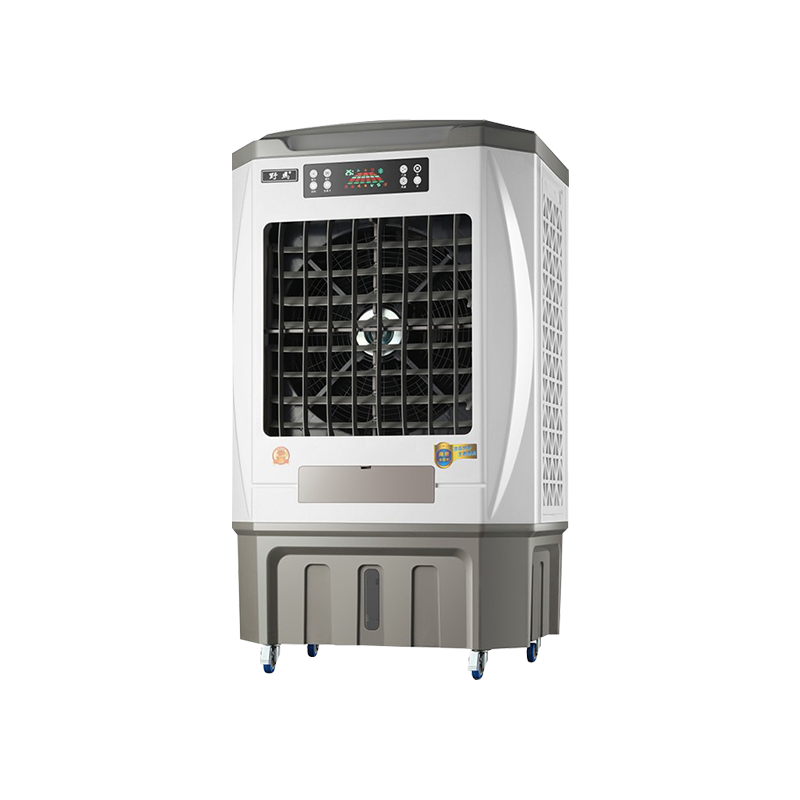 Low Energy Low Noise Industrial Air Cooler LBW-16000RCIndustrial air cooler with low-noise design, triple curtain filtration, ice box, and remote control; suited to large spaces needing dust filtration and high airflow.View Product →
Noise creeps back as a unit gets dirty, and it usually returns in steps rather than gradually. A short routine prevents most of it.
You do not need a laboratory. A phone sound-level app, a fixed distance of one metre from the front grille, the same speed setting and similar background conditions will show whether a cleaning actually helped. Expect 1 to 4 dB after cleaning, and 6 to 10 dB after fixing placement and vibration. If a measurement does not move after a fix, the remaining noise is mechanical, and the next step is the bearing or the motor rather than another round of cleaning.
Reducing fan noise is mostly a sequence, not a purchase. Identify whether the sound is aerodynamic, mechanical or structural; clean the air path; break the vibration path; drop one speed step; and only then start comparing specifications.
If you are selecting equipment for a home, a retail space or a workshop and noise is one of the deciding factors, tell us the room size, the distance to the nearest person and the target decibel level. Those three numbers narrow the options faster than any brochure.


No.1015 Guanfu Road, Fuhai Town, Cixi City,Zhejiang,China

+86 134-8601-6220



Copyright ? Cixi Bisheng Electrical Appliance Co., Ltd. All Rights Reserved.
Wholesale Portable Air Cooler Manufacturer




 English
 中文简体
中文简体 Español