Content
A workshop air cooler that starts rattling in its second summer, and a fan motor that seizes after 14 months of near-continuous running, usually fail for the same reason: a sleeve bearing that has lost its oil film. That is why ball bearing fans remain the default choice for long-duty cooling, vertical shafts and warm, dusty air.
Here is the short version before the detail. Choose a ball bearing fan when the motor has to run thousands of hours a year, sit in a vertical or tilted position, or work above roughly 40 °C. Stay with a sleeve or hydro bearing when the fan runs horizontally, at low speed, for a few hours a day, and unit price decides the order.
A ball bearing fan uses two small ball bearings, one at each end of the motor shaft, in place of the single oil-impregnated bronze bushing found in a sleeve bearing design. Each bearing has an inner ring that grips the shaft, an outer ring pressed into the motor bracket or hub, and a ring of hardened steel balls held in a cage. Grease keeps the balls separated and the raceways apart.
In a sleeve bearing the shaft rides on a thin oil film that is continuously replenished from the porous bushing. That works well for radial load, but the design has almost no thrust capacity. In a ball bearing the load passes through point contacts between the balls and the raceways, so the motor carries both radial and axial load, and the rotor keeps its position when it is pushed or pulled sideways.
Most fan motors in this class use single-row, deep-groove bearings between 8 mm and 15 mm bore, shielded on both sides, with C0 or C3 internal clearance and a lithium or synthetic grease rated for the temperature the appliance will actually see. Those four details, size, shield, clearance and grease, matter more than the phrase "double ball bearing" printed on a box.
Datasheet life figures are calculations, not guarantees, and suppliers quote them under different assumptions. The ranges below reflect what is commonly published for fan motors. Treat them as planning numbers and ask for the load, speed and temperature basis behind any figure you are given.
| Bearing type | Orientation tolerance | Noise when new | Typical life at 25 °C | Behaviour above 45 °C | Relative cost |
|---|---|---|---|---|---|
| Sleeve (oil-impregnated bushing) | Poor with vertical or tilted shafts | Quietest at low speed | 20,000 to 30,000 h | Life falls sharply as oil migrates | 1.0x |
| Ball (single or double shielded) | Good at any mounting angle | Slightly higher, stable tone | 50,000 to 70,000 h | Tolerates heat with the right grease | 1.5x to 2.5x |
| Hydro or rifle (grooved) | Good horizontally, weaker vertical | Very quiet | 40,000 to 60,000 h | Better than plain sleeve | 1.3x to 2.0x |
Two columns usually settle the argument. Orientation tolerance rules out plain sleeve bearings for tower coolers and standing fans, and warm-air behaviour explains most warranty claims in hot climates.
An L10 rating of 50,000 hours means that under rated load, 10% of bearings are expected to have failed by that point. It does not mean every fan reaches the figure. In practice, fan bearings rarely fail from metal fatigue. They fail because the grease oxidises, bleeds or becomes contaminated.
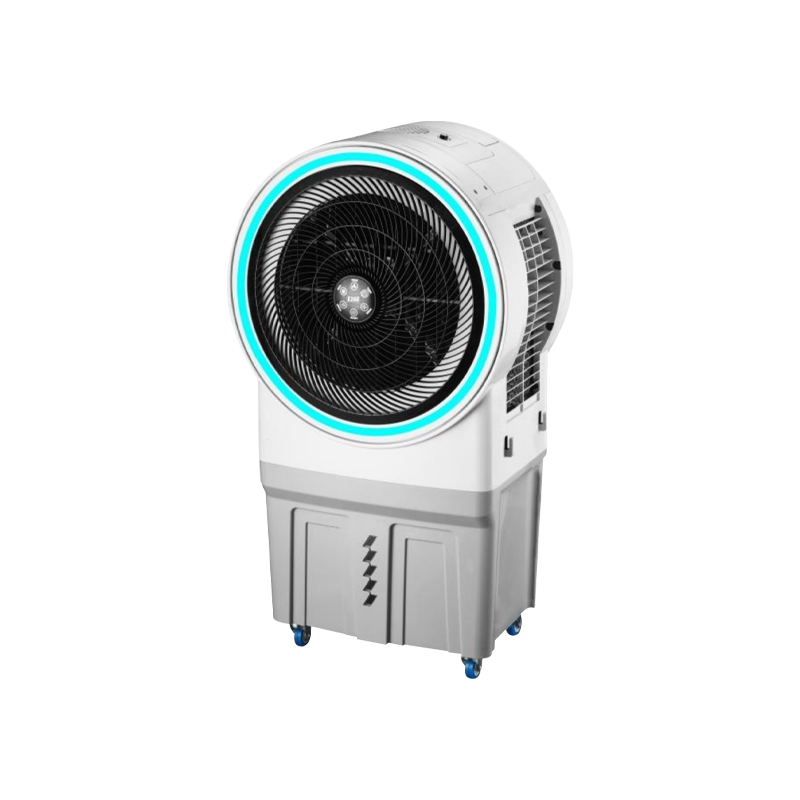
Heat drives that process. Grease life roughly halves for every 10 to 15 °C increase in operating temperature, so the same fan pulling 25 °C room air and 45 °C air through a cooler can differ by three or four times in service life. Dust adds friction and contamination, and moisture attacks the raceways when the shield is inadequate. For equipment that runs long hours in warm intake air, the bearing and grease specification is an engineering decision, which is why coolers such as the LBW16000RC low noise industrial air cooler are specified around that duty cycle rather than around a peak-speed figure.
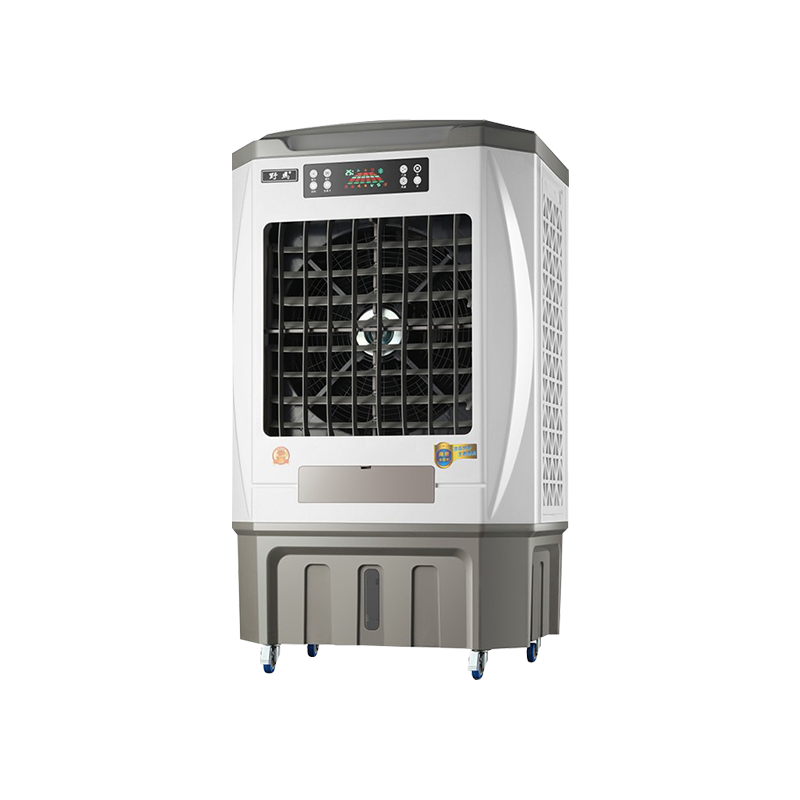 LBW-16000RC Low Noise Industrial Air CoolerA low-noise industrial air cooler for warm, long-hour environments, cited for duty-cycle reliability and low energy consumption rather than peak-speed performance.View Product →
A brand-new sleeve bearing fan is frequently the quieter unit at low speed. The oil film absorbs vibration and produces almost no tonal noise, while ball bearings run with a small internal clearance that can add a soft whirr or a light rattle.
That comparison changes with age. As lubricant migrates or dries, sleeve bearing noise climbs and the shaft begins to wander; ball bearing noise stays close to its original level for most of the service life. Above roughly 1,200 to 1,500 rpm, airflow noise masks both types, so the bearing tone matters most in slow, quiet equipment such as office circulation fans, bedroom appliances and overnight retail use.
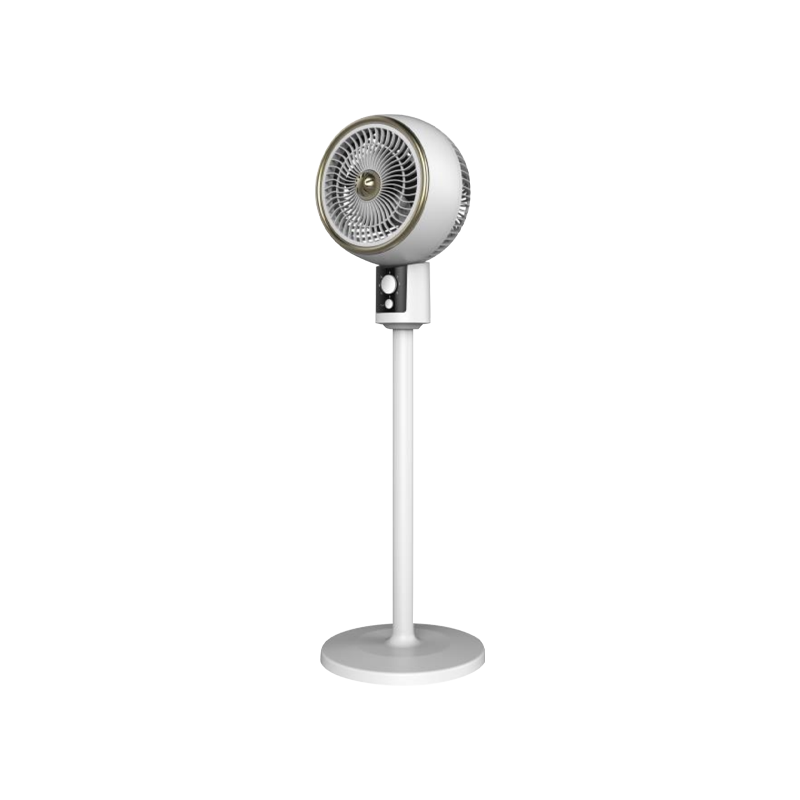
Where low sound pressure is the requirement, pair a quiet motor with soft mounting. A floor fan like the FAN03 intelligent voice control silent floor fan is built for that segment, using a DC motor and rubber-isolated mounting points so the bearing contribution stays below the sound of the airflow itself.
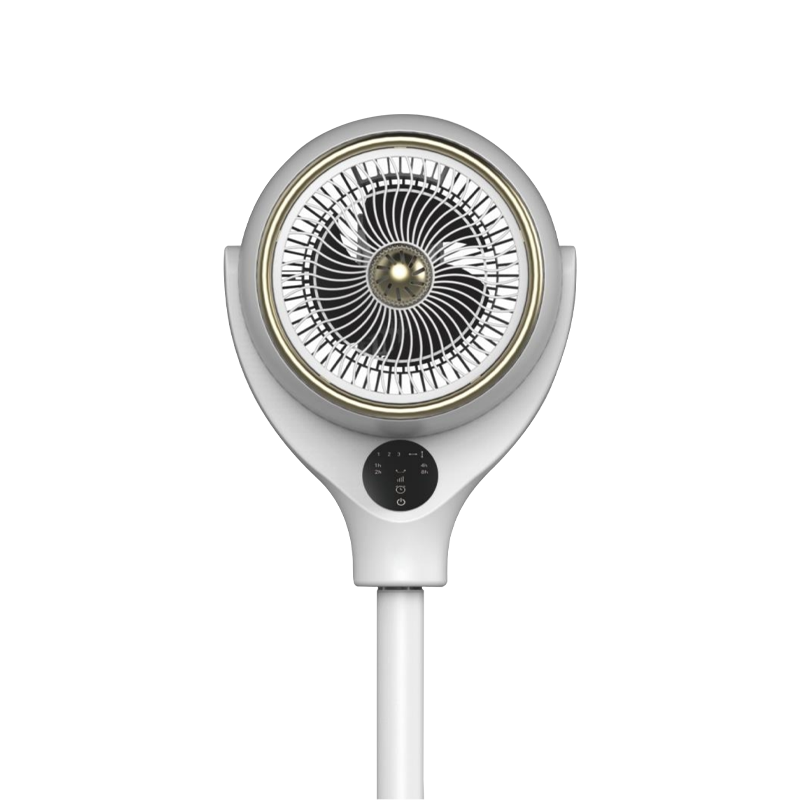 Fan-03 Intelligent Voice Control Silent Floor FanA silent floor fan with intelligent voice control and a DC motor, using rubber-isolated mounting to keep mechanical noise below airflow sound in quiet rooms.View Product →
Tower coolers, standing fans and any appliance with a vertical or steeply angled shaft put a sleeve bearing in a difficult position, because gravity pulls oil away from the loaded zone. Thrust washers, felt rings and oil-return grooves reduce the problem but do not remove it, and failures in vertical installations are consistently more common than in horizontal ones.
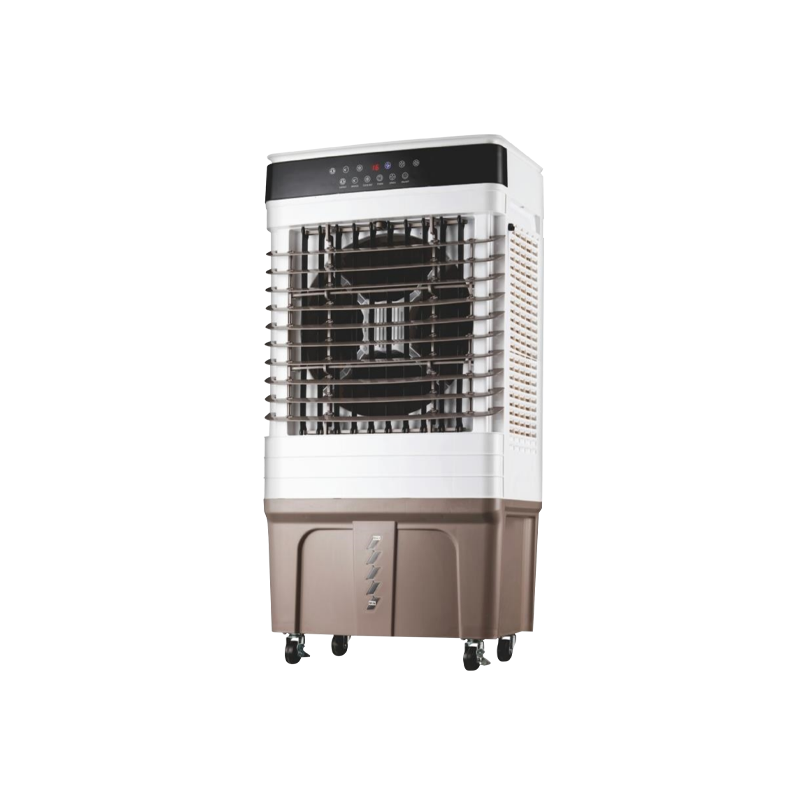
A ball bearing fan does not rely on oil circulation to support load, so it works at any mounting angle: vertical, horizontal, or tilted while the unit is wheeled between rooms and stored on its side. For portable evaporative coolers and mobile industrial units, that is a reliability difference rather than a marketing claim.
Continuous duty is the clearest case. A unit running 12 to 16 hours a day, 300 days a year, accumulates 3,600 to 4,800 hours annually. A 20,000-hour sleeve bearing will be replaced two or three times before a 60,000-hour ball bearing fan needs attention. Once a service call and the lost cooling time during a production shift are counted, the price difference disappears with the first replacement.
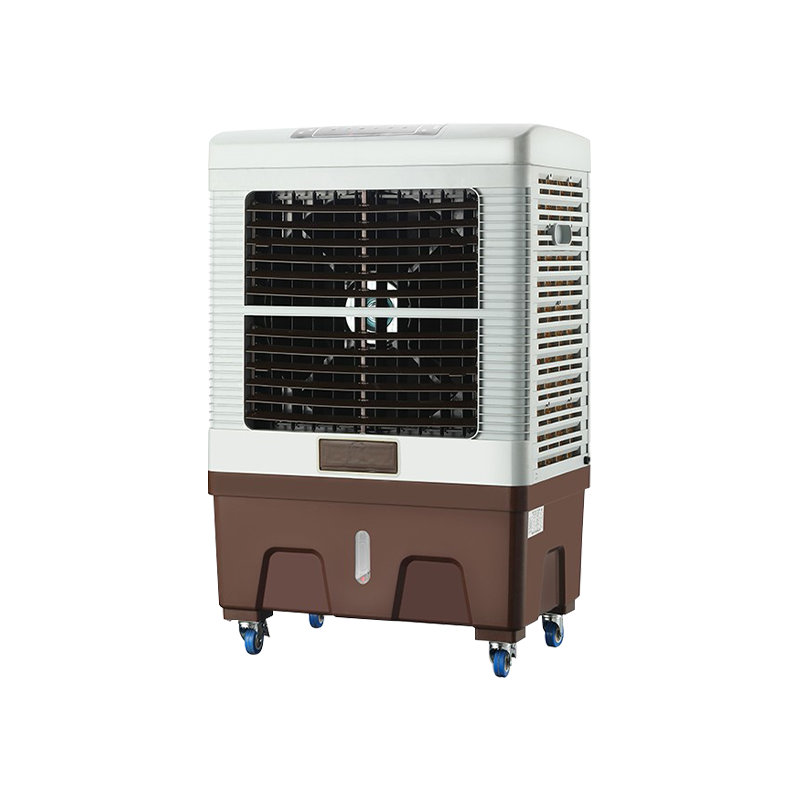
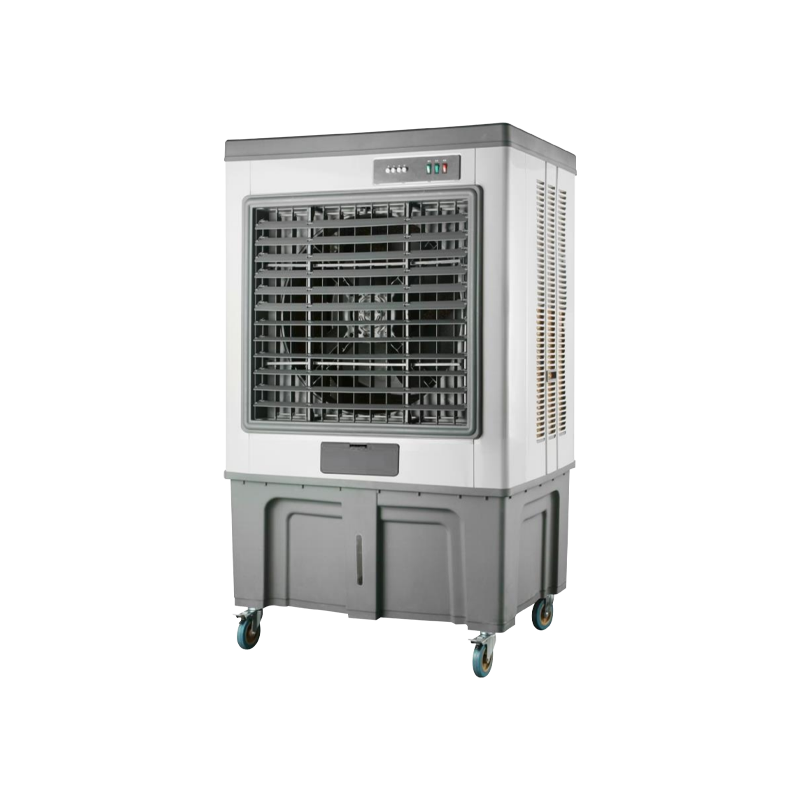
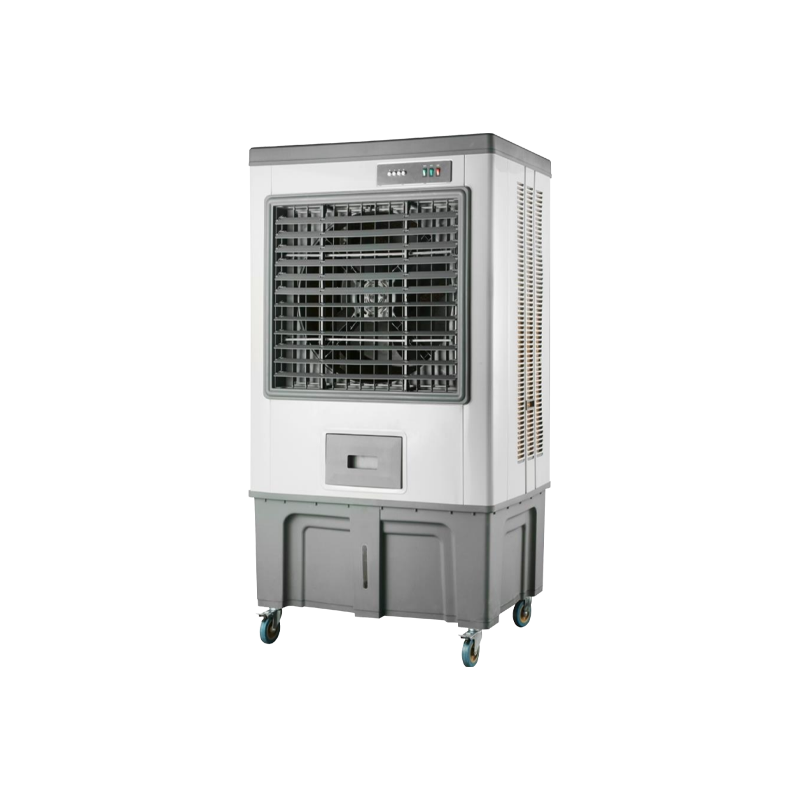
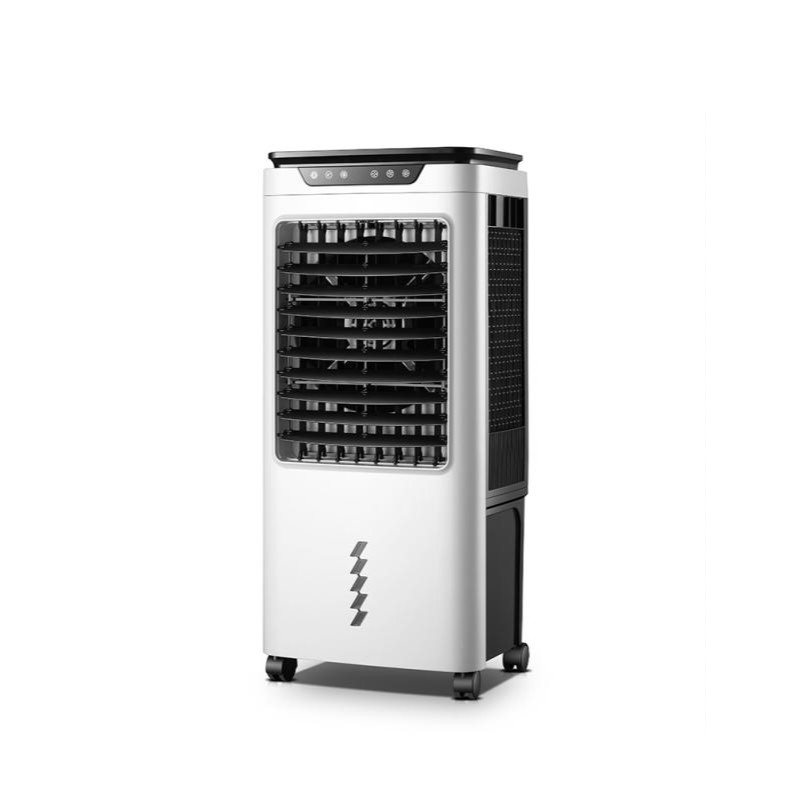
Large industrial evaporative air coolers used in workshops, warehouses and light assembly halls fit that profile exactly. The LBW2047 large industrial evaporative air cooler, for example, is specified with ball bearing motors because it is expected to run through full shifts rather than for an hour in the evening.
If you want the wider picture of where fan reliability affects output, this overview of the fields where cooling fans play a vital role in heat dissipation is a useful reference.
Buyers who skip items three to five usually discover the difference during the first summer of field returns.
Bearing grade is only as good as the production line behind it. Cixi Bisheng Electrical Appliance operates a 10,000 m² plant in Cixi with more than 100 staff, an in-house test laboratory and annual output above 240,000 units, working as both a brand owner and an OEM partner that builds to customer drawings or samples. The plant sits 73 km from Ningbo port, which keeps export logistics predictable for European, American and Southeast Asian buyers.
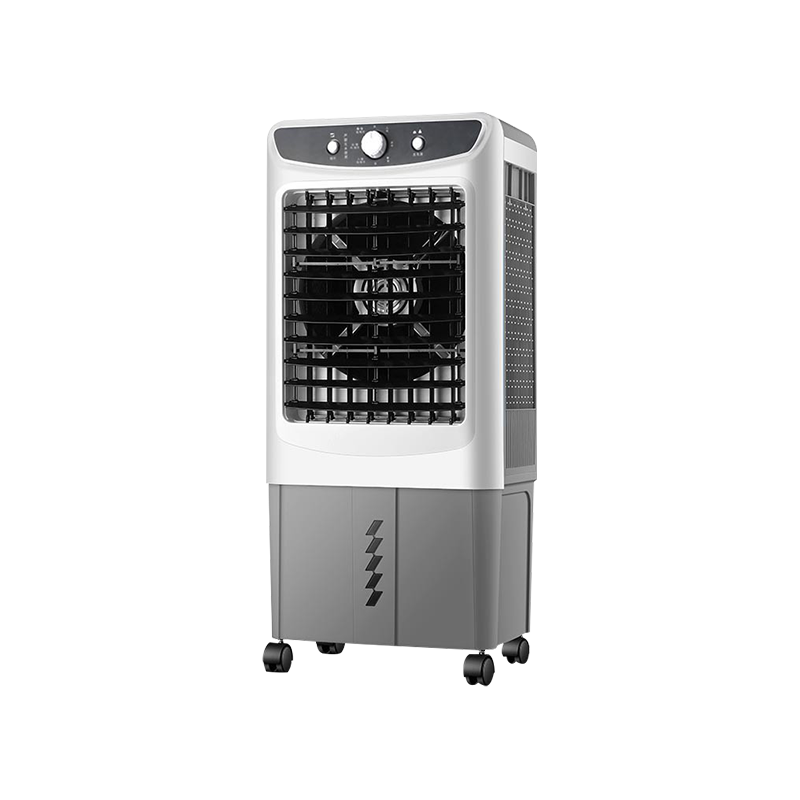
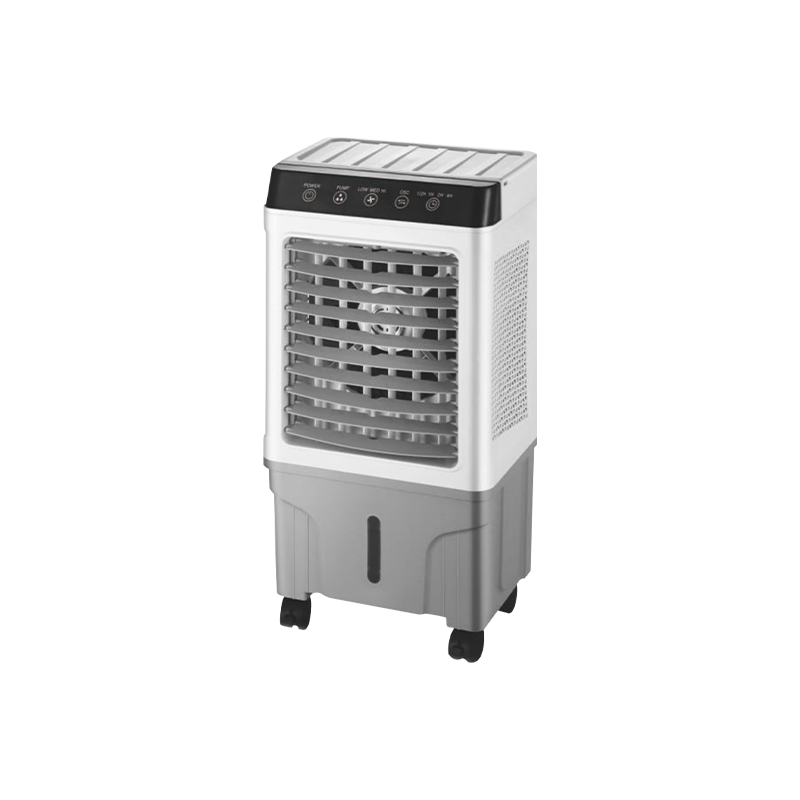
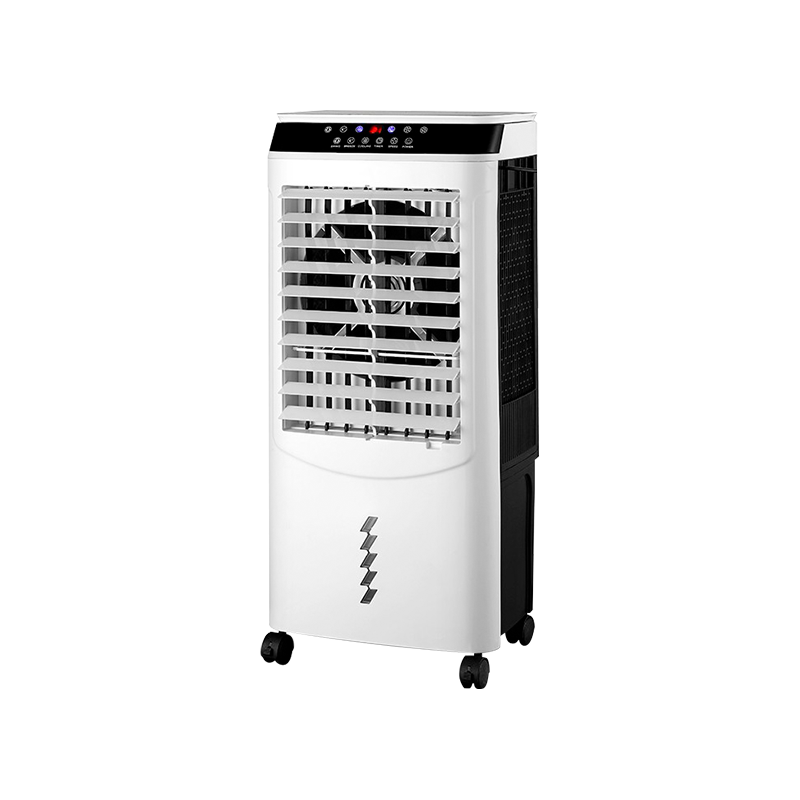
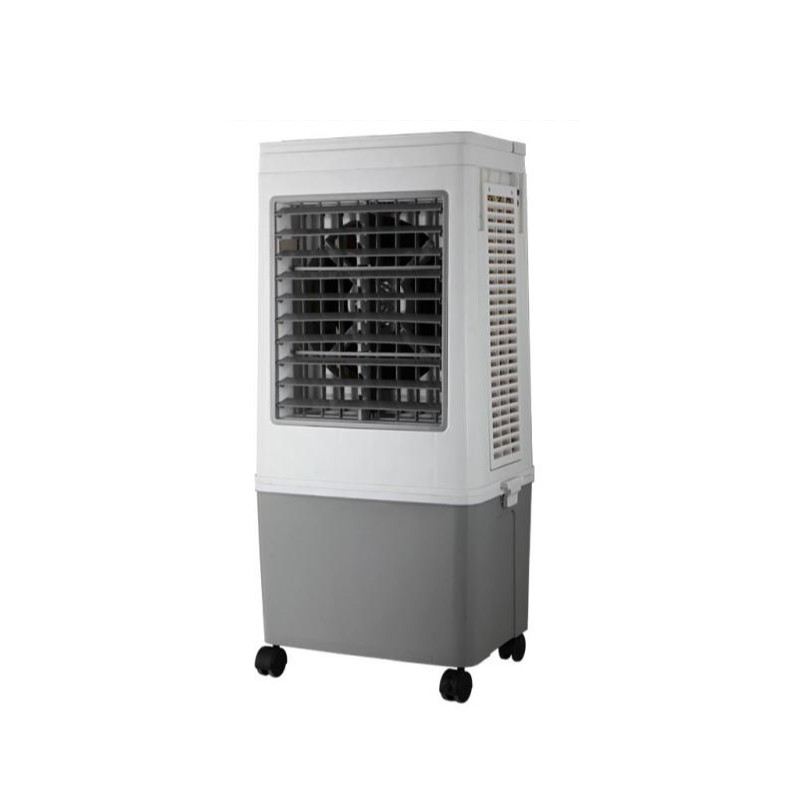
The company's cooling fan range covers 15 L to 260 L evaporative air coolers plus voice-controlled DC circulation fans, so most duty profiles, from portable household use to heavy industrial shifts, can be matched with a motor and bearing specification that fits the run hours instead of the price list.
If the fan runs horizontally, under eight hours a day, in a temperate room, and the order is decided by unit price, a well-made sleeve or hydro bearing will serve you. If any of the following applies, vertical or tilted mounting, more than 4,000 running hours a year, ambient air above 40 °C, dust or high humidity, or a warranty longer than two years, specify ball bearings, test the sample in the real orientation and temperature, and confirm that service spares use the same bearing lot.


No.1015 Guanfu Road, Fuhai Town, Cixi City,Zhejiang,China

+86 134-8601-6220



Copyright ? Cixi Bisheng Electrical Appliance Co., Ltd. All Rights Reserved.
Wholesale Portable Air Cooler Manufacturer




 English
 中文简体
中文简体 Español