Content
A west-facing patio can read close to 45 °C underfoot at four in the afternoon while the weather app still says 31 °C. That gap — between air temperature and the radiant heat coming off paving, walls and furniture — is what makes an outdoor area exhausting, and it is the reason a single pedestal fan often feels like it does nothing.
The order that actually works: cut the sun load first, then raise air speed across the seating zone, and only then add an evaporative cooler — and only where summer air is dry enough for evaporation to lower temperature rather than just move moisture around. What follows is how each step is sized, where the physical limits sit, and which details decide whether the space feels ten degrees better or barely different.
Comfort outdoors is driven by three separate heat sources, and they need different fixes. Direct sun adds roughly 700–1000 W/m² at midday in summer. Stored heat in masonry keeps radiating upward for two to four hours after sunset, which is why a paved courtyard stays warm at nine at night. Reflected and re-radiated heat from pale walls, glazing and neighbouring buildings adds a third load that shade alone cannot remove.
Surface choice is the cheapest lever most homeowners never consider. Swap or cover a dark surface and the perceived temperature of the whole area changes before any equipment is switched on.
| Surface | Behaviour in afternoon sun | Practical countermeasure |
|---|---|---|
| Dark concrete pavers or asphalt | Absorbs strongly and keeps releasing heat long after sunset | Add a light-coloured rug or a sail shade over the hottest zone |
| Pale porcelain or light stone | Reflects more and feels cooler underfoot, though glare increases | Keep it; add side shade to cut reflected light |
| Timber decking | Warms at the surface, then sheds heat faster than masonry | Effective once overhead shade is in place |
| Artificial turf | Traps heat close to the surface and can be unpleasant barefoot | Avoid in peak afternoon sun or shade it directly |
| Planting beds and lawn | Cools itself through transpiration and lowers nearby air temperature slightly | Place along the sun-facing edge, not in the middle |
Overhead shade is worth more than any cooling appliance of the same price. An adjustable-louver pergola outperforms a fixed roof because the slats can be angled to the sun's seasonal path; a 70–90 % shade cloth or retractable awning is the next best value, and it can be pulled back in spring and autumn. Deciduous planting on the west side gives shade exactly when it is needed and lets winter light through.
Air movement is the second layer, and it needs an honest explanation. A fan does not cool air; it accelerates evaporation from skin and increases convective heat loss. That works well up to roughly 32–35 °C, especially in dry heat. Above that, and in humid conditions where sweat cannot evaporate efficiently, a fan motor's own heat output can outweigh the benefit. Fans also stop helping the moment the air they move is already the temperature of the surfaces around them — which is why a fan under an unshaded pergola so often disappoints.
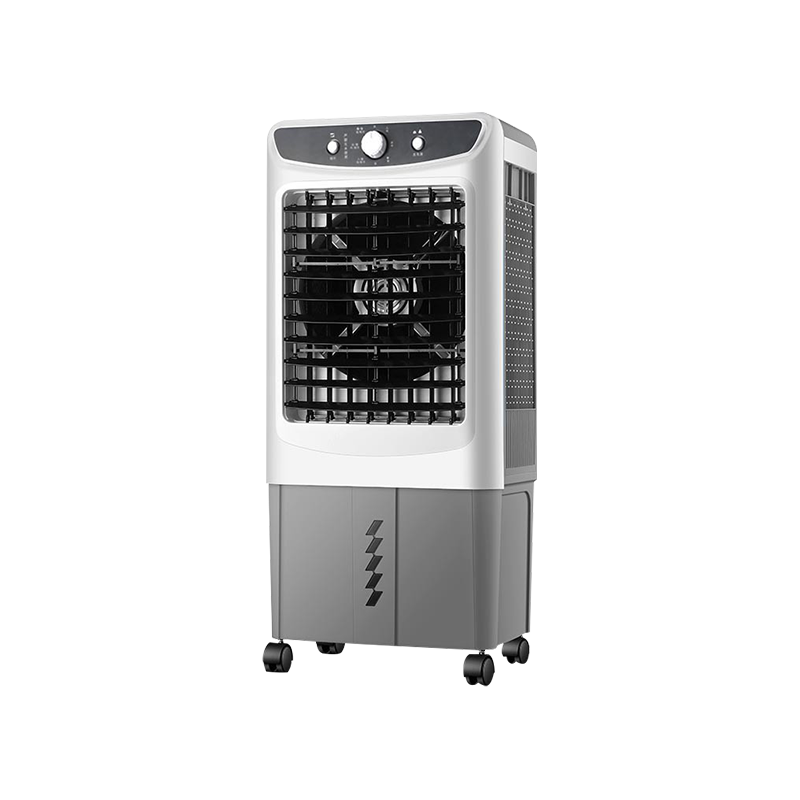
If you are weighing airflow against active cooling, it helps to know how much cooling a portable air cooler can realistically deliver in peak summer conditions before you commit a budget to either option.
An evaporative cooler pulls air through a wet pad; the water absorbs sensible heat as it evaporates, so the delivered air is cooler than the outdoor air. The limit is physics, not build quality: the temperature drop can never exceed the difference between dry-bulb and wet-bulb temperature, and real pads achieve about 70–85 % of that difference. In coastal humidity the wet-bulb figure sits close to the air temperature, so the achievable drop collapses.
| Outdoor relative humidity | Realistic supply-air drop | What it feels like |
|---|---|---|
| Below 30 % | 9–13 °C | Genuine cooling; one unit can serve a large terrace |
| 30–50 % | 6–9 °C | Clearly effective, especially combined with a fan |
| 50–65 % | 3–5 °C | A pleasant breeze rather than air conditioning |
| Above 65–70 % | 1–2 °C | Little temperature benefit; rely on air movement instead |
Two installation rules matter more than the specification sheet. First, never seal the space: an evaporative unit needs an open exhaust path, otherwise humidity climbs indoors and the cooling effect fades within twenty minutes. Second, place the unit so its output crosses the seating area rather than blowing into a wall behind people.
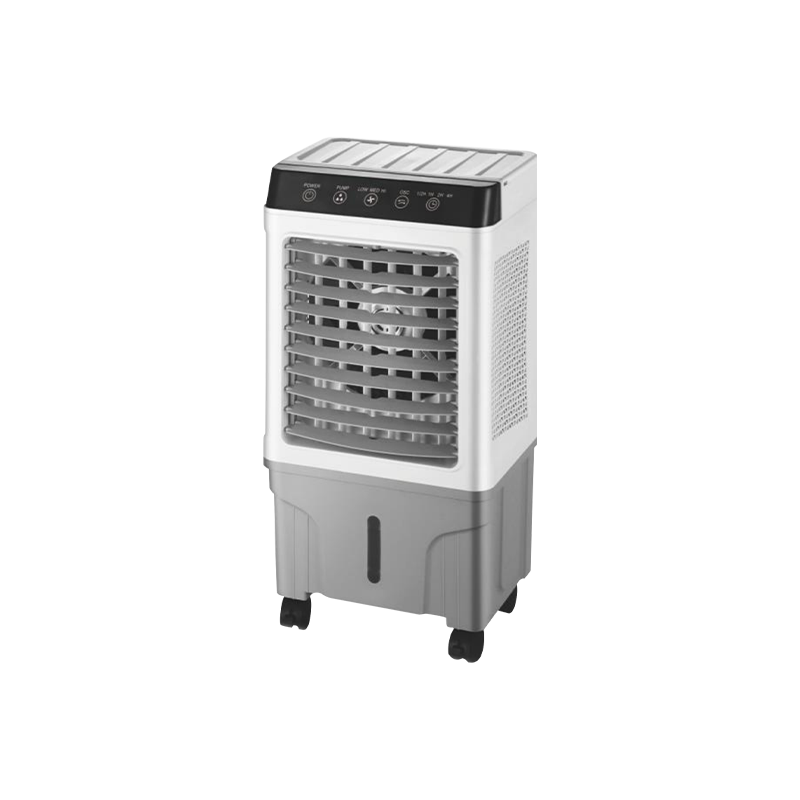
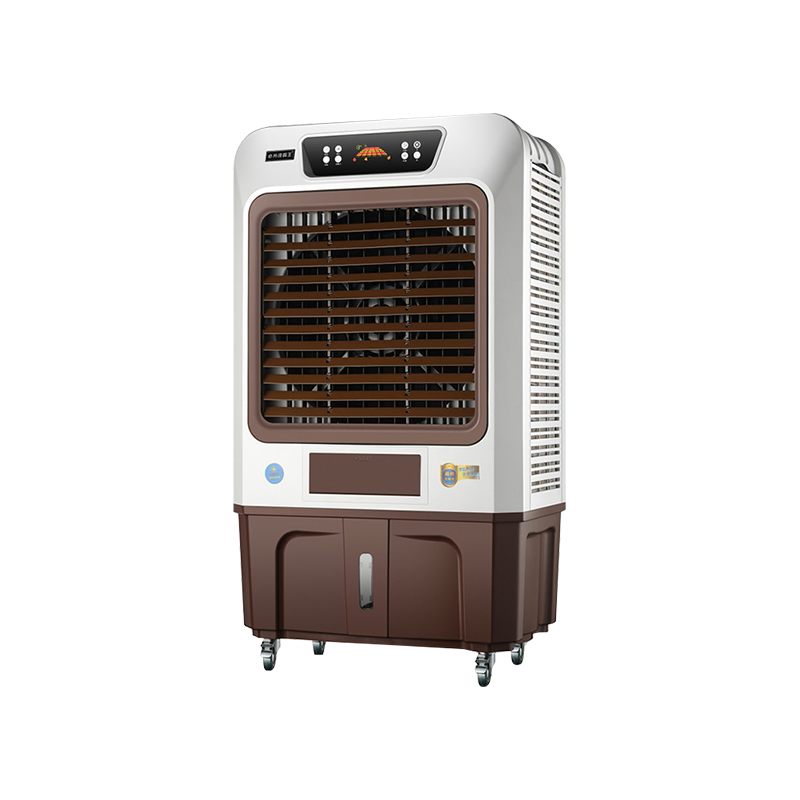
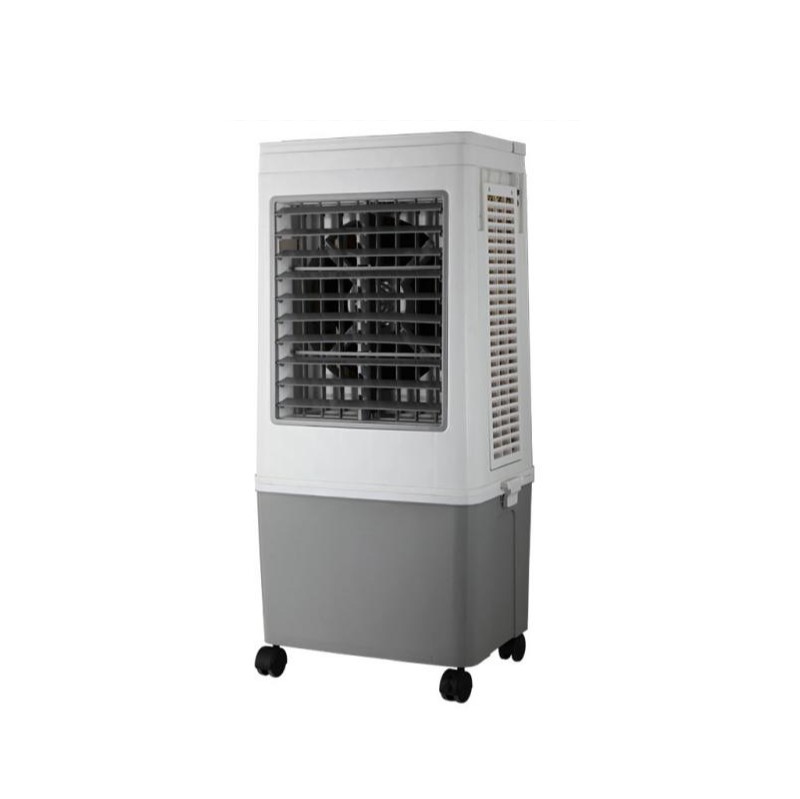
For patios and mixed indoor-outdoor use, a low-power unit with a modest tank is usually enough. A model such as the
 Low-Power Evaporative Air Cooler for Home and Outdoor Use80W evaporative cooler with 36L tank and remote/button control, suited to 20–40 m² spaces; at 9.5 kg it moves easily between patio and workshop.View Product →
is designed for exactly that role — light enough to move between the terrace and a workshop, and low draw on a circuit shared with lighting.
Evaporative coolers are sized by airflow, not by the area printed on the box. Use volume, then apply an air-change rate: 15–20 changes per hour for an open patio, 25 for a covered terrace with heat-generating surfaces, and up to 30 for a commercial space with people and cooking equipment.
Worked example: a 25 m² covered terrace with a 2.6 m ceiling is 65 m³. At 20 air changes per hour that is 1,300 m³/h of airflow. Tank size then sets runtime: 15–20 L gives roughly 4–6 hours, 50–70 L gives 8–12 hours, and 120 L and above is for all-day commercial operation.
| Patio footprint | Airflow target | Tank and runtime | Typical placement |
|---|---|---|---|
| Balcony up to 10 m² | 600–900 m³/h | 15–20 L, 4–6 h | Portable, moved as the sun moves |
| 10–25 m² | 1,000–1,500 m³/h | 20–36 L, 6–8 h | Corner opposite the seating group |
| 25–50 m² | 1,800–3,000 m³/h | 50–70 L, 8–12 h | Two units for wide, shallow terraces |
| 50–100 m² | 3,000–6,000 m³/h | 75–120 L, full day | Fixed position with a refill point nearby |
| Above 100 m², commercial | 8,000 m³/h and up | 120–260 L, continuous | Ducted or multi-unit layout |
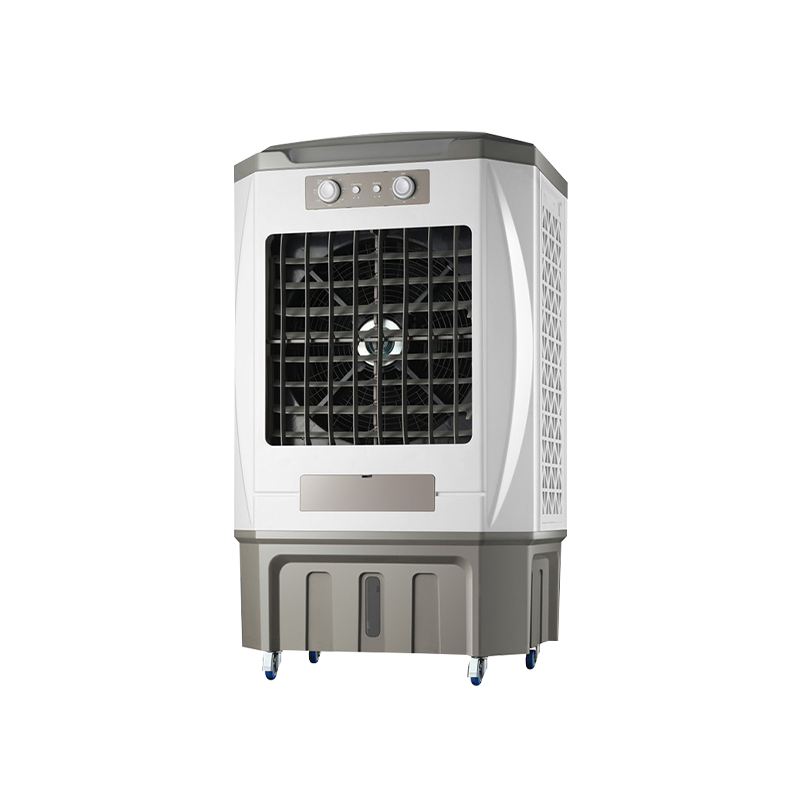
Large terraces attached to restaurants or event spaces usually need airflow that portable units cannot reach. A heavy-duty floor-standing unit such as the
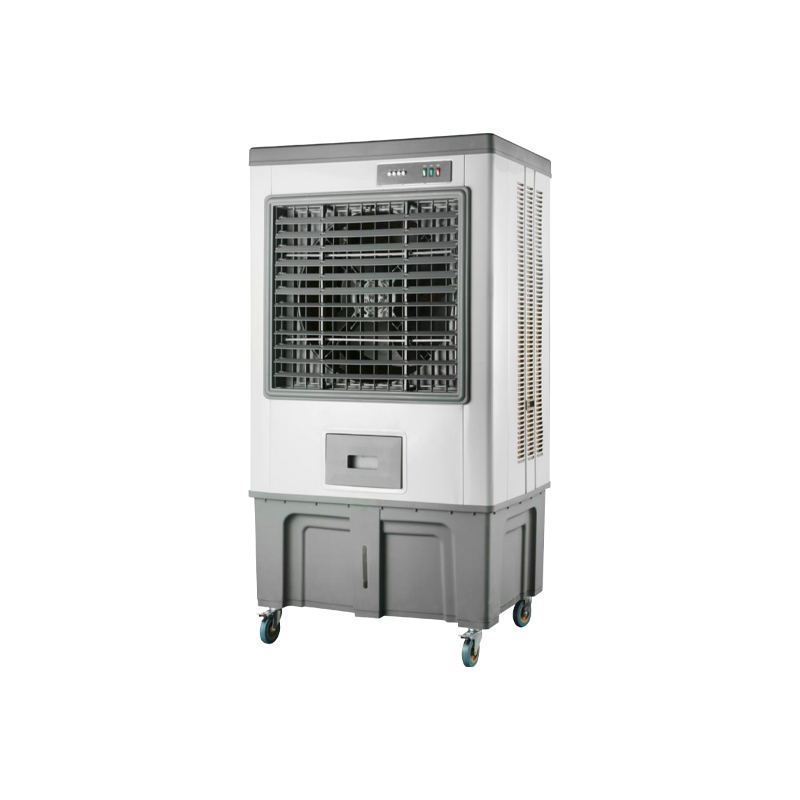 Large Industrial Evaporative Air Cooler for Big Outdoor SpacesA 500W floor-standing evaporative cooler with 260L tank, 28,000 m³/h airflow and 150–180 m² coverage, plus remote monitoring for demanding terrace or event use.View Product →
is built around that heavier duty cycle, where the machine runs for eight hours and the tank is refilled mid-afternoon.
Two patios with identical equipment can feel completely different because of where the air goes. These points cover most of the failures seen in practice.
Evening use changes the selection criteria. During the day, a cooler competes with traffic and conversation; at 10 p.m. it competes with sleep and neighbours. Pump and fan noise together usually dominate, and a unit rated for a workshop will be intrusive on a terrace. Ask for the sound pressure figure at the lowest usable speed, not the marketing "silent" label, and check whether low fan speed still delivers enough airflow to matter.
A timer matters more than most buyers expect, because the coolest, cheapest hours are often over by midnight and nobody wants to walk outside to switch a machine off. A large-tank unit with a 12-hour timer, such as the
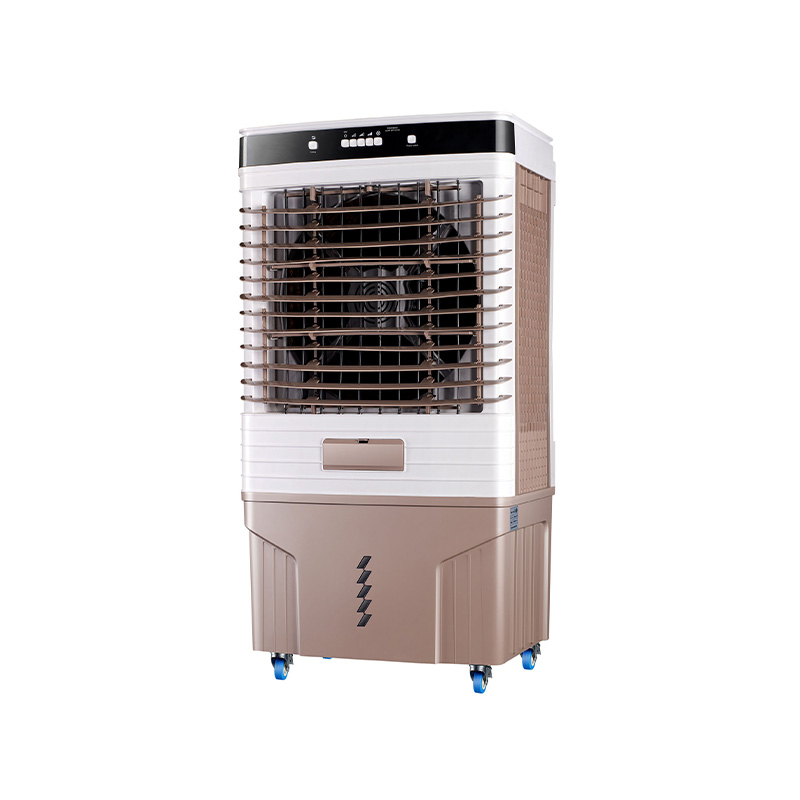 70L Low-Noise Air Cooler with 12-Hour TimerA 70L air cooler with low-noise airflow, 12-hour timer and 200W cooling for 40–70 m² spaces, useful for long evening use without frequent refills.View Product →
, covers a full evening of entertaining and shuts itself down afterwards. Running costs are modest — most domestic units draw between 80 W and 150 W, roughly one tenth of a comparable split-system air conditioner, though that comparison only holds where the climate is dry enough for evaporation to work.
Pad saturation and mineral scale decide output. A pad that has dried out overnight is inefficient for the first hour; one coated in calcium deposits can lose a third of its cooling capacity within a season.
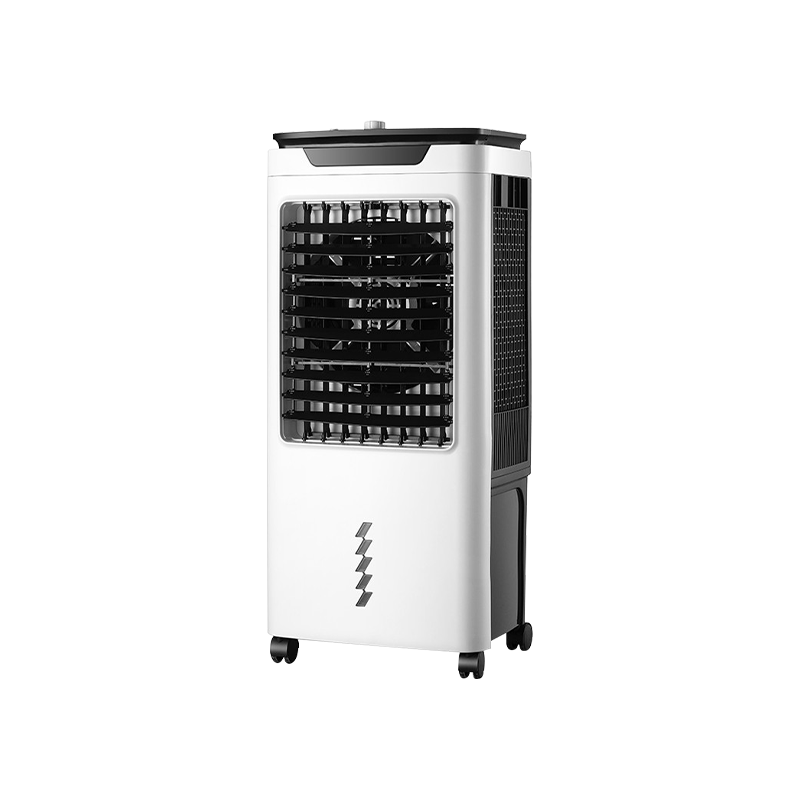
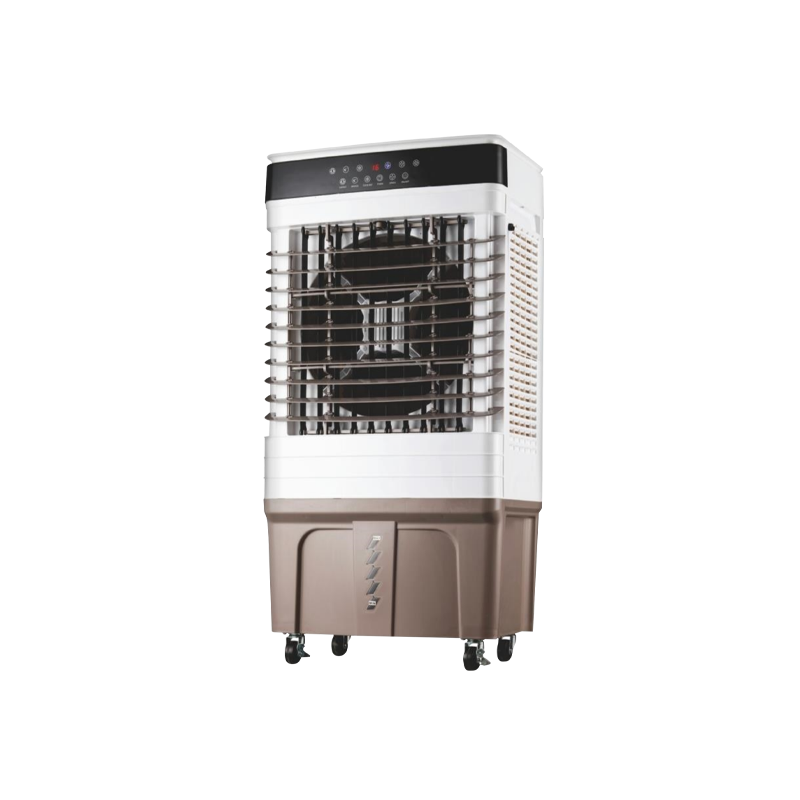
If you are comparing formats before buying, the evaporative cooling fan range shows how capacity, control type and tank size are combined in practice, which makes the trade-offs easier to judge against your own terrace dimensions.
Get the sequence right and a patio becomes usable from mid-afternoon rather than only after sunset. Get it wrong — a large cooler under an unshaded pergola in humid weather — and the equipment looks at fault when the real problem is the order of the decisions.


No.1015 Guanfu Road, Fuhai Town, Cixi City,Zhejiang,China

+86 134-8601-6220



Copyright ? Cixi Bisheng Electrical Appliance Co., Ltd. All Rights Reserved.
Wholesale Portable Air Cooler Manufacturer




 English
 中文简体
 Español