Content
Two portable air coolers can sit side by side with nearly identical spec sheets: similar airflow, similar water tank capacity, similar power draw. The line that actually decides how each machine will behave a year from now is often buried in the fine print: the bearing type listed for the fan motor. One unit specifies a sleeve bearing, another a ball bearing or a fluid dynamic bearing, and that single line explains a price gap that airflow numbers cannot.
The conclusion comes first: the bearing determines how a fan ages. It governs how quickly noise creeps up during continuous running, how long the motor survives in hot air, whether the fan can operate in a vertical orientation, and how much of the production budget sits in a component nobody ever sees. For light, occasional, horizontal use, a sleeve bearing is usually adequate. For continuous duty, elevated temperatures, or strict noise requirements over years of service, ball, fluid dynamic, or magnetic designs justify their higher cost.
A fan bearing supports the motor shaft and keeps the impeller running true, whether the fan turns at a few hundred or a few thousand revolutions per minute. It sets the clearance between rotating and stationary parts, holds the lubricant film that prevents metal-to-metal contact, and manages the friction heat generated at the shaft. When a cooling fan wears out, the failure is almost always here rather than in the electrical windings: lubricant migrates, dries out, or breaks down; wear opens the clearance; and the first symptom is audible, a dry rasp, a rhythmic tick, or a rattle that varies with speed and temperature.
This is why bearing type is a procurement question and not merely an engineering footnote. The same motor and impeller can deliver very different field performance depending on what sits between the shaft and the housing.
A sleeve bearing is a simple porous metal bushing, typically oil-impregnated bronze, with the shaft spinning inside a thin film of oil. It is the least expensive option, quiet when new, and mechanically simple, which is why it remains common in budget fans. Its weaknesses appear over time: oil slowly migrates out of the bushing and evaporates faster as temperature rises, so service life drops noticeably in hot conditions. Sleeve bearings are also orientation-sensitive. They perform best with the shaft horizontal and lose life expectancy when the fan runs vertically, because gravity pulls lubricant away from the load point. A common refinement is the rifle bearing, which adds spiral oil grooves to improve vertical performance while keeping the cost low.
Ball bearings replace the oil film with hardened steel balls running between grooved races, lubricated with grease. The result is a bearing that tolerates high temperatures, carries heavier loads, works in any mounting orientation, and avoids the lubricant-loss problem that limits sleeve designs. Dual ball bearing assemblies are commonly rated for 50,000 to 100,000 hours, which is why they are the default specification for industrial fans and equipment expected to run continuously. The trade-offs are higher cost, a faint click from the balls at low speed, and greater sensitivity to rough handling during shipping.
Fluid dynamic bearings and their hydraulic cousins keep the shaft floating on a self-generated wedge of oil, so there is no solid contact between rotating surfaces at operating speed. The design combines sleeve-like quietness with life ratings that rival dual ball bearings, commonly 50,000 hours or more, and well-engineered versions hold their performance in vertical mounting as well. Cost sits between sleeve and ball bearings. This family sits behind most premium quiet fans, from computer case fans to home appliances where low noise is a headline selling point.
Magnetic bearing designs levitate the rotor with magnetic fields, reducing or eliminating physical contact altogether. Noise reaches the lowest levels available and mechanical wear nearly disappears, with service life often quoted above 100,000 hours. The penalty is cost, which confines magnetic bearings to high-end and noise-critical products rather than volume household goods.
| Bearing Type | Noise When New | Typical Rated Life | Mounting Flexibility | Relative Cost | Best Suited For |
|---|---|---|---|---|---|
| Sleeve | Low | Around 30,000 hours; less in heat or vertical use | Horizontal preferred | Lowest | Budget products, light and intermittent duty |
| Ball (single or dual) | Moderate, faint click at low speed | 50,000-100,000 hours | Any orientation | Medium to high | Continuous duty, hot environments, industrial fans |
| Fluid dynamic / hydraulic | Very low | 50,000-100,000 hours | Most designs handle vertical | Medium | Quiet appliances, long-run home use |
| Magnetic | Lowest | Often above 100,000 hours | No orientation limit | Highest | Premium and noise-critical applications |
The ranges overlap because manufacturing quality and lubricant chemistry matter as much as the design family. A well-made sleeve bearing in cool, horizontal service can outlast a poorly assembled ball bearing, which is why hour ratings should always arrive with their test conditions attached.
Long daily runtimes and warm ambient air are the harshest realistic conditions for a fan bearing, because heat accelerates lubricant loss in oil-based designs. A sleeve-bearing fan that sounds fine for four hours a day in a living room may not hold up running ten or more hours in a workshop, warehouse, or commercial space. For evaporative air coolers working through full shifts, ball or fluid dynamic bearings are the safer specification. Noise control under continuous operation is a broader engineering topic, which we address separately in our guide to keeping heat dissipation stable while reducing noise interference.
Products built for this duty usually say so in their own naming, as with our low-energy industrial model below.
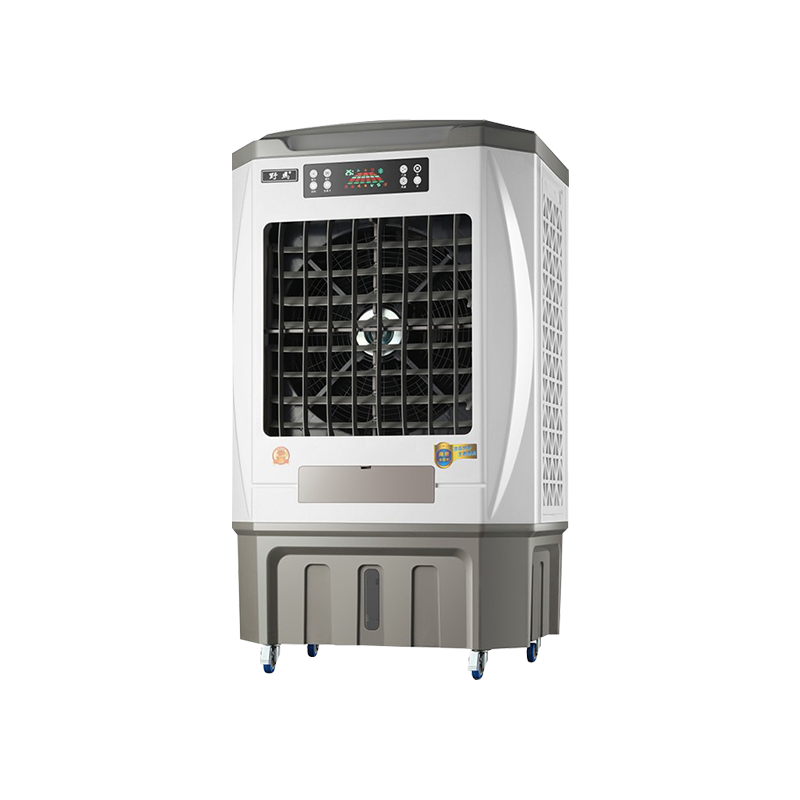 Low Noise Industrial Air Cooler LBW-16000RCThis low-energy industrial air cooler fits the discussion of units that stay quiet over long nightly use while accumulating fewer running hours, making it a practical option for bedrooms and offices alike.View Product →
In a bedroom or office, the real question is not the decibel figure printed on the box but how the unit sounds after months of nightly use. Oil-film and magnetic designs hold their acoustic character far longer than entry-level sleeve bearings, and the runtime pattern matters too: a cooler with a long timer that switches off once the room has cooled simply accumulates fewer running hours each year. Low-noise household coolers built around that combination are a safe default for sleeping and working environments.
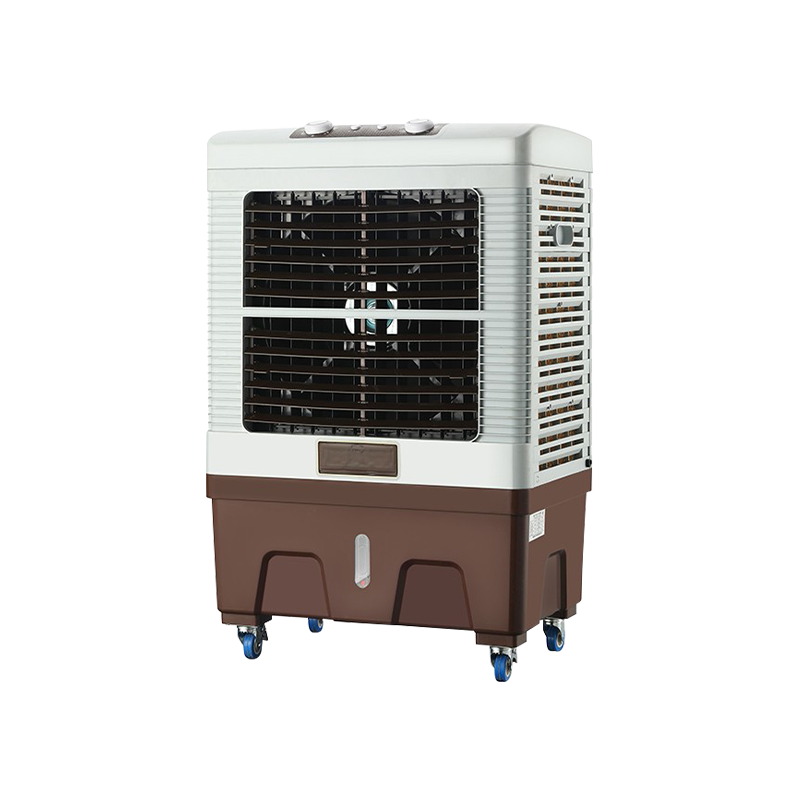 3-In-1 Low-Noise Evaporative Air Cooler With 12h Timer LBW-6000RCCombining evaporative cooling, multiple functions, and a long 12-hour timer, this low-noise cooler matches the need for quiet operation and automatic shutoff in sleeping and working spaces.View Product →
Modern DC circulation and floor fans run compact, electronically controlled motors in which every trace of mechanical noise is noticeable in a quiet room. Fluid dynamic and magnetic structures suit these products particularly well, which is why silence is typically listed right alongside voice control in their specifications.
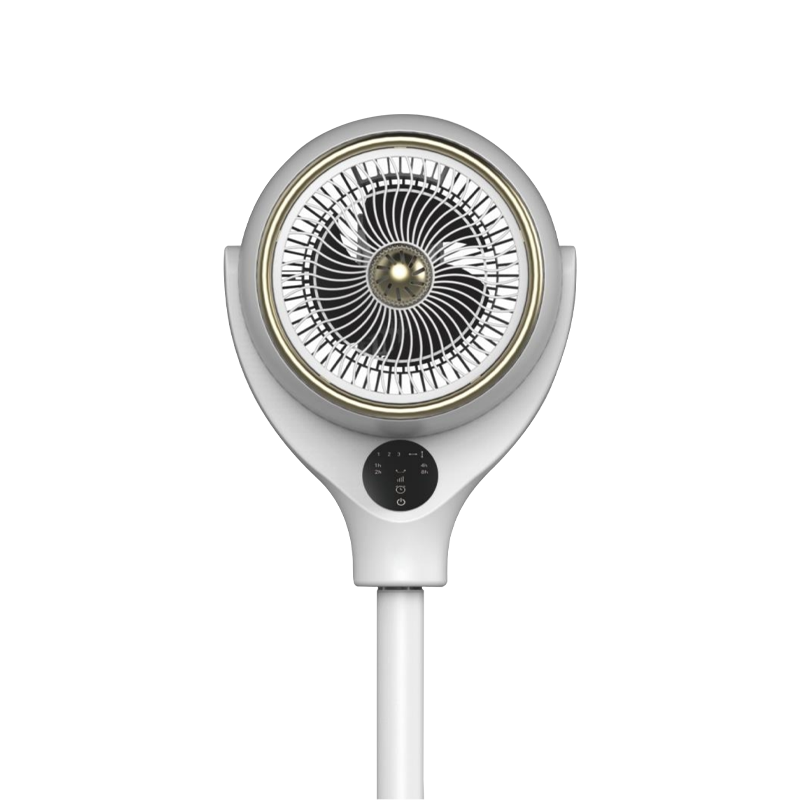 Intelligent Voice Control Silent Floor Fan Fan-03This silent floor fan illustrates the shift to compact DC motors with quiet fluid-dynamic or magnetic bearing designs, where low noise sits alongside convenient voice control as a key specification.View Product →
Bearing type is easy to verify once you know what to ask. Before committing to an order, particularly an OEM project or a bulk purchase, put these five points to the manufacturer:
As a manufacturer of evaporative air coolers and fans, we treat bearing selection as a quotation-stage discussion with OEM customers, since it moves both the bill of materials and the noise figures that end up on the packaging, both of which are verified in our own testing laboratory before shipment.
The practical summary: bearing type is a small line item with an outsized influence on how a fan sounds and how long it lasts. Sleeve bearings suit light, horizontal, budget-conscious duty. Ball bearings handle heat, load, and continuous running in any orientation. Fluid dynamic designs deliver sleeve-like quietness with far longer life, and magnetic structures push noise and wear to a minimum at a premium price. Match the bearing to the duty cycle, ambient temperature, and mounting position, then verify the specification instead of assuming it. To see how these choices translate into finished machines, browse our complete cooling fan and air cooler range.


No.1015 Guanfu Road, Fuhai Town, Cixi City,Zhejiang,China

+86 134-8601-6220



Copyright ? Cixi Bisheng Electrical Appliance Co., Ltd. All Rights Reserved.
Wholesale Portable Air Cooler Manufacturer




 English
 中文简体
中文简体 Español