Content
A newly installed air cooler starts up in a workshop, and within ten minutes a supervisor asks whether the whine and rumble are normal. In a quiet home, the same question follows the first overnight use of a portable fan. Fan noise is rarely the fault of a single component. It is the product of at least seven measurable factors—fan speed, blade geometry, fan size, bearing type, motor quality, installation method, and airflow path—each of which can be controlled at the design stage or managed at the installation stage. Understanding these factors lets buyers, importers and OEM partners compare equipment on informed terms rather than relying on a single dB(A) number printed in a datasheet.
Rotational speed is the strongest single predictor of fan noise. Aerodynamic sound energy grows with approximately the fifth power of blade tip speed, so doubling the RPM of the same fan can increase its acoustic output by 15 dB(A) or more. In practical terms, a fan running at high speed is not just twice as loud as the same fan at low speed—it is several times louder to the human ear.
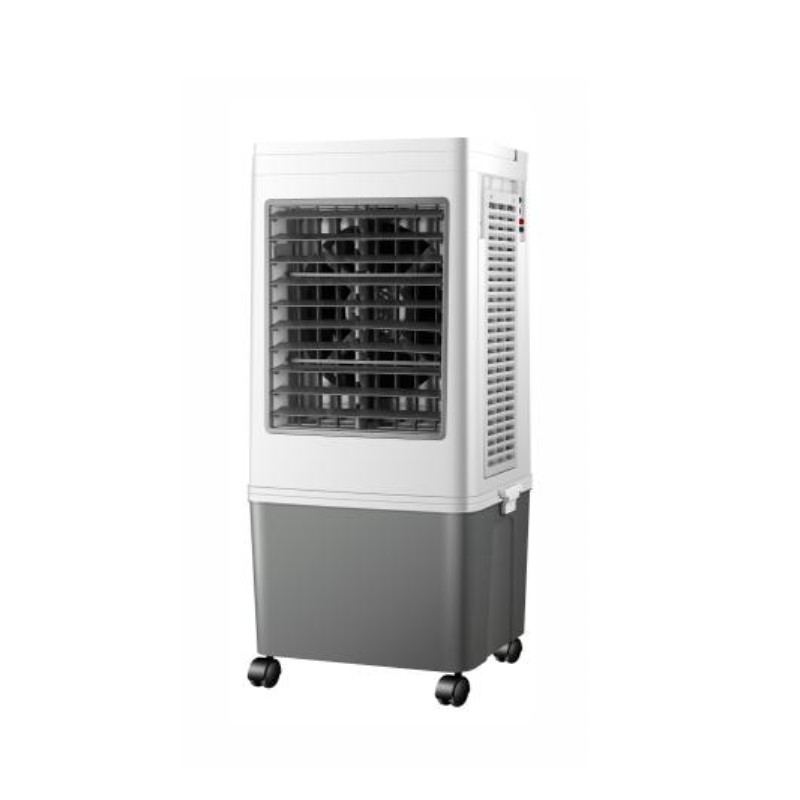
This is why quiet fans are rarely high-speed fans. The most effective way to reduce noise while preserving airflow is to let a larger or more efficient impeller move the air at a lower speed. When comparing products, ask for noise data at every speed step, not only at maximum airflow. A three-speed portable cooler such as the low-noise 3-speed mode portable air cooler LBW8800 gives users the flexibility to run at a reduced speed during nighttime or sedentary hours, where the acoustic difference is easily perceived.
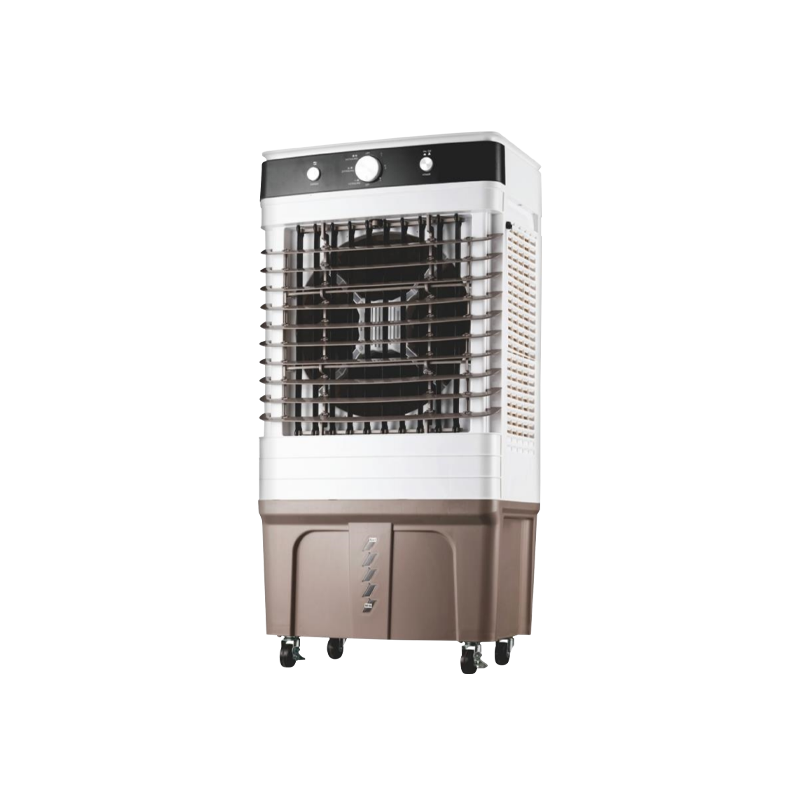 Low Noise 3 Speed Mode Portable Air Cooler LBW-8800 Suppliers, OEM Company - BBisheng Electrical Appliance Co., Ltd is a China OEM Low Noise 3 Speed Mode Portable Air Cooler LBW-8800 suppliers and Low Noise 3 Spee...View Product →
Blade shape determines how much of the airflow energy is converted into sound. Pitch angle, chord width, sweep, and the number of blades all influence the turbulence pattern at the blade edges. Straight, flat blades shed vortices more aggressively, producing broadband noise, while swept and twisted blades guide the air more smoothly and reduce that turbulence. Uneven blade spacing can also break up the tonal whine that occurs each time a blade passes a fixed strut or grille.
These geometric choices mean two fans of the same diameter and speed can differ by several dB(A). Acoustic testing is required to verify real performance, and manufacturers that run anechoic chamber tests are usually the ones that publish credible noise specifications.
A larger fan can be quieter than a smaller fan while delivering the same airflow. Because noise scales with blade tip speed rather than with rotational speed alone, increasing the impeller diameter allows the fan to spin more slowly for the same air volume. A wide floor fan at a low setting frequently moves as much air as a compact fan at high speed, at a fraction of the noise level.
This principle is one of the reasons evaporative air coolers with large water tanks and wide fan wheels tend to perform better acoustically than undersized portable units. The physical room for a larger impeller is a legitimate specification to evaluate, especially in industrial or semi-open spaces where airflow demand is high.
Bearings control both the initial noise of a fan and how quiet it remains after thousands of hours of operation. Sleeve bearings are inexpensive and common in low-cost fans, but they gradually lose lubrication and develop an audible rumble. Ball bearings last longer but can introduce a high-frequency whine. Hydraulic and magnetic bearing systems aim to combine the low noise of sleeve bearings with the service life of ball bearings.
For applications where a fan runs twelve hours or more per day, bearing quality is a core purchasing criterion, not a minor detail. In evaporative air coolers designed for overnight comfort, bearing stability directly affects whether users can sleep through a cooling cycle. The 3-in-1 evaporative low-noise air cooler with 12-hour timer LBW6000/LBW6000RC is one example of a model that pairs low-noise operation with a timer, so it can run through the night at reduced speed settings.
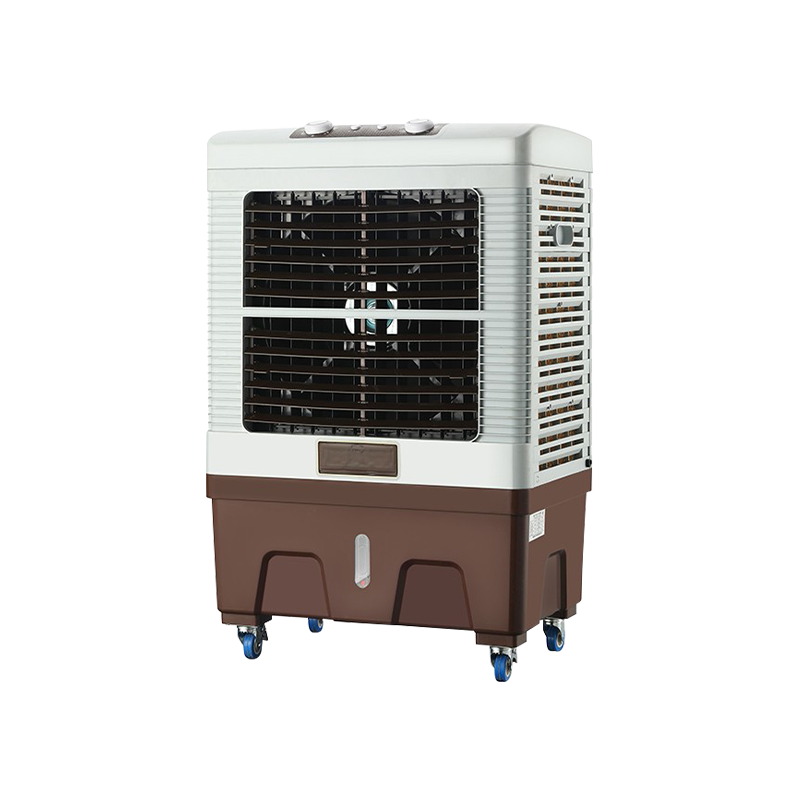 3-In-1 Evaporative Low-Noise Air Cooler With 12h Timer LBW-6000/LBW-6000RC SupplBisheng Electrical Appliance Co., Ltd is a China OEM 3-In-1 Evaporative Low-Noise Air Cooler With 12h Timer LBW-6000/LBW-6000RC suppliers...View Product →
The motor contributes its own noise, separate from the airflow. Electromagnetic hum, rotor imbalance and switching noise from the drive electronics all appear in the acoustic spectrum. Older shaded-pole AC motors hum at the mains frequency, while modern DC and EC motors run more smoothly and allow precise speed regulation. Cogging torque—the uneven magnetic resistance as the rotor turns—can produce vibration that travels into the frame.
Motors with balanced rotors, tight air gaps and properly designed electronic commutation are noticeably quieter at the same speed. This is also where energy efficiency and quietness overlap: low-energy consumption designs usually pair well with smooth, controlled motor operation.
Installation method determines how much of the motor's and bearing's vibration is transmitted into a room. A fan bolted directly to a thin metal panel effectively turns that panel into a loudspeaker. Rubber feet, isolation grommets and a rigid frame reduce the vibration path. On portable air coolers, uneven flooring, contact with a wall, or a loosely fitted water tank can amplify noise that the bare unit would not otherwise produce.
The same model can sound different in two rooms because the mounting conditions differ. This is a useful reminder for installers and quality auditors: check isolation hardware and placement before judging whether a unit is defective.
The environment around the fan—its inlet, outlet, filters and nearby obstacles—is often as influential as the fan itself. A partially blocked inlet or outlet raises static pressure and forces the fan to work harder, which increases turbulence and noise. Dirty filters, narrow grilles and furniture placed too close can add several dB(A) while reducing the airflow that actually reaches the room. In high heat-density environments, keeping the airflow path open is as critical to acoustic performance as it is to heat dissipation, a point examined in our discussion of maintaining stable heat dissipation while reducing noise interference.
Quiet operation begins at the specification stage, not after installation. When evaluating a fan or air cooler, ask three questions. First, what is the dB(A) rating at the operating speed you actually intend to use? Second, what bearing system and blade geometry does the unit use? Third, how will it be mounted relative to the room's layout and airflow path? Acoustic data measured at maximum speed tells only part of the story.
For OEM buyers and wholesale distributors, these seven factors define what can be improved in the next product generation. A modest change in blade geometry or a switch to a quieter bearing system can reduce acoustic output by 3 to 5 dB(A), which the human ear perceives as roughly half as loud. Improvements of that magnitude change how a product performs in a bedroom, a workshop or a commercial space.
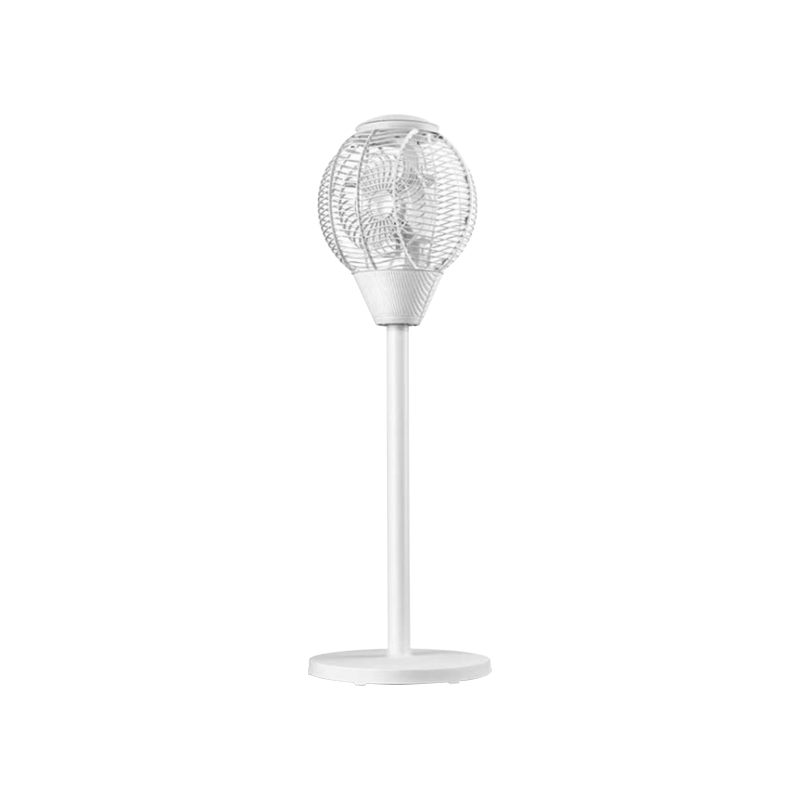
At Cixi Bisheng, we design evaporative air coolers and circulating fans with these trade-offs in mind. The intelligent voice control silent floor fan FAN03, for example, combines compact motor control, carefully shaped blades and a stable base to deliver quiet air circulation for smart-home and office settings. For a broader view of where the category is heading, see how evaporative air coolers are leading the new trend of green cooling.
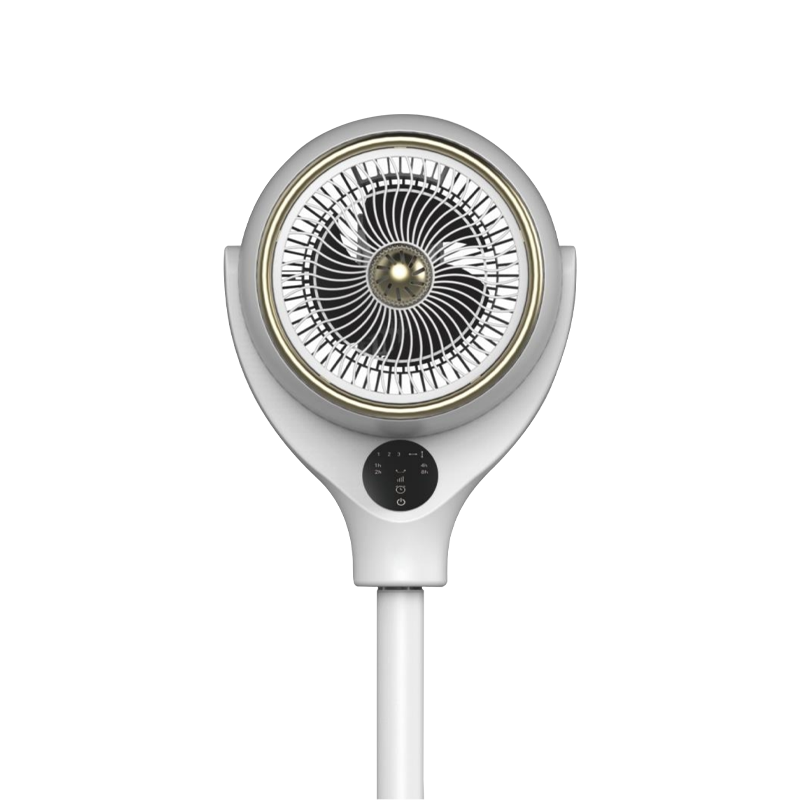 Intelligent Voice Control Silent Floor Fan Fan-03 Suppliers, OEM Company - BisheBisheng Electrical Appliance Co., Ltd is a China OEM Intelligent Voice Control Silent Floor Fan Fan-03 suppliers and Intelligent Voice Co...View Product →
| Factor | Primary noise mechanism | Practical mitigation |
|---|---|---|
| Fan speed | Aerodynamic noise rises sharply with blade tip speed | Run larger or slower fans; compare noise at each speed step |
| Blade design | Vortex shedding and tonal whine from blade edges | Specify swept or twisted blades with irregular spacing |
| Fan size | Small impellers require higher speed for the same airflow | Choose the largest diameter compatible with the space |
| Bearing type | Wear and friction produce rumble or high-frequency whine | Use hydraulic, magnetic, or high-grade ball bearings |
| Motor quality | Electromagnetic hum, cogging and rotor imbalance | Select EC or DC motors with balanced rotors |
| Installation | Vibration transmitted to panels, floors and walls | Use isolation mounts and stable, level surfaces |
| Airflow path | Back pressure and obstructions increase turbulence | Keep inlets and outlets clear; clean filters regularly |


No.1015 Guanfu Road, Fuhai Town, Cixi City,Zhejiang,China

+86 134-8601-6220



Copyright ? Cixi Bisheng Electrical Appliance Co., Ltd. All Rights Reserved.
Wholesale Portable Air Cooler Manufacturer




 English
 中文简体
中文简体 Español