Content
Short answer: yes, a misting fan really does lower air temperature — as long as the water it throws out evaporates faster than it lands. Two metres from the nozzle on a 35 °C afternoon at 30% relative humidity, a well-built outdoor misting fan will pull 5–10 °C off the dry-bulb reading. Put the same unit in a closed, muggy room at 80% humidity and the thermometer barely moves, the floor turns slick, and you have bought a very wet fan.
The physics does not change between a misting fan, a fogging line and a pad-based evaporative air cooler; only the way water meets air changes. What follows is how to judge in advance whether misting will work in your application, the humidity range where it stops paying for itself, and the cases where a wet-curtain cooler is the safer purchase.
Evaporating one litre of water absorbs roughly 2,450 kJ of heat, about 0.68 kWh. That is the entire cooling budget of any evaporative device, and it is why water consumption and cooling output are locked together. A fan spraying 20–30 L/h is moving close to 15–20 kWh of heat out of the air every hour — impressive near the nozzles, and the reason the tank empties so quickly.
Two details decide how much of that budget you actually collect:
The hard ceiling is the wet-bulb temperature. No evaporative machine can push air below it, so at 30 °C and 30% relative humidity — a wet bulb near 17 °C — a realistic outlet is 20–22 °C, not 10 °C, whatever the brochure claims. And a misting fan never air-conditions a sealed room: it cools an airstream and the people standing in it. Close the windows, let humidity climb, and the cooling fades within minutes.
Relative humidity is the single number that predicts the outcome. Below 50% misting is a sound investment; above 70% it is a decorative sprinkler.
| Relative humidity | Typical temperature drop | What users notice | Practical verdict |
|---|---|---|---|
| Below 30% | 6–10 °C | Mist vanishes within a metre, skin dries quickly | Excellent — patios, dry workshops, desert climates |
| 30–50% | 3–6 °C | Comfortable, slight dampness on skin | Good — most summer afternoons |
| 50–70% | 1–3 °C | Air feels heavier, surfaces pick up a film of water | Marginal — airflow does more work than the mist |
| Above 70% | Under 1 °C | Visible fog, wet floors, slow drying | Not effective — specify ventilation instead |
For procurement, translate that into one test: if the design-day wet-bulb depression at the site is under 5 °C, misting will not deliver measurable comfort. Dry indoor spaces raise the opposite concern, where humidity balance matters as much as temperature — keeping indoor air from becoming too dry while a cooler runs is a better starting point than adding more mist.
Even in suitable climates, four issues show up on site within the first week:
None of this rules misting out; it simply confines it to outdoor or well-ventilated semi-open spaces where surfaces can dry between cycles.
A misting fan injects water into open air. A wet-curtain air cooler pulls room air through a honeycomb pad soaked in water and delivers it through louvres as cool, droplet-free air. Both rely on the same 2,450 kJ per litre, but only one can be used beside a packing line, a paper store or a retail floor.
The dividing line is simple. Open air, patios, loading docks and perimeter cooling favour misting. Enclosed or semi-enclosed interiors — workshops, warehouses, poultry sheds, homes — favour pad-based cooling, because the moisture stays in the pad and the floor stays dry.
Sizing follows the space. In the 15–50 L class, three-speed units with a directional louvre let you aim the cool airstream where people actually stand instead of chilling empty floor.
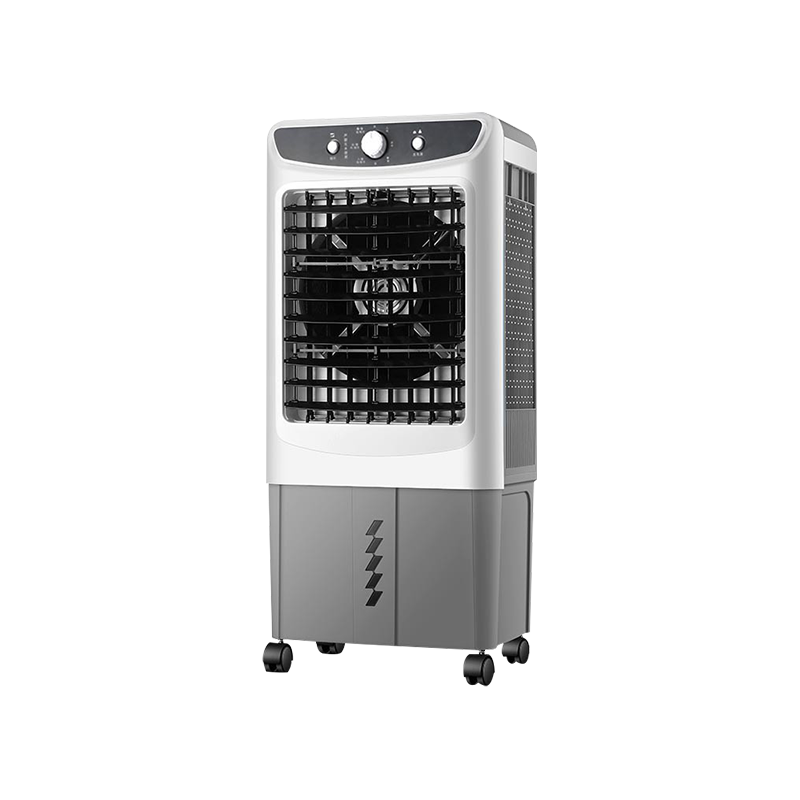
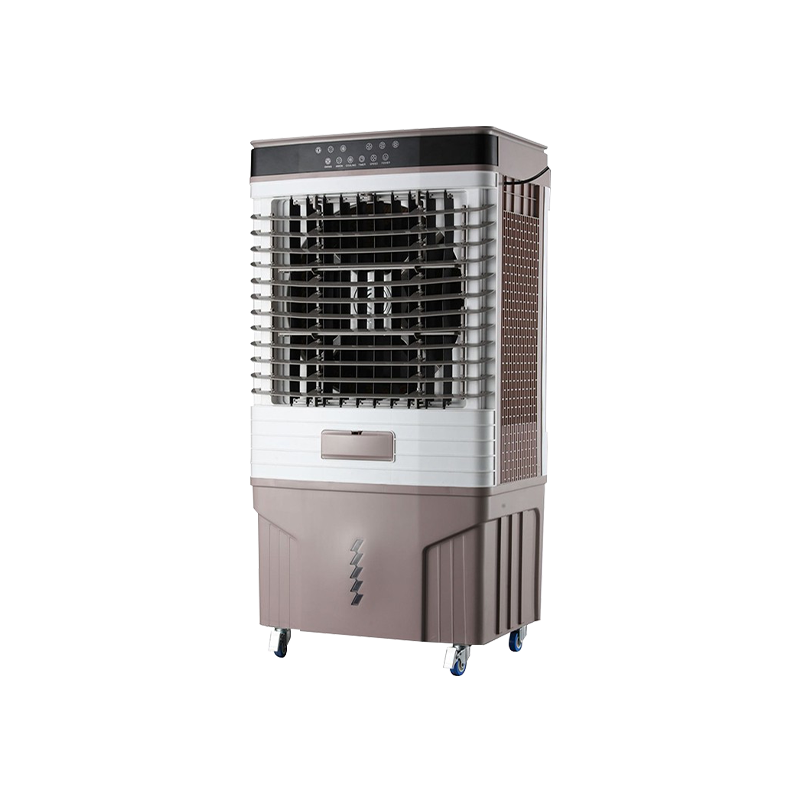
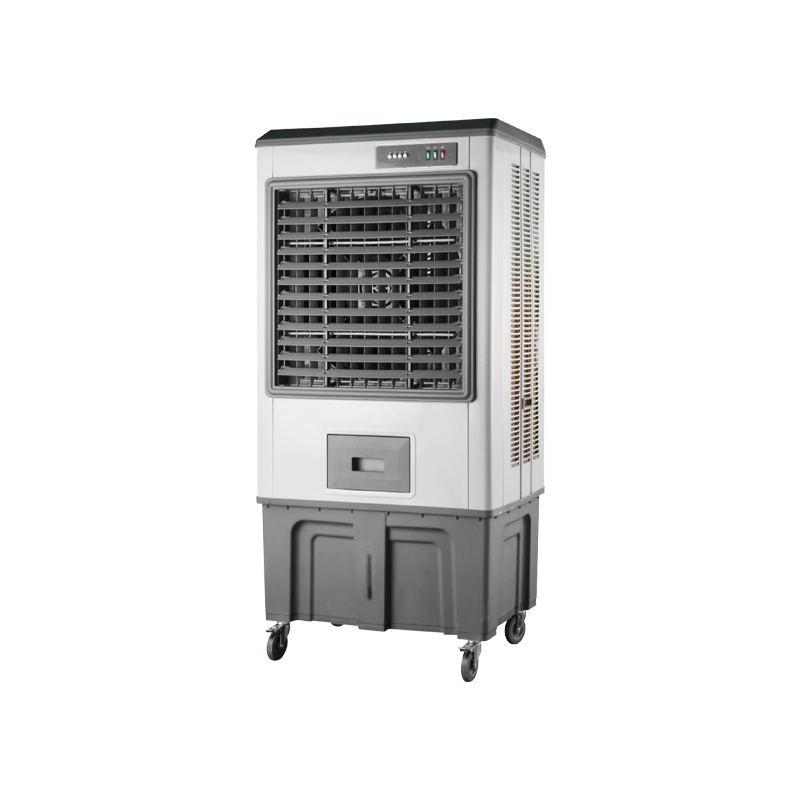
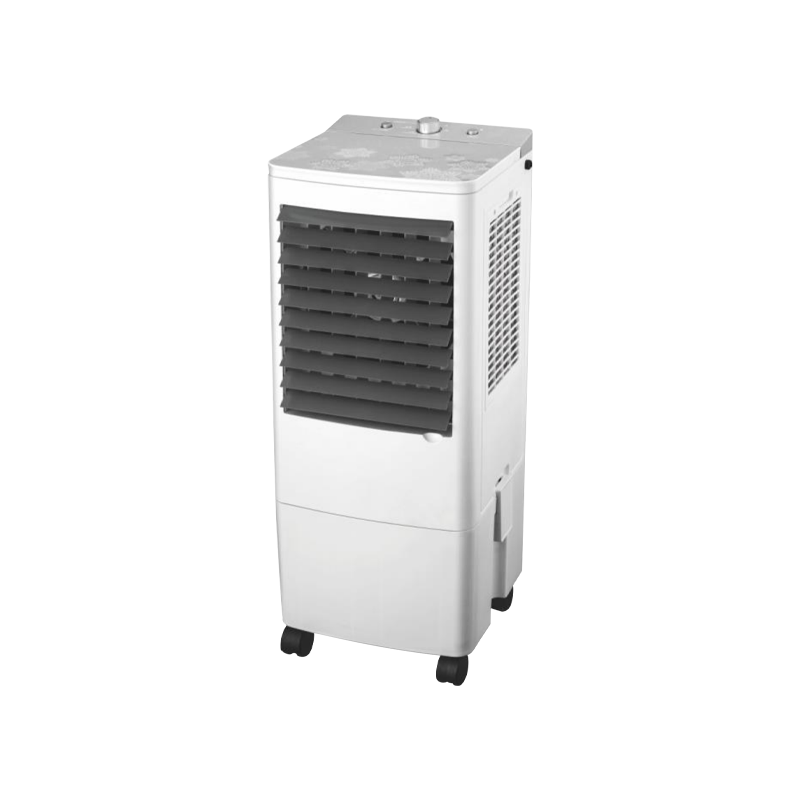 Portable 20L Three-Speed Evaporative Air Cooler LBW-5000-1A compact 20 L cooler with three wind speeds, directional airflow and casters, useful for semi-outdoor spaces where low-power, movable cooling is needed.View Product →
For patios, workshops with open roller doors and other semi-outdoor areas, a low-power unit that tolerates dust and can be wheeled under cover at night does the job without soaking nearby surfaces.
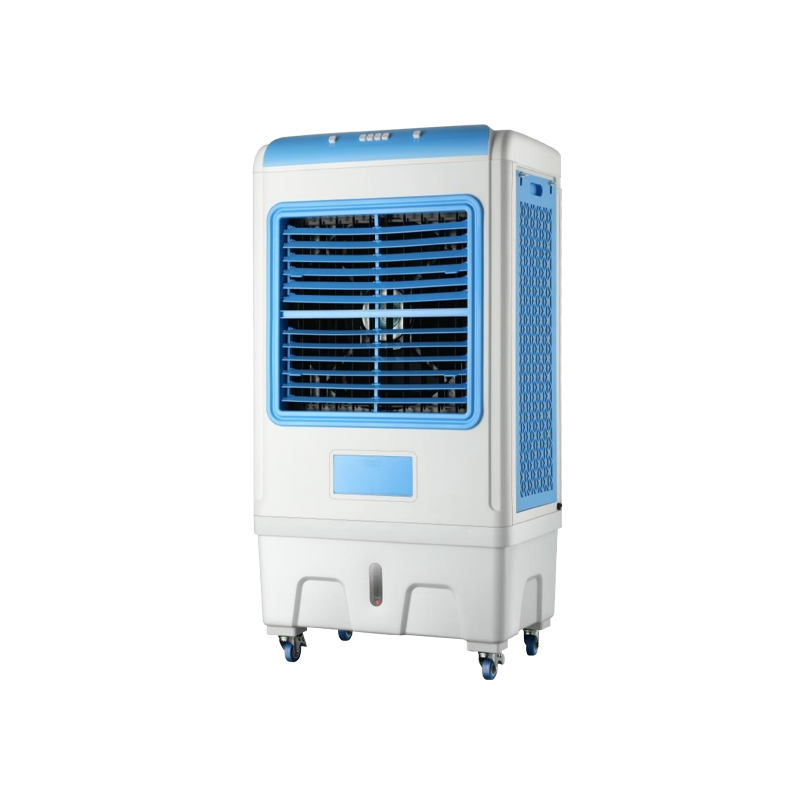
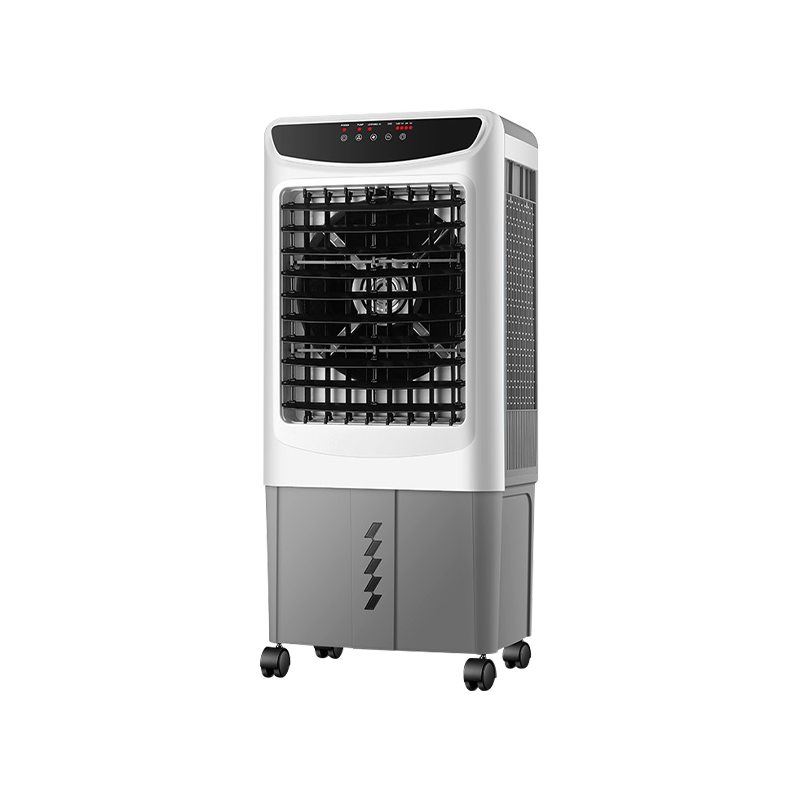 Low-Power 36L Air Cooler LBW-5500RC/5500A 36 L remote-controlled cooler with low-noise operation and 80 W cooling, suited to home or terrace use where quiet, economical cooling matters.View Product →
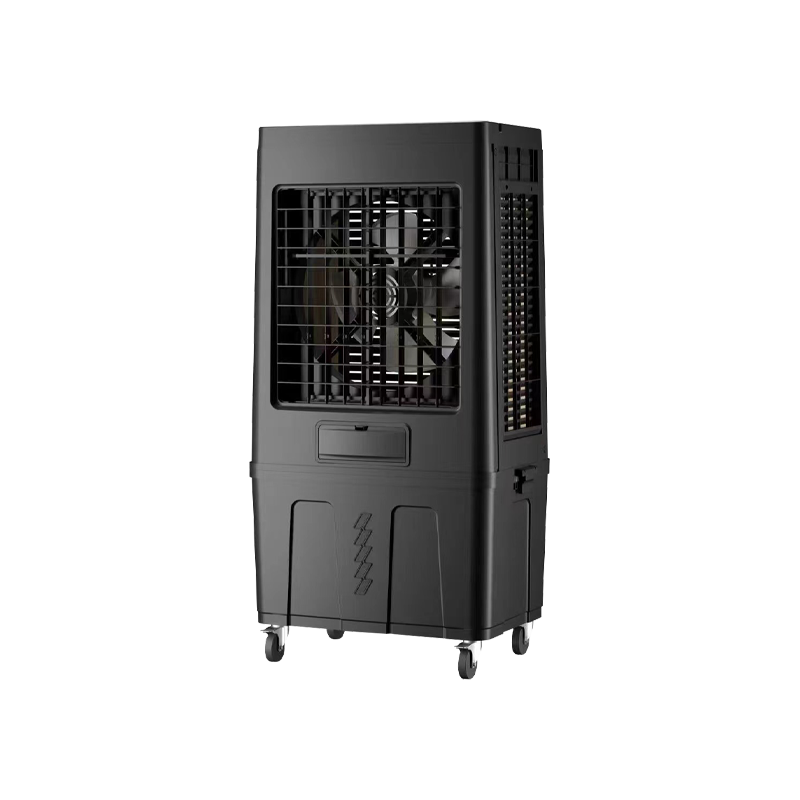
At industrial scale the specification changes again: a 120 L tank, a 120 W motor and a high-throw fan are what keep a production hall tolerable across a shift without a refill every two hours.
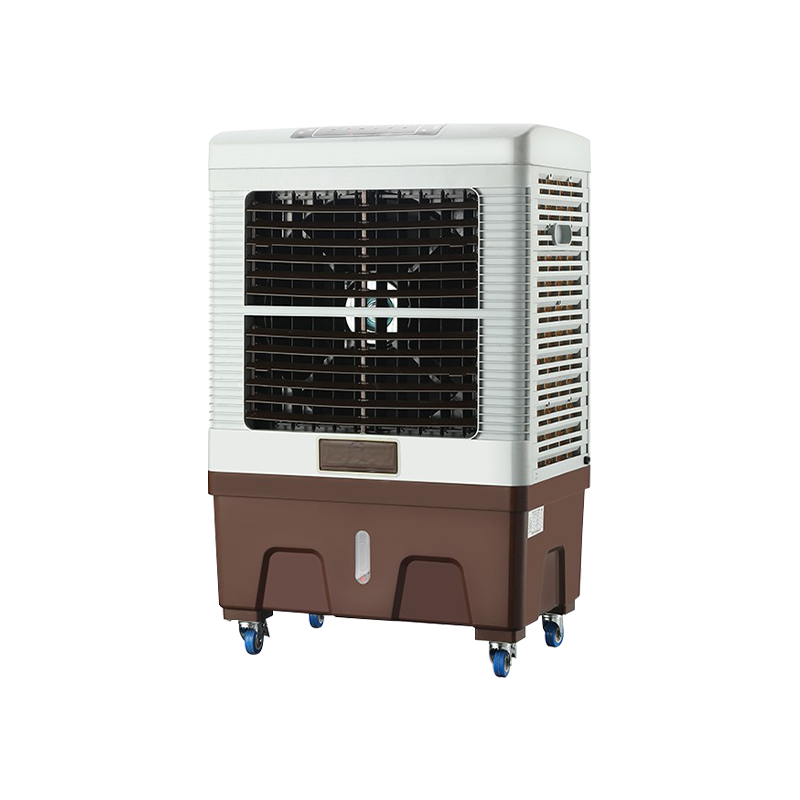
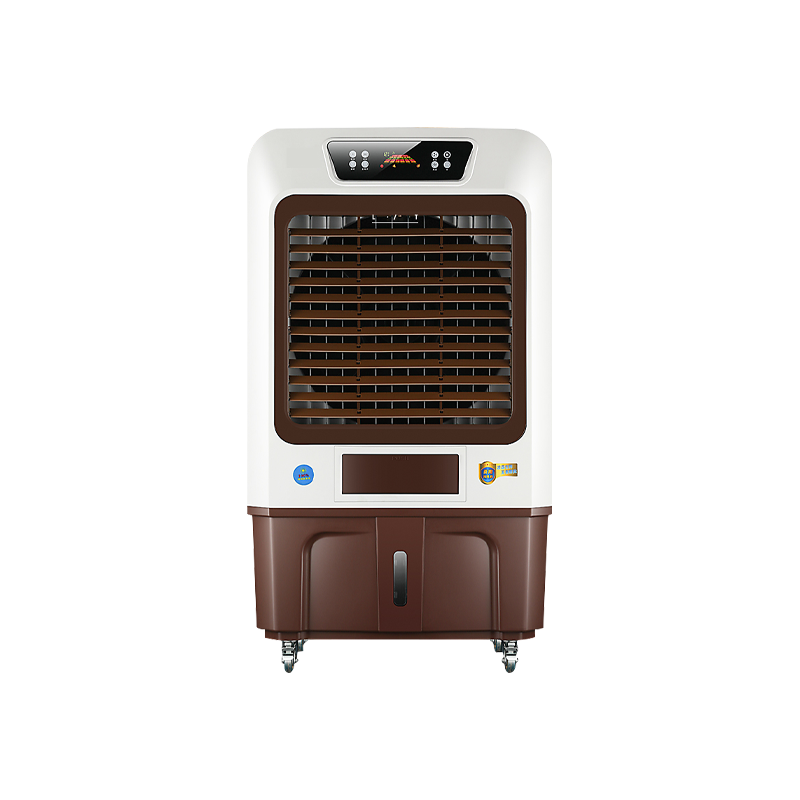 LBW-18000RC 120L Industrial Evaporative Air CoolerA 120 L floor-standing evaporative cooler with high air volume for industrial halls and large spaces, suited to comparing pad-based cooling options.View Product →
If you are weighing pad-based cooling against misting for a new facility, the wider case for evaporative cooling as a low-energy alternative is worth reading before the equipment schedule is fixed.
Most "misting fans don't work" complaints are sizing failures rather than technology failures. Run four checks before ordering:
Misting fans work — in dry air, in moving air, outdoors, and when nozzle and pump are matched to the job. Above roughly 70% relative humidity the evaporation that provides all the cooling simply stops, leaving wet floors and a larger water bill. If the space is enclosed, dust-sensitive or in continuous use, a wet-curtain evaporative air cooler delivers the same thermodynamic benefit without the standing water. Decide which of those two situations you are in, and the question of whether misting works answers itself.


No.1015 Guanfu Road, Fuhai Town, Cixi City,Zhejiang,China

+86 134-8601-6220



Copyright ? Cixi Bisheng Electrical Appliance Co., Ltd. All Rights Reserved.
Wholesale Portable Air Cooler Manufacturer




 English
 中文简体
 Español