Content
When you lower a metal spoon into a pot of hot soup, the handle warms within seconds even though only the tip touches the liquid. Steam rising from the pot carries heat toward your face, and the burner beneath radiates warmth across the kitchen. These three sensations come from three physically distinct mechanisms of heat transfer: conduction, convection, and radiation.
Understanding the difference reaches beyond the classroom. It explains why a tiled floor feels colder than wood at the same temperature, why the upper floor of a house turns stuffier in summer, and why an evaporative air cooler can lower a room's temperature using a fraction of the electricity that an air conditioner demands.
Heat transfer is the movement of thermal energy from a region of higher temperature to a region of lower temperature. The process continues until the two regions reach thermal equilibrium. Every real-world heat exchange, from a laptop to a blast furnace, follows this drive toward balance.
All heat transfer can be sorted into three modes. Conduction transfers energy by direct contact between particles. Convection transfers energy through the bulk movement of a fluid. Radiation transfers energy by electromagnetic waves that need no medium. Most practical systems experience at least two of these modes at once, but each one behaves by its own rules.
Conduction is heat transfer through direct molecular contact, with no net movement of the material itself. In a solid, atoms and molecules vibrate around fixed positions. When one end of the object is heated, particles there vibrate more strongly and collide with their neighbors, passing kinetic energy along like a line of billiard balls.
Metals conduct far better than most solids because their free electrons create a second, faster energy pathway. A copper saucepan therefore spreads heat quickly and evenly across its base, while a wooden spoon handle stays cool enough to grip. This property is quantified as thermal conductivity, expressed in watts per meter per kelvin (W/(m·K)): approximately 400 for copper, 205 for aluminum, 50 for steel, 0.6 for water, and just 0.025 for air.
Fourier's law describes the conductive heat flow:
q = -kA(dT/dx)
The heat flow q depends on the thermal conductivity k of the material, the cross-sectional area A, and the temperature gradient dT/dx across the material's thickness. Three practical rules follow directly: choose low-conductivity materials to slow heat loss, enlarge the cross-sectional area to speed heat transfer, and remember that a still air layer is among the best practical insulators.
Convection transfers heat through the movement of a liquid or gas. When a portion of fluid heats up, it expands, becomes less dense, and rises. Cooler, denser fluid flows in to replace it, creating a circulation loop. Boiling water offers the clearest demonstration: hot water rises from the bottom, releases energy, cools near the surface, and sinks back down.
| Type | Driving Force | Common Example |
|---|---|---|
| Natural convection | Buoyancy differences caused by temperature | Warm air rising near a radiator |
| Forced convection | A fan, pump, or blower moving the fluid | Space heaters, ventilation systems, air coolers |
Newton's law of cooling gives the convective heat transfer rate:
q = hA(Ts - Ta)
The heat flow q depends on the convection heat transfer coefficient h, the surface area A, and the difference between the surface temperature Ts and the fluid temperature Ta far from the surface. Because convection carries heat through bulk fluid motion rather than slow particle-to-particle collisions, it moves energy across a room much faster than conduction through air alone.
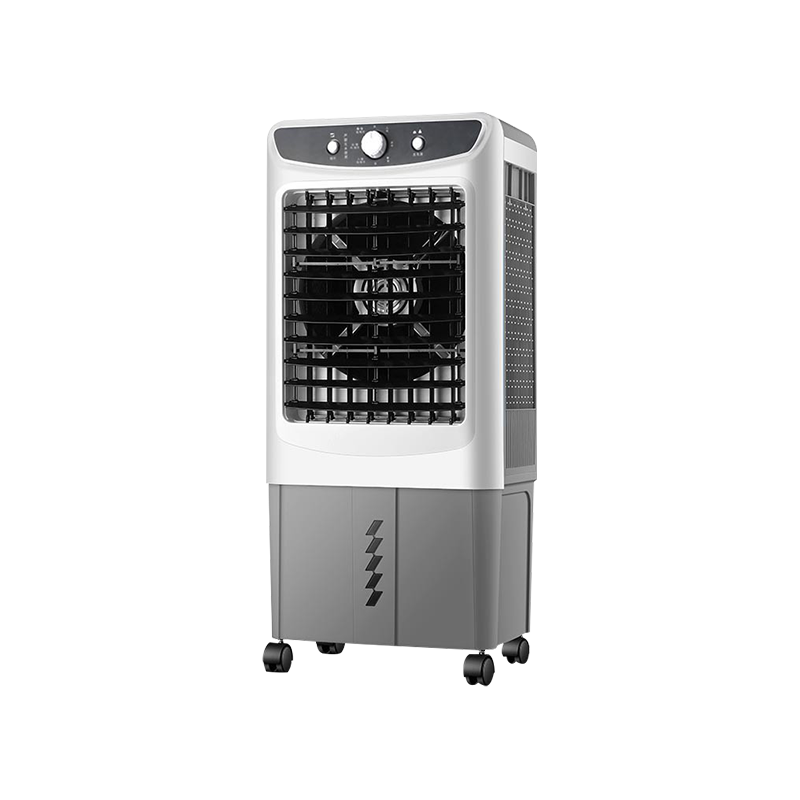
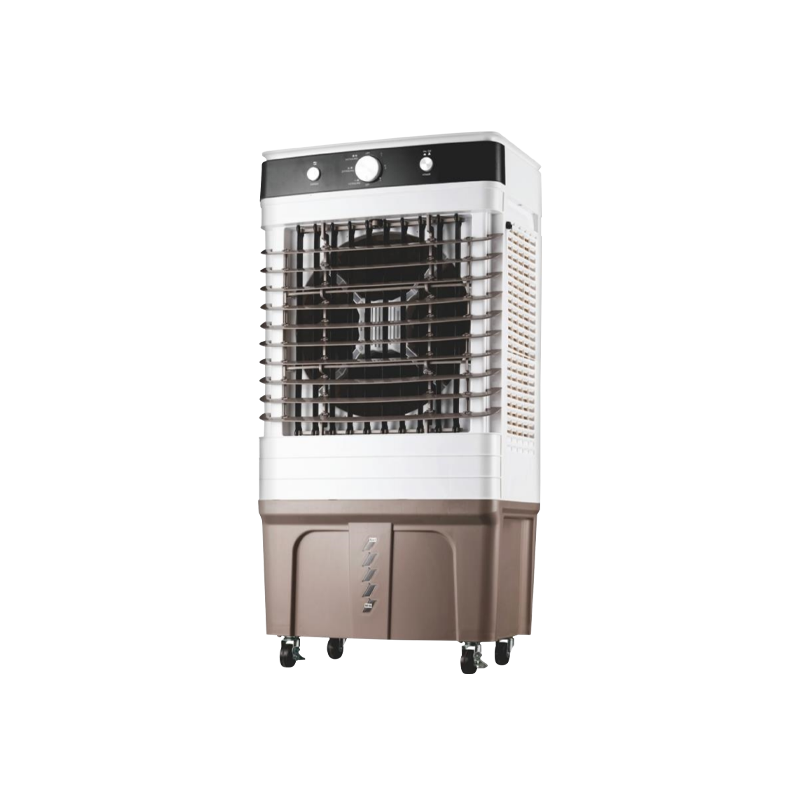
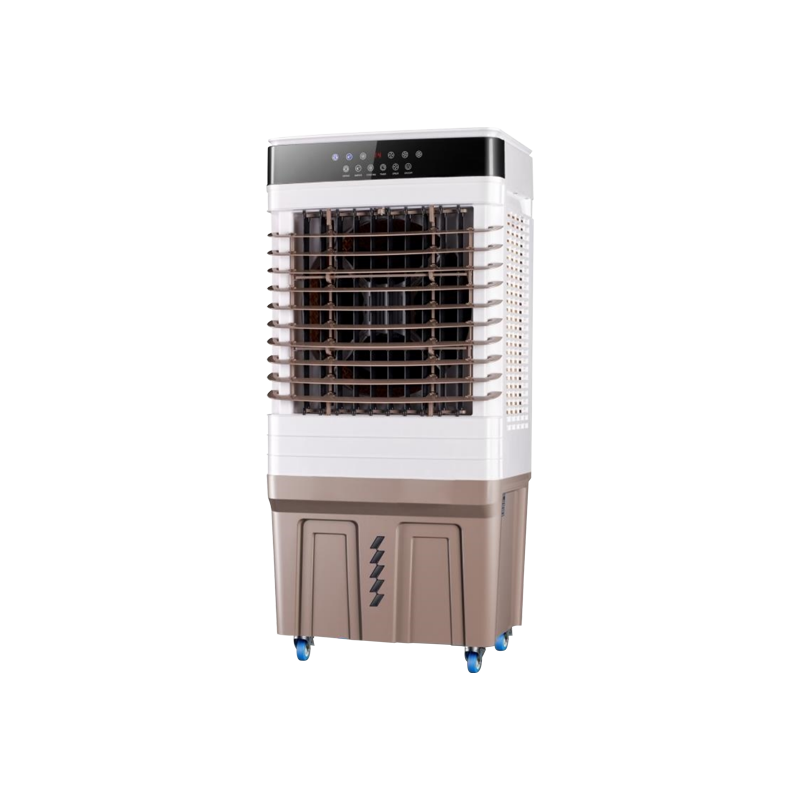
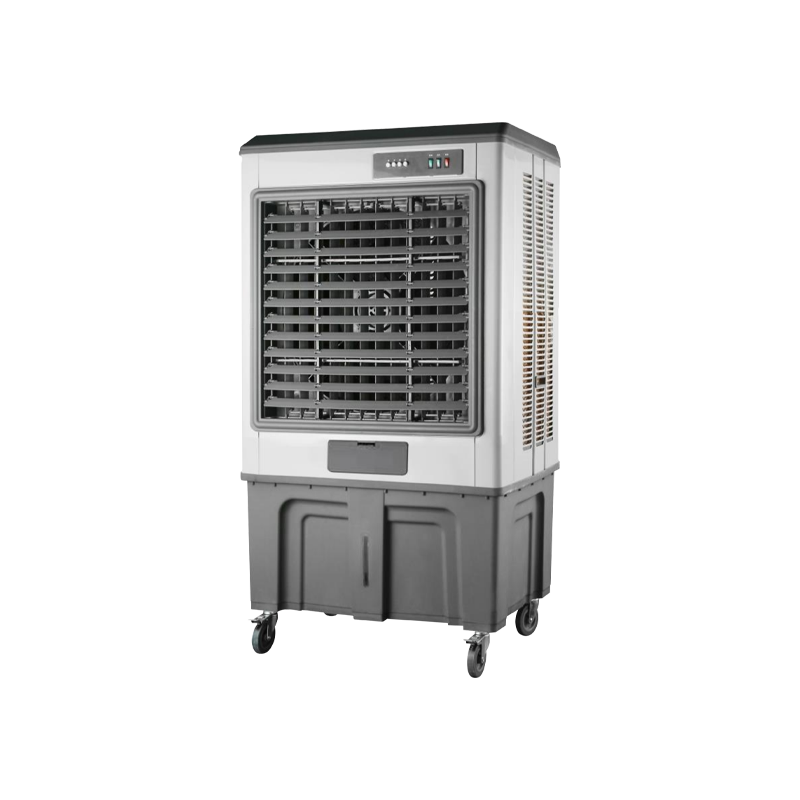
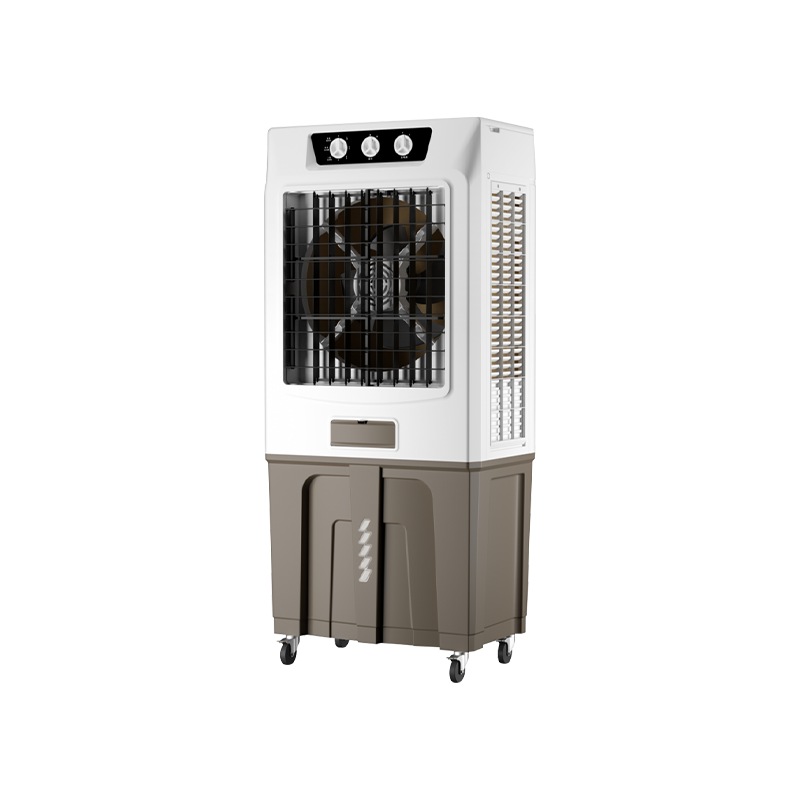
Evaporative cooling combines forced convection with a phase change. When water evaporates, it absorbs latent heat from the surrounding air, lowering the air temperature. An evaporative air cooler draws warm air through wet evaporative pads; the air evaporates water from the pads, loses heat, and then flows into the room as cooler, slightly humid air. The performance of such a cooler depends heavily on airflow design: a well-matched fan-and-pad system delivers better cooling than a unit with a larger tank but weaker airflow.
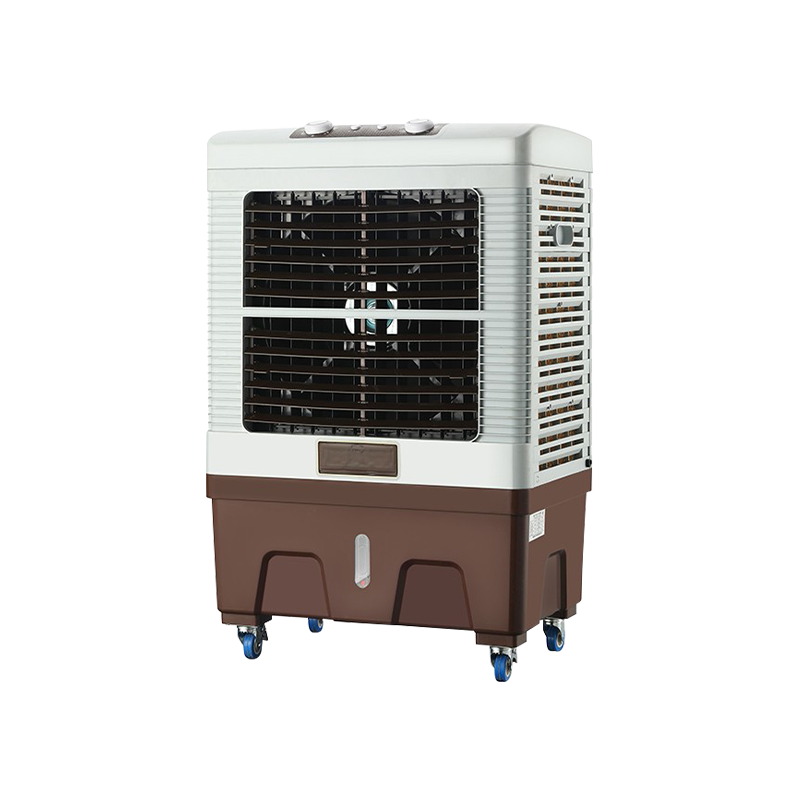 Evaporative Low-Noise Air Cooler with 12-Hour TimerAfter learning about evaporative cooling fundamentals, this three-in-one unit demonstrates how matched airflow and phase change deliver practical temperature reduction while remaining quiet enough for bedroom use.View Product →
Radiation is the transfer of energy through electromagnetic waves, mostly in the infrared portion of the spectrum. It is the only mode of heat transfer that works across a vacuum. Sunlight crosses 150 million kilometers of vacuum before warming the Earth. Every object above absolute zero emits thermal radiation; hotter objects emit more energy and at shorter peak wavelengths.
The Stefan–Boltzmann law expresses the emitted power per unit area:
P = εσAT^4
The variables are emissivity ε (a surface property from 0 to 1), the Stefan–Boltzmann constant σ, the radiating area A, and the absolute temperature T measured in kelvin. The T^4 term explains why radiant heat rises so sharply with temperature: doubling the absolute temperature increases emitted power by a factor of sixteen. A campfire with flames near 1,000 °C radiates intense heat for meters, while a warm wall at 40 °C produces a far milder glow.
Two units with identical wattage can feel completely different in the same room because their designers balanced the three heat-transfer modes differently.
Engineers, procurement teams, and homeowners who understand these three modes can evaluate heating and cooling equipment far more effectively than those who rely on energy ratings alone.
Conduction determines how efficiently a device sheds heat through its housing. A metal cabinet can help electronic components stay cool by conducting heat outward, but it also creates surfaces hot enough to require protective guards. Low-conductivity enclosures keep exteriors cooler but demand better internal airflow. The right choice depends on which risk matters more.
Radiation often dominates thermal comfort even when air temperature is moderate. People near a large sunny window can feel warm in a cool room because infrared radiation reaches their skin directly, bypassing the air. Reflective window films, light-colored surfaces, and radiant barriers are radiation-management tools, and recognizing that changes how you think about building comfort.
Convection governs most air-treatment products. Ceiling fans, ventilation ducts, and evaporative air coolers all rely on forced convection. The performance gap between well-built and poorly built evaporative coolers is largely an airflow story: how uniformly the fan draws air across the wet pads and distributes it through the room. That is why recent development has focused on low-noise, high-efficiency fan systems, and why the broader industry now treats these systems as energy-efficient green cooling solutions.
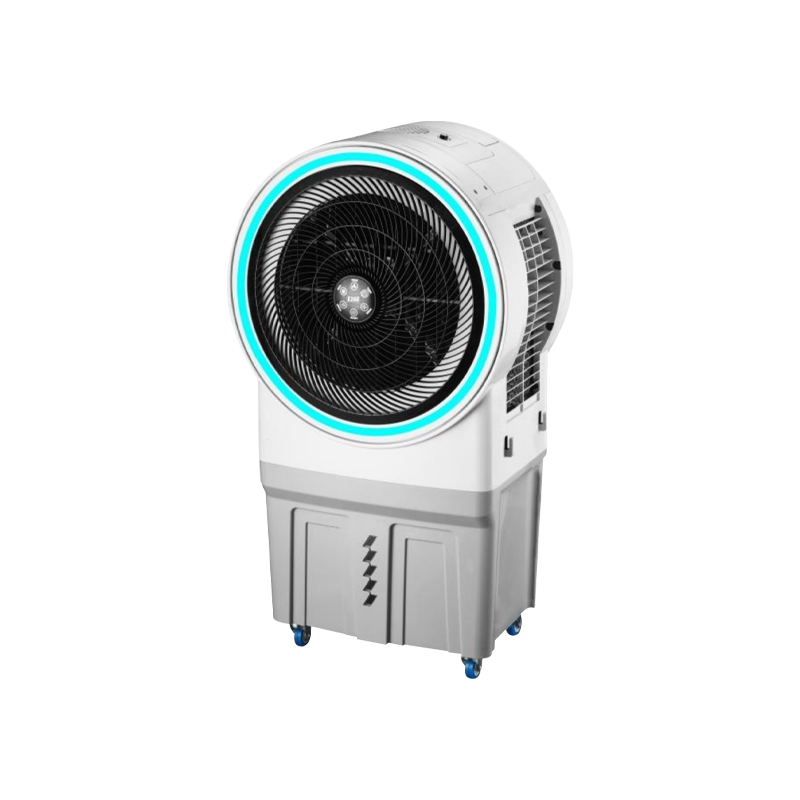
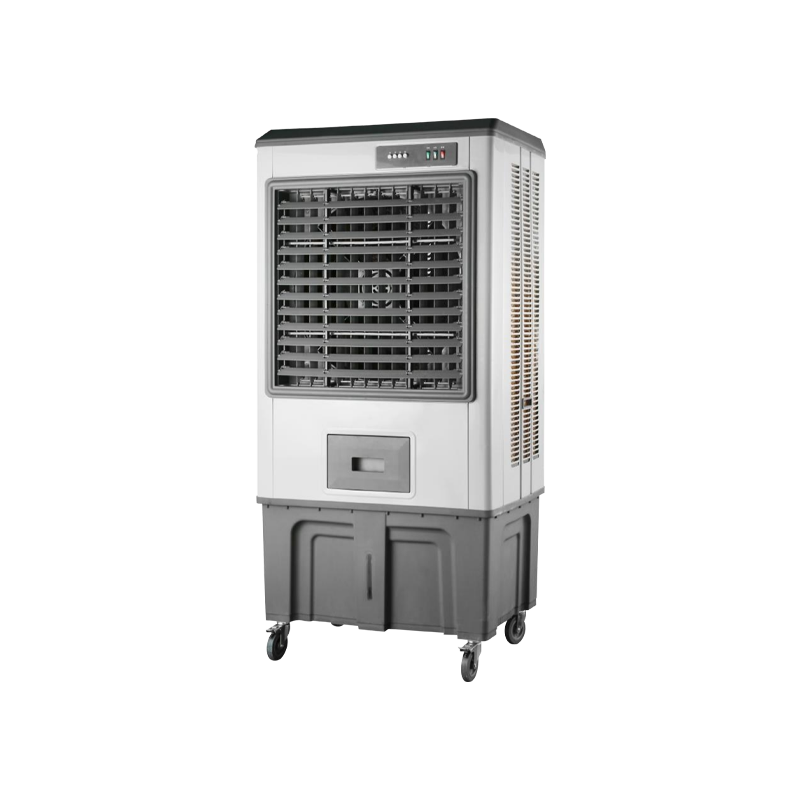
For industrial and commercial spaces, the three modes act simultaneously: warm air collects near the roof through natural convection, machinery radiates heat in all directions, and metal surfaces conduct energy to anyone who touches them. An industrial-grade evaporative air cooler addresses the convection component by pushing large volumes of cooled air through the space at a fraction of the energy cost of compressor-based air conditioning. The design logic that balances these factors matters more than any single component specification.
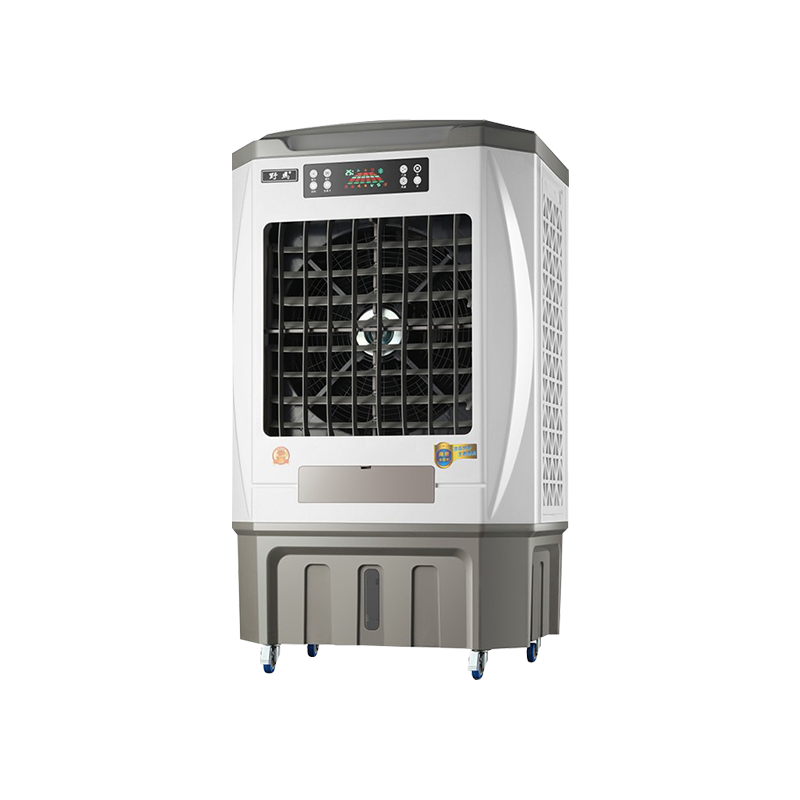
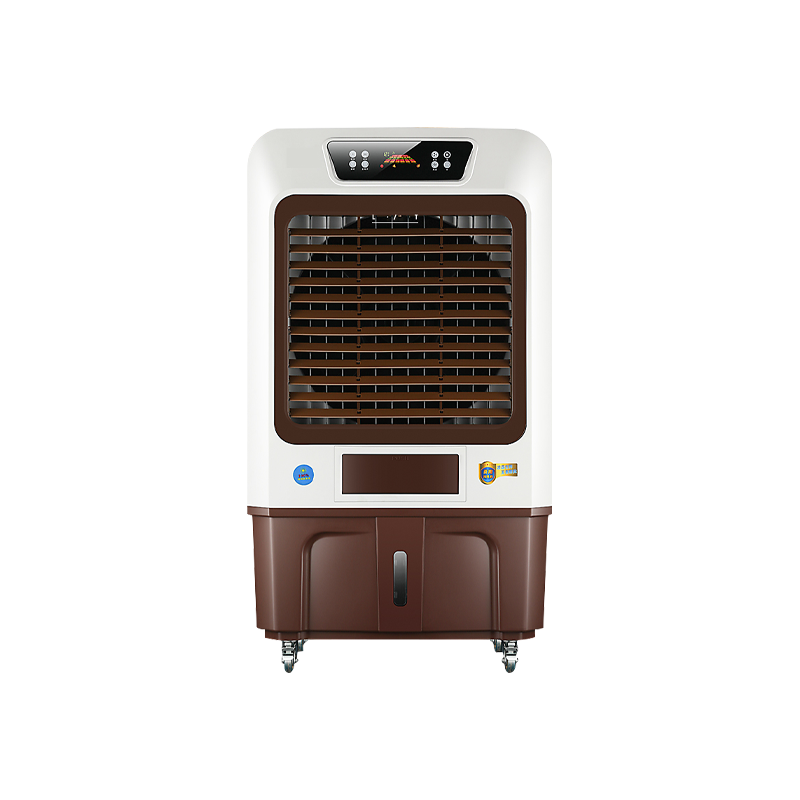 Large-Capacity Floor-Standing Evaporative Air Cooler for Industry and HomeThis 120-liter model tackles the convection component in large spaces by pushing high volumes of cooled air efficiently, bridging the industrial heat-transfer principles discussed above with practical household scalability.View Product →
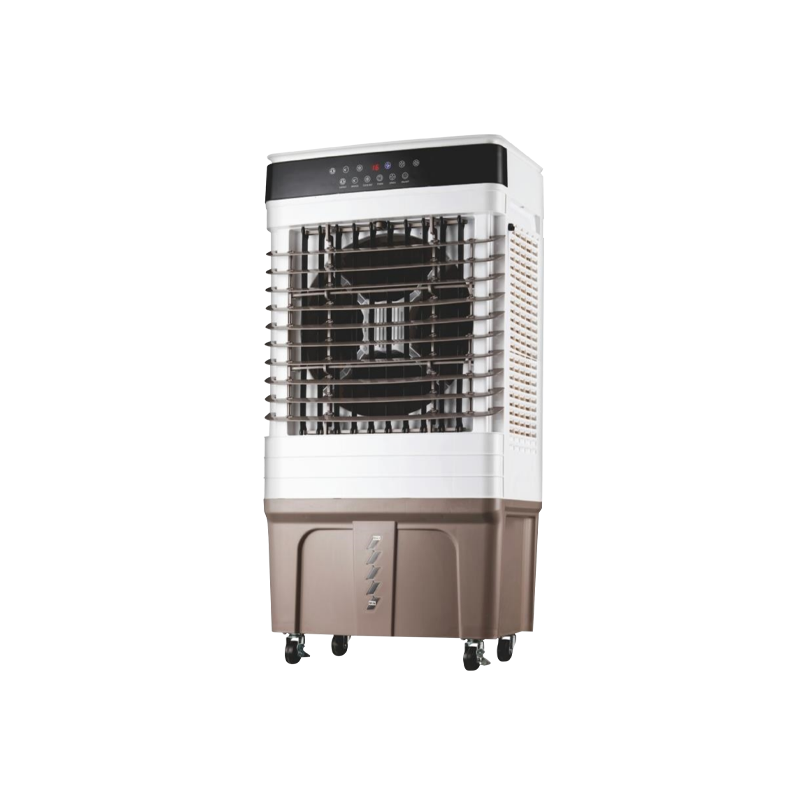
Household buyers face the same physics on a smaller scale. A portable evaporative cooler with a well-matched fan, a quality wet-curtain pad, and adequate water capacity can achieve a meaningful temperature drop through forced convection and evaporative phase change, while staying quiet enough for a bedroom. Energy-conscious operation follows from choosing a unit whose airflow path is efficient rather than oversized for the room.
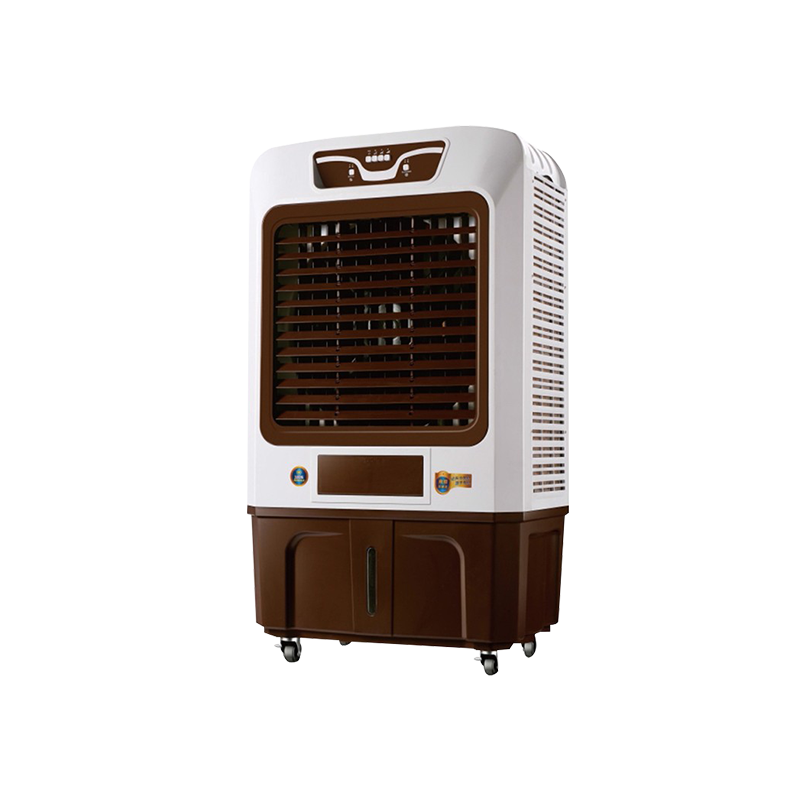
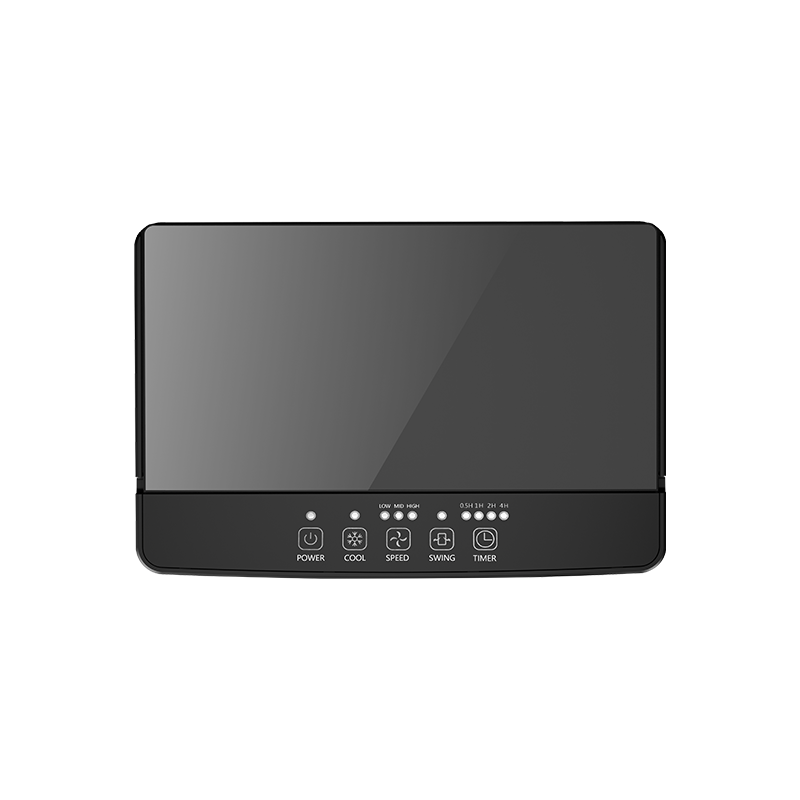 Low-Energy Low-Noise Evaporative Air Cooler with Remote ControlBuilding on how airflow path efficiency affects energy use, this unit combines quiet operation with low power consumption, making it a practical choice for energy-conscious households after studying heat-transfer modes.View Product →
When you compare any thermal appliance through the lens of conduction, convection, and radiation, energy figures stop being abstract. For practical examples of how these principles translate into hardware, explore our complete product range.


No.1015 Guanfu Road, Fuhai Town, Cixi City,Zhejiang,China

+86 134-8601-6220



Copyright ? Cixi Bisheng Electrical Appliance Co., Ltd. All Rights Reserved.
Wholesale Portable Air Cooler Manufacturer




 English
 中文简体
中文简体 Español